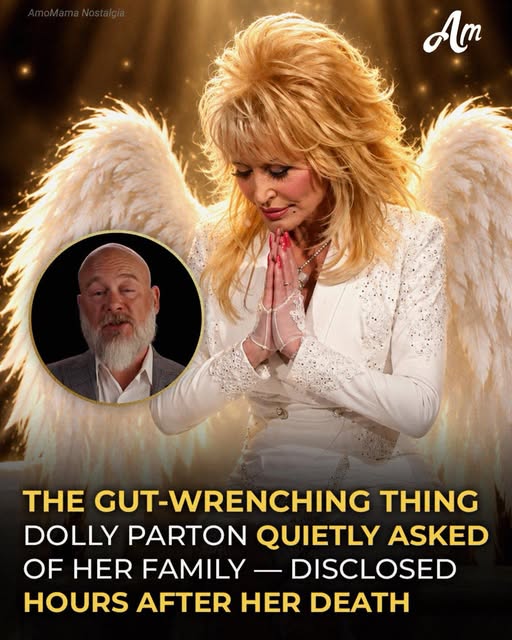
The news of her death was shared with the public through a poignant video message posted to her social media accounts by her nephew, Brian Seaver. Serving as Parton’s head of security for over twenty years—following in the professional footsteps of his father, Larry—Seaver carried out a deeply personal request that the singer had made years prior. He spoke of his aunt as a woman who never encountered a door she could not open, noting that her influence extended to countless musicians, songwriters, and dreamers across the globe. This final act of communication was a testament to the meticulous care and foresight Parton applied to both her professional and personal life. Her passing occurred just over a year after the death of her husband, Carl Thomas Dean, who died in March 2025 at the age of 82.
Parton and Dean were married for nearly 59 years, maintaining a bond that remained largely private despite her immense fame. While they never had children of their own, the couple often reflected on the possibility, even jokingly considering names like Carla had they welcomed a daughter. In 1985, Parton underwent a partial hysterectomy due to a diagnosis of endometriosis, a medical reality that prevented her from conceiving naturally. Though she initially struggled with the emotional weight of this news, she eventually found profound peace with her path.
Throughout her life, Parton frequently spoke about how this circumstance allowed her to channel her maternal instincts into her expansive philanthropic efforts. She often remarked that if she had been a mother, she likely would have dedicated herself entirely to her children, potentially altering the trajectory of her career. Instead, she became a mother figure to many, most notably serving as a dedicated godmother to Miley Cyrus. Parton viewed her role in the lives of others’ children as a divine plan, finding deep fulfillment in her ability to support and inspire young people through initiatives like the Imagination Library.
Her commitment to education and the well-being of children in her home county of Sevier, Tennessee, through the Dollywood Foundation, remains a cornerstone of her charitable work. She often expressed that her fame provided her with the platform to share her love and resources on a scale she might not have otherwise achieved. By choosing to embrace her life as it unfolded, she transformed her personal challenges into a broader mission of kindness and advocacy. Her public persona was always marked by a genuine, self-deprecating humor and an unwavering faith that guided her through both personal and professional milestones.
As the country music community and her global fanbase mourn her loss, many have reflected on the quiet dignity with which she navigated her final days. Following the loss of her husband, Dean, in 2025, Parton spent much of her remaining time away from the public eye, surrounded by family and close associates. Her nephew’s tribute highlighted the lasting impact of her life, closing with a sentiment that echoed her own famous lyrics: “She will always love you.” This final, respectful announcement served as a closing chapter to a life defined by authenticity, hard work, and an enduring spirit of generosity that touched countless lives. Her family has since requested space to grieve, honoring the private nature that defined her long, storied, and profoundly influential journey.
The loss of such a monumental figure serves as a reminder of her unique place in cultural history. From her humble beginnings to her status as a global icon, Parton remained grounded in the values she learned from her family. Her decision to keep her marriage to Dean private was a deliberate choice to protect the person she loved most, a commitment that remained steadfast until the very end. Today, she is remembered not only for her music but for the grace with which she lived, the courage she showed in the face of illness, and the legacy of compassion she leaves behind for future generations to cherish and emulate as they continue to listen to her songs.