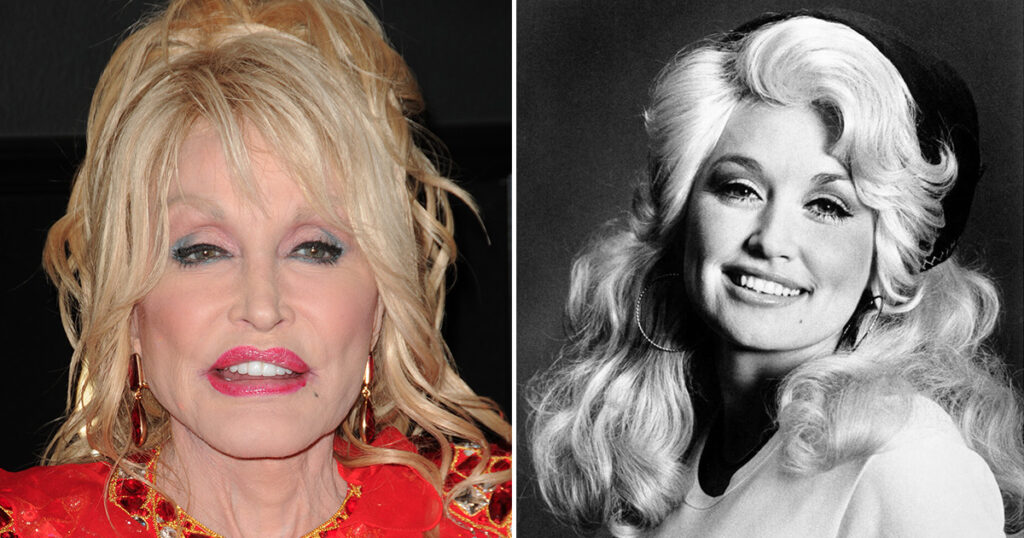
Her family later said that Parton died following a “brief battle with cancer.” The specific type of cancer was not publicly disclosed.
Long before becoming an international superstar, Dolly Rebecca Parton grew up in poverty in rural Tennessee. Born January 19, 1946, she was one of 12 children and spent her childhood near the Great Smoky Mountains.
Money was scarce, but music was everywhere.
Parton frequently credited her family with nurturing her creativity. Her mother sang, relatives played instruments, and Dolly began experimenting with music while she was still very young.
“Music was such a large part of our whole family.”
She remembered constantly picking up whatever instruments relatives left nearby, although the guitar quickly became especially important to her.
An uncle eventually gave her a small Martin guitar, something Parton later described as one of her treasures.
By the age of 10, she was performing on local television and radio programs around Knoxville. At 13, she appeared at the Grand Ole Opry.
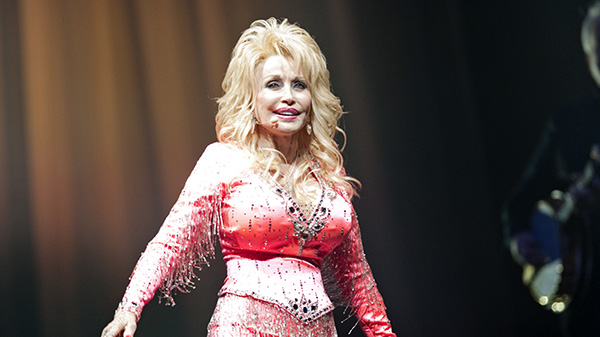
After graduating from high school, Parton moved to Nashville in 1964 at only 18 years old.
She arrived with enormous ambition.
“I had a dream. And I had a talent, I thought. And I really believed it was going to happen.”
It did.
Her work with Porter Wagoner on The Porter Wagoner Show helped introduce her to a national country audience. Their partnership produced several successful duets, while Parton increasingly established herself as a solo performer.
In 1971, “Joshua” became her first No. 1 country single.
Then came “Jolene.”
Parton later explained that the famous name came from a young fan with red hair and green eyes who approached her for an autograph. Dolly loved the sound of the girl’s name and immediately thought it belonged in a song.
The story itself, however, was inspired by a bank teller who Parton joked had become a little too interested in her husband.
“She got this terrible crush on my husband.”
Parton recalled teasing Carl about how frequently he seemed to be visiting the bank.
“Hell, you’re spending a lot of time at the bank. I don’t believe we’ve got that kind of money.”
That combination of humor, insecurity and unforgettable songwriting produced one of the most famous country songs ever recorded.
Other classics followed, including “Coat of Many Colors,” “The Seeker,” “Love Is Like a Butterfly” and “I Will Always Love You.”
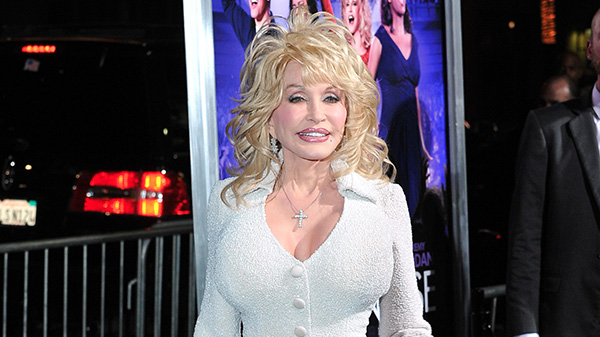
Parton’s career eventually expanded far beyond country radio. She starred alongside Jane Fonda and Lily Tomlin in the 1980 comedy 9 to 5, wrote its hit title song and subsequently appeared in numerous other movies.
She also launched Dollywood in Tennessee, transforming her success into a major business closely connected to the area where she grew up.
But alongside the fame was a remarkably private marriage.
Parton met Carl Dean in Nashville in 1964, shortly after arriving in the city. She was 18, while Dean was 21.
Dean later remembered the encounter clearly.
“My first thought was, ‘I’m gonna marry that girl.’ My second thought was, ‘Lord she’s good lookin’.’”
They married in May 1966 in Ringgold, Georgia.
Parton’s record label reportedly preferred that she wait because her career was beginning to take off, but the couple chose a quiet ceremony away from Tennessee publicity.
Her mother made her a simple white dress, bouquet and Bible.
“I can’t get married in a courthouse because I’ll never feel married.”
So the couple found a small Baptist church and exchanged vows there.
Dean remained almost completely outside the entertainment spotlight throughout their marriage. He attended one major industry event early in Parton’s career and reportedly made it clear afterward that he had no interest in making such appearances a habit.
That arrangement worked for them.
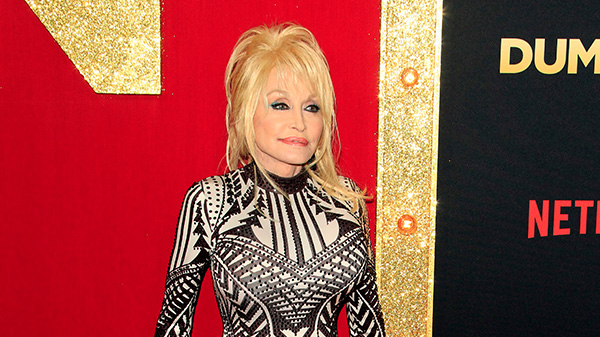
In 2016, they celebrated their 50th anniversary by renewing their vows privately before traveling back to Ringgold.
Parton frequently described Dean as her best friend.
“We’ve always been good buddies. We have a lot of fun and a lot of respect for one another.”
Dean died in 2025 after nearly six decades of marriage.
Despite their long relationship, Dolly and Carl never became parents.
Over the years, Parton gave several explanations for why motherhood wasn’t part of her life, and her perspective appeared to evolve with time.
She acknowledged that her career required extraordinary sacrifices.
“I’ve made sacrifices, but I think, like I said, I believe what I know I’m supposed to do.”
That included sacrificing time with family and friends and giving enormous portions of her life to work.
“You give up family and friends, vacation, and work without end, 24/7, 365, but you got to make the sacrifice.”
She and Dean sometimes wondered what their children might have looked like, suggesting that the absence of children wasn’t something they never considered.
But later in life, Parton developed another way of understanding it.
Speaking with Oprah Winfrey in 2020, she said that not having children gave her an independence that made her extraordinary career and charitable work possible.
“Since I had no kids, and my husband was pretty independent, I had freedom.”
She continued:
“So I think a big part of my whole success is the fact that I was free to work.”
Parton also framed the decision through her Christian faith.
“I didn’t have children because I believed that God didn’t mean for me to have kids so everybody’s kids could be mine.”
That belief became particularly meaningful through the Imagination Library.
Parton created the book-gifting program to send free books to young children, regardless of their family’s income. Her father, who had struggled with literacy, became a major inspiration for the initiative.
She was especially proud that he lived long enough to see the program begin succeeding.
“He loved it when the kids called me the Book Lady. He was prouder of that than saying that my daughter’s a star: ‘My daughter’s the Book Lady.’”
The program eventually expanded enormously, reaching children far beyond Tennessee.
That work gave Parton a way to nurture millions of young lives without ever becoming a mother herself.
In many ways, the answer to why Dolly Parton never had children cannot be reduced to a single sentence.
Her career demanded tremendous time and freedom. She and Carl built a marriage that worked without children. And eventually, Parton came to believe that her life had taken that path for a larger reason.
Rather than raising children of her own, she used her success to support generations of other people’s children.
For someone who once said that “everybody’s kids could be mine,” the Imagination Library may ultimately stand as one of the clearest expressions of how seriously she meant it.
Dolly Parton’s music will continue to be heard for generations, but so will the impact of the millions of books placed into children’s hands because she decided that success should be used to give something back.
{"post":110706,"page":2,"next":[{"id":110704,"title":"Dolly Parton, Beloved Country Music Icon and Philanthropist, Passes Away at Age 80","url":"https:\/\/new24.info\/110704"},{"id":110694,"title":"Dolly Parton, 80, Spent Her Final Days Out of the Public Eye \u2014 and a Source Close to Her Family Has Now Revealed Why","url":"https:\/\/new24.info\/110694"},{"id":110691,"title":"Dolly Parton\u2019s last public appearance has everyone saying the same thing","url":"https:\/\/new24.info\/110691"},{"id":110687,"title":"Dolly Parton chose the song she wanted at her funeral years before her death","url":"https:\/\/new24.info\/110687"},{"id":110685,"title":"A Mother\u0027s Secret, A Daughter\u0027s Flight, and the Long Road to Rebuilding Trust After a Year","url":"https:\/\/new24.info\/110685"},{"id":110682,"title":"The Enduring Legacy of Dolly Parton and the Mystery of Her Dollywood Time Capsule","url":"https:\/\/new24.info\/110682"},{"id":110679,"title":"A Young Student\u2019s Quiet Sacrifice Sparks a Wave of Compassion Throughout Her Entire School Community","url":"https:\/\/new24.info\/110679"},{"id":110673,"title":"3-Ingredient Slow Cooker Whole Chicken","url":"https:\/\/new24.info\/110673"},{"id":110669,"title":"Garden Vegetable Spread","url":"https:\/\/new24.info\/110669"},{"id":110667,"title":"The Hidden Letter Beneath the Roses That Changed Everything for My Ex-Husband\u2019s New Life","url":"https:\/\/new24.info\/110667"},{"id":110662,"title":"New Details Emerge About Dolly Parton\u2019s Secret Hospital Visit Just Days Before Her Death","url":"https:\/\/new24.info\/110662"},{"id":110656,"title":"Dolly Parton Dies at 80 \u2014 Inside Her Heartbreaking Final Days, Last Health Update and Family\u2019s Emotional Goodbye","url":"https:\/\/new24.info\/110656"},{"id":110653,"title":"The Ring You Pick Will Reveal Your Truest Trait","url":"https:\/\/new24.info\/110653"},{"id":110648,"title":"A Rude Woman Took the Window Seat I\u0027d Paid for My 6-Year-Old Daughter With Autism \u2013 So the Pilot Taught Her a Lesson She\u0027d Never Forget","url":"https:\/\/new24.info\/110648"},{"id":110644,"title":"After Ten Years of Loss, We Welcomed Our Miracle Baby \u2013 But When My Husband Saw the Birthmark on Her Shoulder, He Went Pale and Whispered, \u0027No... That\u0027s Impossible\u0027","url":"https:\/\/new24.info\/110644"},{"id":110631,"title":"Dolly Parton, Country Music Legend, Dies at 80 \u2014 Details and Family Statement","url":"https:\/\/new24.info\/110631"},{"id":110628,"title":"Country Music Legend Dolly Parton Dies at 80","url":"https:\/\/new24.info\/110628"},{"id":110625,"title":"The Letter Beneath The Roses That Undid My Ex-Husband\u2019s Wife The Very Next Day","url":"https:\/\/new24.info\/110625"},{"id":110623,"title":"Addressing False Reports Regarding the Well-Being of Country Music Icon Dolly Parton","url":"https:\/\/new24.info\/110623"},{"id":110620,"title":"Wheel of Fortune Contestant Delinda Rood Secures Significant Bonus Round Victory in Recent Appearance","url":"https:\/\/new24.info\/110620"}]}