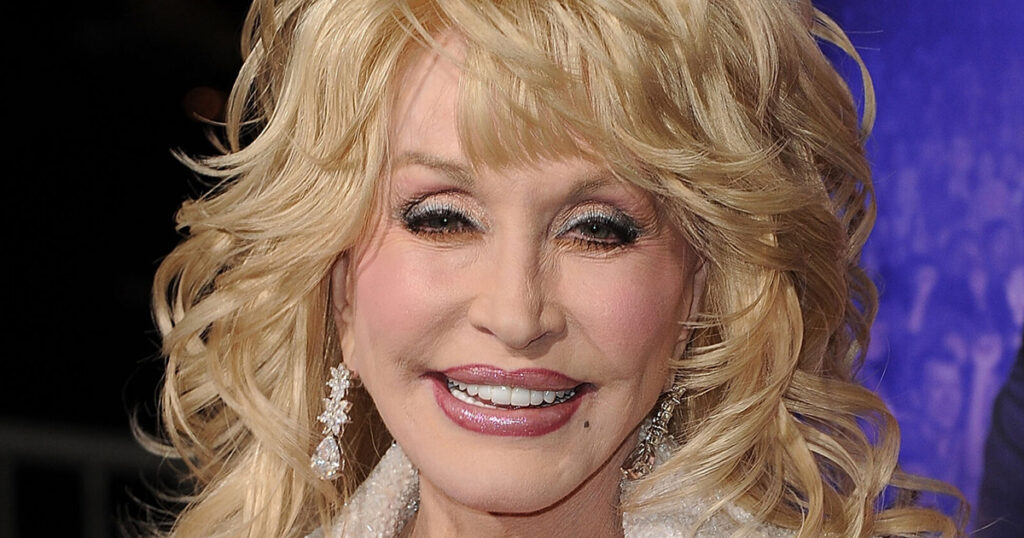
The singer had already chosen the song she hoped would be performed at her funeral — and surprisingly, it wasn’t one of her own legendary hits.
Following Parton’s death at 80, tributes have poured in for the woman whose music, philanthropy and unmistakable personality made her one of country music’s most enduring icons. President Donald Trump has also ordered U.S. flags lowered in her honor.
Although Parton’s voice may now be silent, songs including “Jolene,” “9 to 5,” “Coat of Many Colors” and “I Will Always Love You” remain part of a musical legacy that spans generations.
Dolly Parton Had Already Thought About Her Final Goodbye
During a 2014 interview with Entertainment Weekly, Parton discussed what music might someday accompany her funeral.
She acknowledged that people would probably associate her farewell with “I Will Always Love You,” particularly because of the powerful memories she connected with Whitney Houston’s version of the song.
“I’m sure they’ll be playing ‘I Will Always Love You’ when I die, just like they did with Whitney Houston.”
Parton recalled becoming deeply emotional when Houston’s recording was played during the late singer’s funeral.
<blockquote>“When they picked her coffin up and started in on that song, I started to cry, and I thought, ‘Oh my Lord.’ That’s when it hit me that she was really gone.”</blockquote>
But when it came to the song Parton personally wanted for her own funeral, she chose something different.
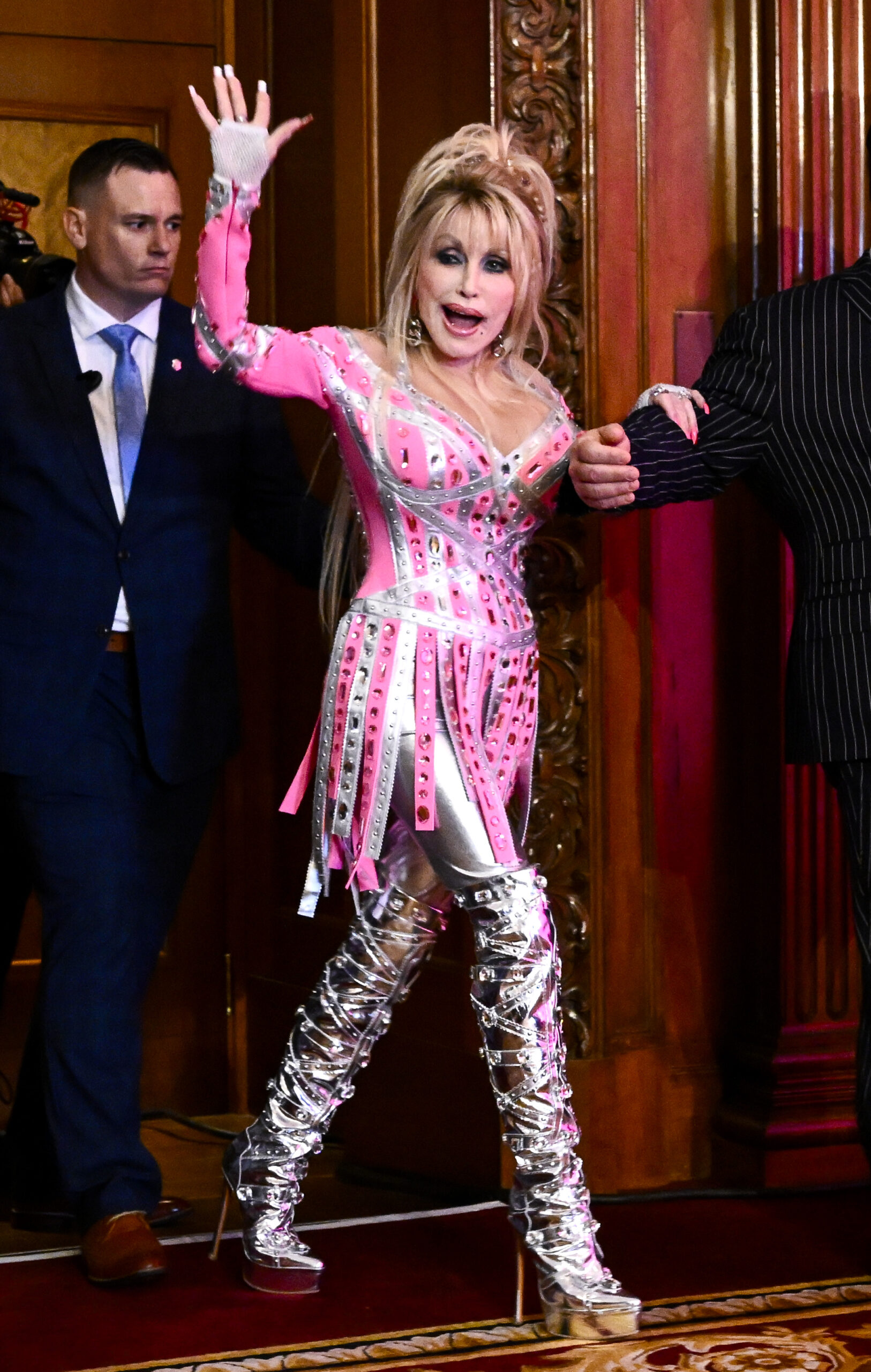
The Gospel Song That Meant Everything to Her
Parton named the traditional country-gospel hymn “If We Never Meet Again” as the song she hoped would accompany her final farewell.
“There’s a song called ‘If We Never Meet Again.’”
She explained that the hymn centers on the Christian hope of being reunited with loved ones after death.
<blockquote>“It’s an old country–gospel church song that talks about if we never meet again this side of heaven, I will meet you on that beautiful shore.”</blockquote>
Written by Southern Gospel songwriter Albert E. Brumley, the hymn carried an especially powerful family connection for Parton.
It had been her father Robert Lee Parton’s favorite song.
When he died in 2000, the family performed it at his funeral.
“That was my daddy’s favorite. We did sing it at his funeral, and I would like it to be sung at mine.”
Following Parton’s own death, those words have taken on a poignancy they didn’t carry when she first shared them publicly.
Her Tennessee Childhood Never Left Her
Despite becoming an international superstar, Parton repeatedly returned to the story of her humble beginnings in Tennessee’s Smoky Mountains.
She was one of 12 children born to Robert Lee and Avie Lee Parton and grew up in a small cabin without many of the conveniences her future success would eventually provide.
Yet music was everywhere.
As a child, Parton remembered standing on the porch of the family’s Locust Ridge home and pretending she was already performing for an audience, using a tobacco stick as part of her homemade microphone.
Decades later, she described those childhood performances as the beginning of the enormous dream that eventually carried her to Nashville and beyond.
“I was dreaming of being on Grand Ole Opry one day, or getting out to sing in front of people — and that little microphone just brought me all the way to the top of the world from the top of the Smoky Mountains.”
She eventually achieved far more than the little girl on that porch could have imagined.
But Parton’s upbringing also influenced another major part of her legacy: giving back.
A Legacy That Extended Far Beyond Music
In 1988, Parton established the Dollywood Foundation in Sevier County, Tennessee. Its early initiatives focused heavily on education and encouraging young people to remain in school.
Then came one of her most celebrated philanthropic projects.
Parton launched the Imagination Library in 1995, inspired partly by her father, who had been unable to read.
The concept was remarkably simple: provide children with free books during their earliest years.
What began as a program serving children around Parton’s Tennessee hometown eventually expanded dramatically, reaching families far beyond the United States. By 2025, the initiative had reportedly distributed more than 304 million books.
Her charitable efforts extended into numerous other areas.
Through Dollywood’s relationship with the American Eagle Foundation, Parton supported conservation efforts involving bald eagles and other birds of prey.
When devastating wildfires struck Tennessee in 2016, she created the My People Fund, which provided direct financial assistance to families whose homes had been destroyed.
Parton also developed a longstanding relationship with Vanderbilt University Medical Center.
Among her contributions were donations supporting children’s healthcare and pediatric infectious-disease research. Her $1 million contribution toward coronavirus research at Vanderbilt also supported research connected with development of the Moderna COVID-19 vaccine.
She continued responding when communities faced natural disasters, contributing to relief efforts following floods and Hurricane Helene and supporting organizations including the Salvation Army.
A Final Song About Faith, Family and Reunion
For someone who wrote and recorded countless songs, Parton’s choice for her own funeral says something deeply personal about what remained important to her.
She could have selected one of the songs that made her famous.
Instead, she chose the hymn her father loved.
It connected her childhood, her family and her Christian faith with the hope that separation wasn’t permanent.
That sentiment also reflected themes that appeared throughout Parton’s life and music: home, love, loss, faith and the people who remain with us even after they’re gone.
Long before her family faced the painful responsibility of saying goodbye to her, Dolly Parton had already explained how she hoped that moment would sound.
And rather than choosing a song celebrating the extraordinary career she built, she chose one that reminded her of her father — and of the hope that loved ones separated in this life might someday meet again.
{"post":110687,"page":2,"next":[{"id":110685,"title":"A Mother\u0027s Secret, A Daughter\u0027s Flight, and the Long Road to Rebuilding Trust After a Year","url":"https:\/\/new24.info\/110685"},{"id":110682,"title":"The Enduring Legacy of Dolly Parton and the Mystery of Her Dollywood Time Capsule","url":"https:\/\/new24.info\/110682"},{"id":110679,"title":"A Young Student\u2019s Quiet Sacrifice Sparks a Wave of Compassion Throughout Her Entire School Community","url":"https:\/\/new24.info\/110679"},{"id":110673,"title":"3-Ingredient Slow Cooker Whole Chicken","url":"https:\/\/new24.info\/110673"},{"id":110669,"title":"Garden Vegetable Spread","url":"https:\/\/new24.info\/110669"},{"id":110667,"title":"The Hidden Letter Beneath the Roses That Changed Everything for My Ex-Husband\u2019s New Life","url":"https:\/\/new24.info\/110667"},{"id":110662,"title":"New Details Emerge About Dolly Parton\u2019s Secret Hospital Visit Just Days Before Her Death","url":"https:\/\/new24.info\/110662"},{"id":110656,"title":"Dolly Parton Dies at 80 \u2014 Inside Her Heartbreaking Final Days, Last Health Update and Family\u2019s Emotional Goodbye","url":"https:\/\/new24.info\/110656"},{"id":110653,"title":"The Ring You Pick Will Reveal Your Truest Trait","url":"https:\/\/new24.info\/110653"},{"id":110648,"title":"A Rude Woman Took the Window Seat I\u0027d Paid for My 6-Year-Old Daughter With Autism \u2013 So the Pilot Taught Her a Lesson She\u0027d Never Forget","url":"https:\/\/new24.info\/110648"},{"id":110644,"title":"After Ten Years of Loss, We Welcomed Our Miracle Baby \u2013 But When My Husband Saw the Birthmark on Her Shoulder, He Went Pale and Whispered, \u0027No... That\u0027s Impossible\u0027","url":"https:\/\/new24.info\/110644"},{"id":110631,"title":"Dolly Parton, Country Music Legend, Dies at 80 \u2014 Details and Family Statement","url":"https:\/\/new24.info\/110631"},{"id":110628,"title":"Country Music Legend Dolly Parton Dies at 80","url":"https:\/\/new24.info\/110628"},{"id":110625,"title":"The Letter Beneath The Roses That Undid My Ex-Husband\u2019s Wife The Very Next Day","url":"https:\/\/new24.info\/110625"},{"id":110623,"title":"Addressing False Reports Regarding the Well-Being of Country Music Icon Dolly Parton","url":"https:\/\/new24.info\/110623"},{"id":110620,"title":"Wheel of Fortune Contestant Delinda Rood Secures Significant Bonus Round Victory in Recent Appearance","url":"https:\/\/new24.info\/110620"},{"id":110617,"title":"Beyond the Ink: Understanding the Nuanced Reality of Three-Dot Tattoos","url":"https:\/\/new24.info\/110617"},{"id":110614,"title":"Clarifying the Truth Regarding the Health and Well-being of Country Music Icon Dolly Parton","url":"https:\/\/new24.info\/110614"},{"id":110611,"title":"I Tested the Avocado Skin Furniture Hack for 14 Days: Here Is the Truth","url":"https:\/\/new24.info\/110611"},{"id":110605,"title":"Do You Wake Up Between 3 and 5 in the Morning? \u0022It Could Be a Sign of Spiritual Awakening.\u0022","url":"https:\/\/new24.info\/110605"}]}