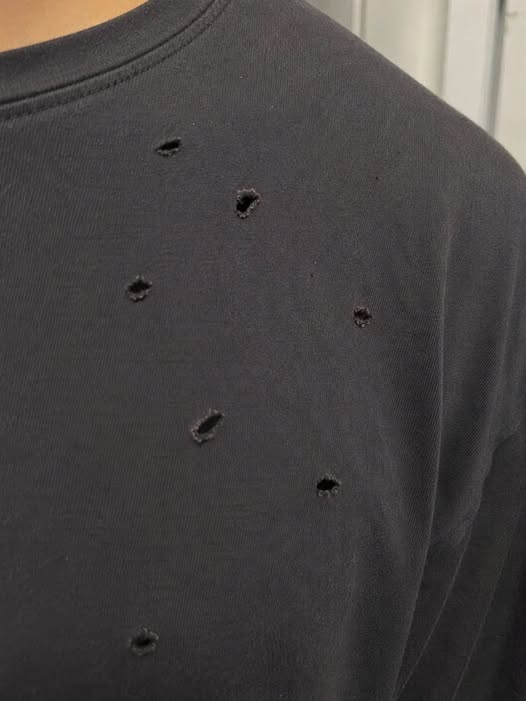
at the physical environment where your clothing spends its time. The most frequent culprit behind those tiny, maddening perforations is not a biological pest at all, but rather the simple, repetitive friction against hard surfaces. Consider where you typically wear your clothes. If you frequently lean against kitchen counters, metal belt buckles, zippers, or even the rough edges of a desk, you are likely subjecting the fabric to constant, microscopic stress that eventually weakens the fibers until they snap.
This type of damage is particularly common around the lower front hem of shirts. This area is the primary point of contact when you lean against a countertop while cooking, washing dishes, or working at a computer. The fabric gets pinched and rubbed against the hard edge of the surface, creating a localized point of wear. Over time, these fibers fray and eventually give way, leaving behind a small hole that might look like a bite mark but is actually a result of mechanical abrasion. Recognizing this pattern is the first step in protecting your clothing from further damage.
Beyond your daily environment, the laundry process itself can be a significant source of wear and tear. Your washing machine and dryer are mechanical environments that can be quite harsh on delicate or even mid-weight fabrics. When you wash clothes, zippers, metal buttons, and hooks on other garments can snag or rub against softer items during the spin cycle. If you do not fasten these closures before tossing them into the machine, they act like tiny saws, catching on fibers and pulling them loose. To minimize this, always zip up zippers, button buttons, and close hooks before placing items into the wash. Additionally, using mesh laundry bags for your more delicate pieces can provide a necessary barrier against the agitator or the drum walls.
Another often overlooked aspect of laundry damage is the condition of the dryer drum. Over time, the interior of a dryer can develop small nicks, burrs, or rough spots, especially near the lint trap or along the seams where the drum meets the housing. If a garment gets caught in these small imperfections during the drying cycle, it can be pulled or torn. It is a good practice to periodically run your hand carefully along the inside of your dryer drum to check for any sharp edges. If you find a snag, you can often smooth it out with a fine-grit sandpaper or cover it with a bit of specialized tape to prevent further snagging.
While friction and laundry equipment are the most frequent causes, we cannot entirely dismiss the possibility of fabric-eating insects. Moths and carpet beetles are indeed attracted to natural fibers like wool, silk, and cashmere. However, insect damage usually looks different from mechanical wear. Insect holes are often irregular, scattered across the garment, and frequently found in hidden areas like collars, underarms, or folds where the fabric is undisturbed. If you suspect pests, inspect your closet for signs of larvae or webbing. If you do not see these, it is highly probable that your issue is mechanical and can be solved by changing your habits or protecting your clothes from rough surfaces.
To prevent future damage, start by evaluating your daily habits. If you lean against counters, try to be mindful of the contact point, or consider wearing an apron to create a protective layer between your shirt and the hard surface. When it comes to laundry, consistency is key. Sort your clothes by weight and fabric type, and never overload the machine, as this increases the friction between garments. Using a gentler wash cycle and lower heat settings in the dryer can also extend the lifespan of your clothes by reducing the mechanical stress placed on the fibers during the cleaning process.
Storage also plays a significant role in maintaining the integrity of your wardrobe. Ensure that your clothes are clean before storing them for the season, as even invisible traces of perspiration or food can attract pests. Use breathable garment bags for items you do not wear often, and avoid overcrowding your closet, which allows air to circulate and reduces the likelihood of items rubbing against each other. If you store items in plastic bins, ensure they are completely dry to prevent mildew, which can also weaken fibers over time.
Ultimately, solving the mystery of holes in your clothing is about observation and small adjustments. By identifying the specific locations of the damage, you can determine whether the cause is friction, laundry habits, or pests. Most of the time, simply being aware of how your clothing interacts with your environment is enough to stop the damage in its tracks. With a few simple changes to how you handle, wash, and store your wardrobe, you can keep your favorite pieces looking their best for years to come, ensuring that your clothes remain a source of comfort rather than frustration. By taking these practical, proactive steps, you can confidently protect your garments from further wear and tear, giving you peace of mind every time you get dressed.
{"post":110522,"page":2,"next":[{"id":110519,"title":"The Midnight Panic: How a Simple Kitchen Scrap Triggered a Night of Irrational Terror","url":"https:\/\/new24.info\/110519"},{"id":110516,"title":"Remembering the Disney Music Icon Whose Melodies Defined the Sound of Childhood for Generations","url":"https:\/\/new24.info\/110516"},{"id":110511,"title":"With heavy hearts, we announce the passing of this beloved actress who graced our screens for decades","url":"https:\/\/new24.info\/110511"},{"id":110508,"title":"With heavy hearts, we announce the passing of a beloved star. She will be deeply missed but never forgotten","url":"https:\/\/new24.info\/110508"},{"id":110506,"title":"My Husband Left Me Injured on the Kitchen Floor \u2014 Then Our Five-Year-Old Called the One Person He Trusted","url":"https:\/\/new24.info\/110506"},{"id":110504,"title":"The Morning Encounter That Forever Changed How I See the Quiet Soil Beneath My Feet","url":"https:\/\/new24.info\/110504"},{"id":110502,"title":"The Morning Discovery That Transformed My Understanding of the Living Earth Beneath My Feet","url":"https:\/\/new24.info\/110502"},{"id":110499,"title":"A Forensic Expert Faces Her Estranged Parents in a High-Stakes Probate Courtroom Battle Over Grandfather\u2019s Fortune","url":"https:\/\/new24.info\/110499"},{"id":110493,"title":"Discovering Hidden Family Secrets Changed Everything About My Marriage Forever Today","url":"https:\/\/new24.info\/110493"},{"id":110489,"title":"Why My Husband Demanded A Separate Room During Our Twentieth Anniversary Trip","url":"https:\/\/new24.info\/110489"},{"id":110485,"title":"Uncovering Hidden Truths About My Daughter Brought Ultimate Justice And Healing","url":"https:\/\/new24.info\/110485"},{"id":110481,"title":"Husband Plots To Give Away My Apartment But Meets Instant Karma","url":"https:\/\/new24.info\/110481"},{"id":110477,"title":"Greedy Son In Law Demands Payment But Quickly Learns An Unforgettable Lesson","url":"https:\/\/new24.info\/110477"},{"id":110473,"title":"Defending My Forever Home From Entitled Relatives Changed My Life Completely","url":"https:\/\/new24.info\/110473"},{"id":110469,"title":"How One Mother Saved Her Daughter From A Dangerous Marriage Trap","url":"https:\/\/new24.info\/110469"},{"id":110466,"title":"The Enduring Charm and Hidden Production Quirks of the Iconic Gilligan\u2019s Island","url":"https:\/\/new24.info\/110466"},{"id":110463,"title":"Reflecting on the Professional Legacy and Life of a Beloved Television Actor","url":"https:\/\/new24.info\/110463"},{"id":110456,"title":"Fans Reflect on the Remarkable Career of a Beloved Star-","url":"https:\/\/new24.info\/110456"},{"id":110451,"title":"Husband Abandoned Our Newborn Twins But Regretted His Costly Vacation Choice","url":"https:\/\/new24.info\/110451"},{"id":110447,"title":"Silent Debt Across the Street","url":"https:\/\/new24.info\/110447"}]}