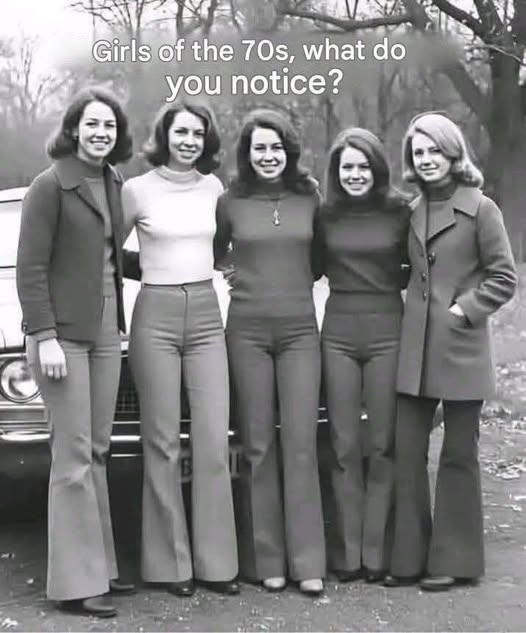
dramatically over the intervening decades. In that era, the visual language of personal style was remarkably understated yet intentional. One immediately notices the prevalence of slim trousers, crisp polo shirts, and simple, well-tailored coats. These garments were not subject to the rapid, ephemeral cycles of fast fashion that dominate today; instead, they represented a practical, enduring approach to self-expression. Complementing this aesthetic were the natural hairstyles of the time, which favored organic textures and longer, flowing cuts over the highly processed or stylized looks that would define later generations. There was a refreshing lack of artifice in the way people presented themselves, a quality that remains strikingly visible in the grain of the film.
Beyond the sartorial choices, the most profound observation one can make about these images is the conspicuous absence of the digital devices that now act as constant intermediaries in our social lives. There are no smartphones, tablets, or glowing screens to fracture the focus of those captured in the frame. In the 1970s, social interaction was an unmediated experience. When people gathered, their attention was fully committed to the present moment, to the act of conversation, and to the shared enjoyment of music or simple companionship. Without the persistent pull of notifications or the urge to document every second for a virtual audience, the social habits of the decade were characterized by a singular, focused presence that feels increasingly rare in our contemporary, hyper-connected landscape.
The technology of photography itself played a significant role in shaping this culture of intentionality. Because film was a finite resource, every shutter click was a deliberate decision rather than an impulsive reflex. Photographers could not instantly review their work on a screen or capture dozens of near-identical frames to find the perfect angle. This limitation necessitated a level of patience and foresight that fundamentally altered the relationship between the subject and the lens. Consequently, a photograph from this period often carries a weight of permanence; it was destined for a physical album, meant to be held and revisited, rather than scrolled past in a fleeting digital feed.
This era of photography turned the act of capturing life into a ritual. Because the process involved waiting for film to be developed, there was a period of anticipation that modern digital instantaneity has largely erased. This delay allowed for a unique kind of reflection, where the final product was not just a record of an event, but a physical artifact of a specific time. These images act as windows into the mundane habits of the past, revealing how people occupied their time when they were not tethered to a global network. It is in these quiet, unposed moments that the true character of the decade is most clearly expressed.
While it is easy to romanticize the past, it is equally important to acknowledge that every generation navigates its own unique set of challenges and advancements. Modern technology has undeniably expanded our ability to connect across vast distances and preserve our memories with unprecedented ease. However, these old photographs serve as a poignant reminder of how quickly the ordinary habits of life can evolve. What we consider essential today—our constant connectivity, our digital archives, and our rapid-fire communication—might one day appear as foreign to future observers as the analog world of the 1970s appears to us now.
To better appreciate these historical snapshots, consider the value of slowing down your own documentation habits. When you take a photograph, treat the moment with the same level of care that a film photographer once did. Focus on the composition, the light, and the genuine emotion of the people involved, rather than the quantity of images captured. By occasionally stepping away from the screen and prioritizing face-to-face interaction, you can reclaim some of that intentionality that defined the 1970s, ensuring that your own memories are anchored in meaningful experience rather than just digital storage.