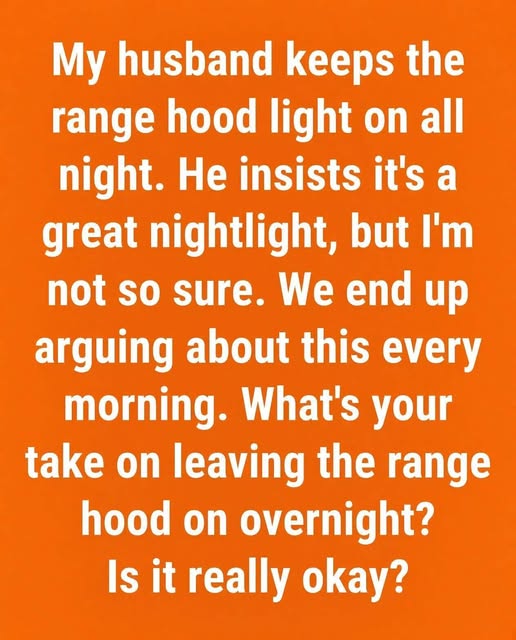
and the technical specifications of your lighting hardware. Range hood lights are primarily designed for stovetop illumination during cooking, serving as a critical safety feature that allows users to monitor ingredients and maintain a clean workspace. In modern kitchens, the shift toward LED technology has significantly changed the calculus of leaving these lights on. Modern LED bulbs are energy-efficient and produce less heat than older halogen or incandescent bulbs, which historically posed a fire risk if left unattended for extended periods or caused damage to plastic housing components.
The primary benefits of maintaining this soft glow are rooted in safety and accessibility. For many households, the kitchen serves as a central hub that requires navigation during late-night hours. Improved visibility for late-night kitchen access can prevent accidental trips, spills, or collisions with furniture. This is particularly relevant in homes with children or older adults who may need to reach the kitchen for a glass of water or a snack without the jarring experience of turning on bright, overhead ceiling fixtures. By providing a subtle, localized light source, range hoods offer a sense of comfort and security that can make navigating a dark home significantly less stressful.
However, there are tangible drawbacks to this practice that should not be overlooked. Even with energy-efficient bulbs, continuous use adds to cumulative electricity consumption over time. While the wattage of a single LED is minimal, running it for eight hours every night results in thousands of hours of operation annually, which inevitably shortens the total lifespan of the bulb. Furthermore, in open-plan homes, the light emitted from the range hood can be surprisingly intrusive. This light pollution can travel into adjacent living areas or bedrooms, potentially disturbing those who are sensitive to light or disrupting the natural circadian rhythms of household members. If the kitchen remains unused throughout the night, the light serves no functional purpose and represents a small but avoidable waste of resources. It is also worth noting that some older range hood models may lack the thermal management required for such extended duty cycles, potentially leading to premature failure of the internal wiring or the switch mechanism itself.
When considering the impact on your home, it is helpful to assess whether your range hood is the most appropriate tool for the job. If your goal is safety or convenience, there are several alternatives that may strike a better balance between utility and efficiency. Motion-sensor lights are an excellent solution, as they provide illumination only when someone is physically present in the kitchen, ensuring that energy is never wasted when the room is empty. These devices can be installed under cabinets or near baseboards to provide low-level guidance without the need for overhead or hood lighting.
Plug-in night lights are another effective, low-cost alternative. These devices are designed specifically for long-term, low-intensity use and often feature sensors that automatically turn the light off during daylight hours. By moving the light source away from the stove and closer to the floor or high-traffic pathways, you can achieve the same safety benefits without the potential drawbacks of leaving a high-intensity appliance light running. For those who prefer to keep the range hood light, utilizing smart bulbs with scheduling capabilities can offer a middle ground. These bulbs allow you to automate the lighting so that it turns on at a specific time in the evening and shuts off automatically before dawn, ensuring that you are not paying for light during hours when the house is fully asleep. This automated approach effectively mitigates the risk of leaving the lights on indefinitely while still granting you the desired safety and comfort during the evening hours.
Ultimately, the choice depends on your household habits, the layout of your home, and how much nighttime visibility is truly required for your family members. If you find that the range hood light is the only thing preventing a midnight accident, the minor energy cost is likely a justified expense. However, if you are simply leaving it on out of habit, exploring more targeted lighting solutions will likely yield better results. Range hood lights are designed for cooking, but when used thoughtfully—or replaced by more efficient, automated options—they can still support safety and comfort without unnecessary waste. By evaluating your specific needs, you can maintain a safe home environment while optimizing your energy usage and extending the life of your kitchen appliances through practical, intentional, and well-considered lighting choices.