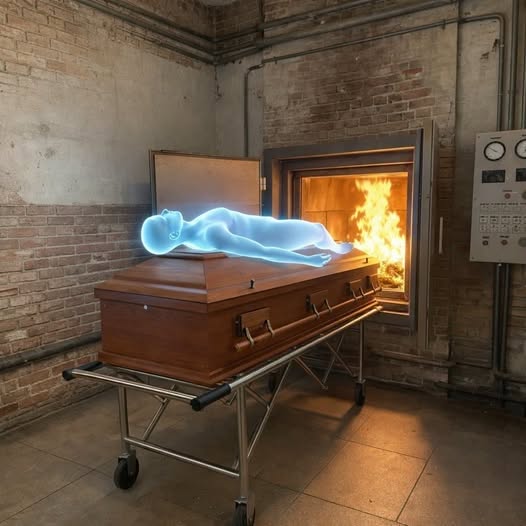
For some believers, the concern is expressed even more directly: is cremation a sin? The Bible provides many examples of burial, but it does not contain a clear command explicitly forbidding cremation. This distinction is important when considering what Scripture teaches and what developed historically as Christian tradition.
Burial was unquestionably the customary practice among many biblical figures. Abraham purchased a burial place for Sarah and was later buried there himself. Other prominent figures in Scripture were also buried, helping establish a strong biblical association between death and placing the body in the earth.
For Christians, however, the most important example is Jesus Christ. Following His crucifixion, Jesus’ body was placed in a tomb. His burial and resurrection became central to the Christian understanding of death—not as the final end, but as something ultimately overcome through resurrection.
The apostle Paul also used the imagery of something being sown before being raised, writing about the resurrection of the dead in 1 Corinthians 15. This symbolism helped reinforce the Christian tradition of burial for centuries. A body placed into the earth could represent a seed awaiting resurrection and transformation.
Still, biblical precedent for burial is not necessarily the same as a biblical prohibition against cremation.
Scripture contains references to bodies being burned, sometimes following warfare, judgment, or extraordinary circumstances. However, these passages do not establish a universal command declaring that cremation itself is sinful. Because there is no straightforward biblical prohibition, many Christian theologians consider cremation an issue of personal conscience rather than salvation or essential doctrine.
Another concern comes from the biblical teaching that the human body is the “temple of the Holy Spirit.” Some Christians therefore believe burial demonstrates greater reverence for the body and more closely follows historical Christian practice. From this perspective, cremation may feel uncomfortable because deliberately burning human remains can appear inconsistent with treating the body with dignity.
Other Christians respond that dignity depends largely on intention and treatment rather than whether the body eventually becomes ashes through cremation or decomposes naturally after burial. Both processes ultimately result in the physical body returning to the elements from which it came.
The doctrine of resurrection also raises an important theological point. Christianity does not teach that God requires an intact earthly body in order to resurrect someone. Throughout history, countless people have died in circumstances in which their physical remains could not be preserved. Bodies naturally decay, while others have been lost at sea, destroyed by fire, or otherwise reduced beyond recognition.
If Christian belief holds that God possesses the power to raise the dead, that power cannot logically depend upon whether someone’s remains were buried or cremated.
Historically, Christians nevertheless had significant reasons for preferring burial. In parts of the ancient world, cremation was associated with religious traditions very different from Christianity. Early Christians sometimes deliberately chose burial as an expression of their distinctive belief in bodily resurrection.
That historical context helps explain why cremation remained controversial among Christians long after the biblical period.
Today, however, choosing cremation usually carries a very different meaning. Families may select it because traditional funerals and cemetery plots are expensive, because relatives live far apart, because burial space is limited, or because the deceased personally requested it. In such circumstances, cremation generally does not represent rejection of Christian teaching.
Many major Christian traditions therefore permit cremation, although individual denominations differ regarding how cremated remains should subsequently be treated. Some churches encourage families to bury or respectfully place ashes in a permanent location rather than scattering them or keeping them casually.
What remains central across Christianity is that salvation is not determined by funeral arrangements. Christian teaching places its hope in Christ and the resurrection rather than in preserving the physical condition of a person’s earthly remains.
For believers deciding between burial and cremation, the choice can therefore involve Scripture, family traditions, personal conscience, church teaching, finances, and the wishes of the deceased. Christians who strongly value traditional burial can continue choosing it as a meaningful expression of faith without necessarily concluding that those choosing cremation have sinned.
Likewise, Christians who choose cremation can approach the decision with reverence, treating the deceased and their remains with dignity while maintaining complete confidence in the resurrection.
Ultimately, burial and cremation represent different ways of caring for a body after death, but neither determines a person’s eternal destiny. The heart of Christian hope rests somewhere far deeper: in the belief that death itself does not have the final word.
Whether a person’s earthly remains rest beneath a gravestone or are reduced to ashes, Christian faith looks beyond both decay and fire toward the same promise—the resurrection and eternal life through Jesus Christ.
{"post":110139,"page":2,"next":[{"id":110135,"title":"Aussie rockstar, 30, has three months left to live after bowel cancer diagnosis","url":"https:\/\/new24.info\/110135"},{"id":110121,"title":"Nicole Kidman, 59, Shows Off Natural Curly Hair on Iceland Family Vacation Aboard a Luxury Yacht \u2014 Photos","url":"https:\/\/new24.info\/110121"},{"id":110116,"title":"\u0027Sister Wives\u0027 Star Janelle Brown Goes Public with New Boyfriend Pete \u2014 and Christine Brown Has Already Weighed In \u2014 Photos","url":"https:\/\/new24.info\/110116"},{"id":110113,"title":"My Sister Charged Me $2,260 for My Surprise Party \u2013 I Was Ready to Pay Until She Dropped Something I Wasn\u0027t Meant to See","url":"https:\/\/new24.info\/110113"},{"id":110110,"title":"Two Days Before the School Year Started, My 12-Year-Old Son Called and Said He Wasn\u0027t Coming Home \u2013 What I Overheard at His Dad\u0027s House Left Me Frozen","url":"https:\/\/new24.info\/110110"},{"id":110107,"title":"We Finally Paid off Our Mortgage, and My MIL Said She Could Start Making the House Her Own \u2013 The Next Morning, She Ran to My Husband, Crying, \u0027You Have to Stop Her!\u0027","url":"https:\/\/new24.info\/110107"},{"id":110103,"title":"My Twin Sister Passed Away in a Car Crash Ten Years Ago \u2013 Last Monday, a Dentist\u0027s Office Called and Asked Me to Pick Her Up","url":"https:\/\/new24.info\/110103"},{"id":110100,"title":"With heavy hearts, we share the heartbreaking news that this legendary actress has passed away at the age of 100.","url":"https:\/\/new24.info\/110100"},{"id":110097,"title":"This Image Has People Perplexed. Can You Solve It?","url":"https:\/\/new24.info\/110097"},{"id":110095,"title":"Frank Beard, the Steady Heartbeat of ZZ Top, Passes Away at Age 77","url":"https:\/\/new24.info\/110095"},{"id":110092,"title":"The Life and Legal Challenges of Redmond O\u0027Neal: A Son\u0027s Journey Under the Public Eye","url":"https:\/\/new24.info\/110092"},{"id":110088,"title":"My Husband Took Our Three Sons on a Fishing Trip, and None of Them Came Back \u2013 Six Years Later, My Oldest Daughter Found His Old Phone and Said, \u0027Mom, I Know What Really Happened Back Then\u0027","url":"https:\/\/new24.info\/110088"},{"id":110083,"title":"Military Mother Returns To Family Funeral Revealing Ten Years Of Secrets","url":"https:\/\/new24.info\/110083"},{"id":110079,"title":"Hidden Medical Data Exposed A Massive Corporate Coverup And Saved My Life","url":"https:\/\/new24.info\/110079"},{"id":110075,"title":"Why My Dying Wealthy Father Set An Unbelievable Trap For Me","url":"https:\/\/new24.info\/110075"},{"id":110071,"title":"Raising Six Children Led To Uncovering A Decade Old Family Secret","url":"https:\/\/new24.info\/110071"},{"id":110067,"title":"My Husband Took A Vacation While Our Newborn Fought For His Life","url":"https:\/\/new24.info\/110067"},{"id":110063,"title":"Selling My Childhood Home Revealed My Husband Was Faking His Terminal Illness","url":"https:\/\/new24.info\/110063"},{"id":110060,"title":"Legendary Radio and Film Actress Peggy Webber Passes Away at the Age of 100","url":"https:\/\/new24.info\/110060"},{"id":110057,"title":"A Mother\u0027s Reckoning: The Unexpected Sacrifice That Changed Everything","url":"https:\/\/new24.info\/110057"}]}