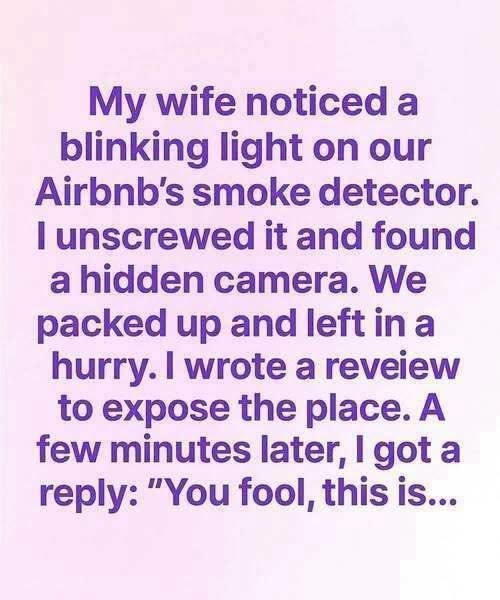
that had been surreptitiously installed to monitor their private movements. Faced with this unsettling discovery, the couple chose to leave the property immediately, prioritizing their physical safety over the inconvenience of an abrupt departure. The decision to vacate was swift, yet the psychological impact of the intrusion lingered. Shortly after leaving, they posted a negative review detailing the discovery, hoping to alert future guests to the potential danger. The host’s response was immediate and alarming, characterizing the device as a mere transmitter for a private security system while issuing a veiled, threatening remark that someone would soon be coming to retrieve it. This escalation transformed a simple discovery into a source of genuine fear, forcing the couple to reconsider their surroundings with newfound suspicion.
Upon reviewing photographs taken inside the rental, the narrator identified a second, equally concerning anomaly: a small, faint red light concealed behind a curtain. This second discovery suggested a more pervasive surveillance setup than they had initially feared, potentially involving tracking or recording equipment positioned to capture activity in multiple areas of the unit. The presence of these devices, combined with the host’s hostile and evasive communication, created an environment of extreme anxiety. Recognizing that they were no longer safe, the couple drove several hours away from the location, eventually finding refuge in a traditional hotel where they could finally feel a sense of privacy and security.
The following day, the couple formally reported the incident to local law enforcement. While the legal process can be slow and complex, documenting the encounter with the authorities was a necessary step to ensure that the incident was officially recorded and to potentially prevent future guests from suffering a similar violation. This experience serves as a stark reminder that the trust placed in property hosts is not always reciprocated with integrity. Travelers must remain vigilant, understanding that the convenience of digital booking platforms does not guarantee the safety or privacy standards one might expect in a professional hospitality setting.
The incident highlights a growing concern regarding the misuse of technology in private spaces. While many hosts operate with honesty and respect for guest privacy, the potential for bad actors to exploit the lack of oversight in residential rentals is a reality that cannot be ignored. Travelers should adopt a proactive approach to their own security. Upon arrival, a quick but thorough sweep of the living space can be an effective deterrent or a means of early detection. Pay close attention to common household items that are often used as camouflage for recording equipment, such as smoke detectors, clock radios, wall chargers, and decorative items. If a device appears out of place, has an unusual power source, or displays unexpected lights, it warrants a closer look.
If you suspect that you have found a recording device, do not attempt to dismantle or tamper with it, as this could lead to the destruction of evidence or a confrontation with the host. Instead, document the location and appearance of the device using photographs or video from a separate, trusted device. Once you have secured your own safety by leaving the premises, contact the local police to file a report. Providing law enforcement with a detailed account and visual evidence is the most effective way to address the situation. Furthermore, ensure that you report the incident through the rental platform’s official safety channels. These platforms have specific protocols for handling reports of illegal surveillance, and your report may be critical in triggering an investigation that leads to the removal of the host from the service.
Ultimately, the goal is to balance the enjoyment of travel with a healthy level of caution. By staying aware of your environment and knowing the proper procedures for reporting suspicious activity, you can better protect yourself and others from invasive surveillance. Privacy is a fundamental expectation in any paid accommodation, and while the responsibility for maintaining that privacy lies primarily with the host, the consumer must remain the final line of defense. When in doubt, trust your instincts; if a space feels wrong or if you identify equipment that seems out of place, the safest course of action is always to remove yourself from the environment and seek assistance from local authorities. Taking these steps ensures that you are not just a passive participant in your travel experience, but an informed and protected traveler who refuses to compromise on personal safety.