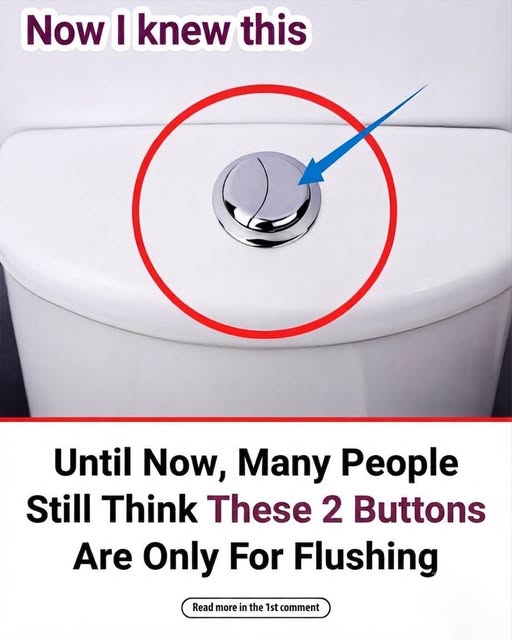
and continue to impact both municipal water systems and personal utility bills. The mechanism behind these toilets is elegantly straightforward: the smaller button is engineered to release a reduced volume of water, specifically intended for liquid waste. Conversely, the larger button triggers a full-volume flush, which is necessary to clear solid waste effectively. By failing to distinguish between these two options, users often default to the full flush regardless of the situation, which consumes significantly more water than is actually required for the task at hand.
Understanding this distinction is not merely an exercise in bathroom etiquette; it is a fundamental step toward responsible resource management. In a standard single-flush toilet, every activation uses a fixed, high volume of water. In contrast, the dual-flush system provides a tailored approach to sanitation. When you utilize the small button, you are typically using about half the water volume of a standard flush. Over the course of a year, this small adjustment in behavior can save thousands of gallons of water for a single household, effectively reducing the strain on local water treatment facilities and lowering your monthly water expenses.
The engineering behind these buttons is quite robust. The small button is connected to a mechanism that lifts the flush valve only partially or for a shorter duration, allowing just enough water to clear the bowl of liquid waste. The large button, however, engages the full capacity of the tank, ensuring sufficient force and volume to move solid waste through the drainage pipes. Misusing these buttons does not damage the toilet, but it does undermine the very purpose of the dual-flush design, which was created specifically to address the global need for smarter water consumption in residential settings.
Many people worry that using the smaller button might lead to clogging or inadequate cleaning, but modern dual-flush toilets are rigorously tested to ensure that the small flush is perfectly sufficient for its intended purpose. If you find yourself consistently using the large button for everything, you are essentially paying for extra water that serves no functional benefit. This habit is often just a result of muscle memory or a lack of awareness regarding how the hardware actually operates. Transitioning to the correct button requires only a moment of mindfulness, yet the cumulative effect of this change is profound.
Beyond the personal financial savings, the environmental impact of choosing the correct button is significant. Water scarcity is an increasing concern in many regions, and residential indoor water use accounts for a massive portion of total consumption. By making the conscious choice to select the small button for liquid waste, you contribute to a broader effort of conservation. It is a simple, daily habit that requires no specialized equipment or lifestyle overhaul, yet it demonstrates a commitment to sustainable living that starts right in your own home.
To put this into practice, take a moment to observe the buttons on your toilet. Usually, the smaller button is clearly marked with a single dot or a smaller icon, while the larger button features two dots or a larger icon. If your toilet does not have these markings, the size difference alone is usually a reliable indicator. Make it a point to pause before you flush. Ask yourself if the full power of the large flush is truly necessary. If the answer is no, opt for the smaller button. This minor adjustment in your routine is a powerful, practical way to reduce your environmental footprint while maintaining the hygiene and functionality of your home bathroom fixtures. By consistently making this choice, you ensure that your household operates with maximum efficiency, proving that even the smallest daily decisions can lead to meaningful, long-term positive change for the planet and your wallet. By adopting this simple, mindful habit, you effectively optimize your home infrastructure for a more sustainable future.