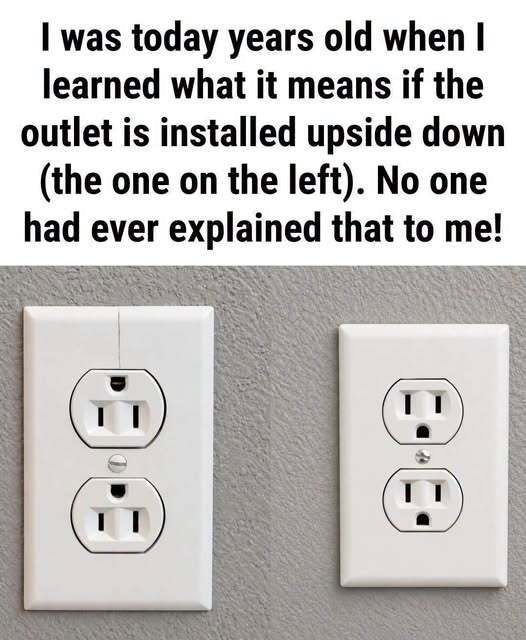
In reality, this specific orientation is frequently a deliberate choice rather than an error, serving as a functional indicator for the homeowner. One of the most common reasons for this configuration involves switched outlets, which were particularly popular in older residential construction before the widespread adoption of ceiling-mounted lighting fixtures. In these setups, one half of the duplex outlet is wired to a wall switch, allowing you to control a floor lamp or table lamp with the flip of a switch, while the other half remains constantly energized for devices like clocks or chargers. By installing the outlet with the ground hole facing up, the electrician provides a subtle, permanent visual cue that this particular receptacle functions differently than the standard, always-on outlets found elsewhere in the room. This helps residents quickly identify which outlet is linked to the wall switch without needing to guess or experiment with every plug in the house.
It is important to understand that there is no National Electrical Code (NEC) requirement that mandates a specific orientation for electrical receptacles. Because the code remains silent on this matter, the final decision often rests entirely on the preferences of the individual electrician, the specific regional building practices, or the requirements set forth by a particular home builder. In some areas, contractors might adopt a standard of installing all outlets with the ground hole facing up as a matter of personal preference or local tradition, regardless of whether the outlet is switched or always powered. Consequently, you cannot assume that every upside-down outlet in your home is controlled by a wall switch, as it could simply be a stylistic choice or a reflection of the installer’s personal habit or regional customs that have persisted over many decades of residential construction.
The lack of a universal standard means that visual inspection alone is rarely sufficient to determine the true nature of an outlet’s wiring. While the upside-down orientation is a common convention for switched outlets, it is not a universal rule that you can rely on with absolute certainty. If you are trying to determine which outlets in your home are switched, the only truly reliable method is to perform a practical test. Simply plug a lamp or a small electronic device into the outlet in question and systematically toggle the wall switches in the immediate vicinity. If the device turns on and off in response to a switch, you have successfully identified a switched outlet. If the device remains powered regardless of the switch position, the outlet is likely wired to a constant power source, and the upside-down orientation is merely an aesthetic decision made during the original installation.
Understanding these nuances can save you a significant amount of frustration when you are trying to organize your home electronics or troubleshoot why a particular device is not receiving power. Rather than viewing an upside-down outlet as a sign of poor workmanship or a technical defect, it is best to view it as a potential indicator that requires a moment of verification. By taking the time to test your outlets, you gain a clearer understanding of your home’s electrical layout and can make more informed decisions about where to place your lamps, chargers, and other essential appliances. Ultimately, the orientation of your electrical outlets is a minor detail that, once understood, provides greater control and clarity over your home’s electrical system, ensuring that you can manage your lighting and power needs with confidence and ease. Always remember that when in doubt, a quick test with a lamp is the most effective way to confirm the functionality of any wall receptacle in your living space. By verifying each connection, you ensure your home remains both functional and safe. This simple, practical approach removes the guesswork from your home maintenance routine.
{"post":109503,"page":2,"next":[{"id":109500,"title":"Essential Kitchen Safety: Why Unplugging High-Wattage Appliances Before Bed Protects Your Home From Hidden Electrical Hazards","url":"https:\/\/new24.info\/109500"},{"id":109495,"title":"My 8-Year-Old Son Came Home from the Barber with Only Half His Hair Cut \u2013 When the Crying Barber Told Me Why, I Went Pale","url":"https:\/\/new24.info\/109495"},{"id":109492,"title":"A Woman on the Plane Took up Half of My 86-Year-Old Grandmother\u0027s Seat \u2013 Five Minutes Later, Karma Struck Her Hard","url":"https:\/\/new24.info\/109492"},{"id":109489,"title":"My Son Walked Across the Graduation Stage in a Bright Red Dress While the Auditorium Giggled \u2013 He Did It for Me","url":"https:\/\/new24.info\/109489"},{"id":109487,"title":"The Piggy Banks On My Porch Held A Secret That Reached The Whole Town","url":"https:\/\/new24.info\/109487"},{"id":109485,"title":"Understanding the Theological and Historical Perspectives on Cremation Within the Christian Tradition","url":"https:\/\/new24.info\/109485"},{"id":109481,"title":"I Surprised My Firefighter Husband at His Station for His Birthday \u2013 What His Captain Told Me Made My Stomach Drop","url":"https:\/\/new24.info\/109481"},{"id":109478,"title":"My Husband Pushed Me to Adopt 4-Year-Old Twins for Months \u2013 A Month Later, I Overheard His Real Reason and Went Pale","url":"https:\/\/new24.info\/109478"},{"id":109470,"title":"At first glance, it looks like a harmless photo of a woman on the beach. Look closer, though, and you\u0027ll see the hidden detail that caused this picture to go viral","url":"https:\/\/new24.info\/109470"},{"id":109468,"title":"A Practical Guide to Safely Managing an Unexpected Snake Encounter Inside Your Home","url":"https:\/\/new24.info\/109468"},{"id":109462,"title":"Which Woman Looks Oldest? Your Pick May Say Something","url":"https:\/\/new24.info\/109462"},{"id":109458,"title":"A Teen\u2019s Fun DNA Test Pointed to Someone He Already Knew","url":"https:\/\/new24.info\/109458"},{"id":109453,"title":"One Cruel Ultimatum Revealed A Massive Financial Betrayal In My Marriage","url":"https:\/\/new24.info\/109453"},{"id":109449,"title":"One Selfish Phone Call Cost My Husband His Marriage And Corporate Career","url":"https:\/\/new24.info\/109449"},{"id":109445,"title":"What A Waitress Revealed About My Sons Secret Diner Visits","url":"https:\/\/new24.info\/109445"},{"id":109441,"title":"Sister Secretly Rented My Rebuilt Lake Cabin Until I Stopped Her","url":"https:\/\/new24.info\/109441"},{"id":109437,"title":"Sick Millionaire Pretends To Sleep And Uncovers A Shocking Family Betrayal","url":"https:\/\/new24.info\/109437"},{"id":109433,"title":"My daughter-in-law pocket-dialed me at 7:15 this morning. She never knew I answered. For nineteen minutes\u2026.","url":"https:\/\/new24.info\/109433"},{"id":109429,"title":"My husband commented \u201cbeautiful\u201d on his ex\u2019s picture. So I did the most logical thing: I booked a professional\u2026\u2026.","url":"https:\/\/new24.info\/109429"},{"id":109427,"title":"He Came Home Smiling After Betrayal. His Wife Had Proof Waiting \u2013 olive","url":"https:\/\/new24.info\/109427"}]}