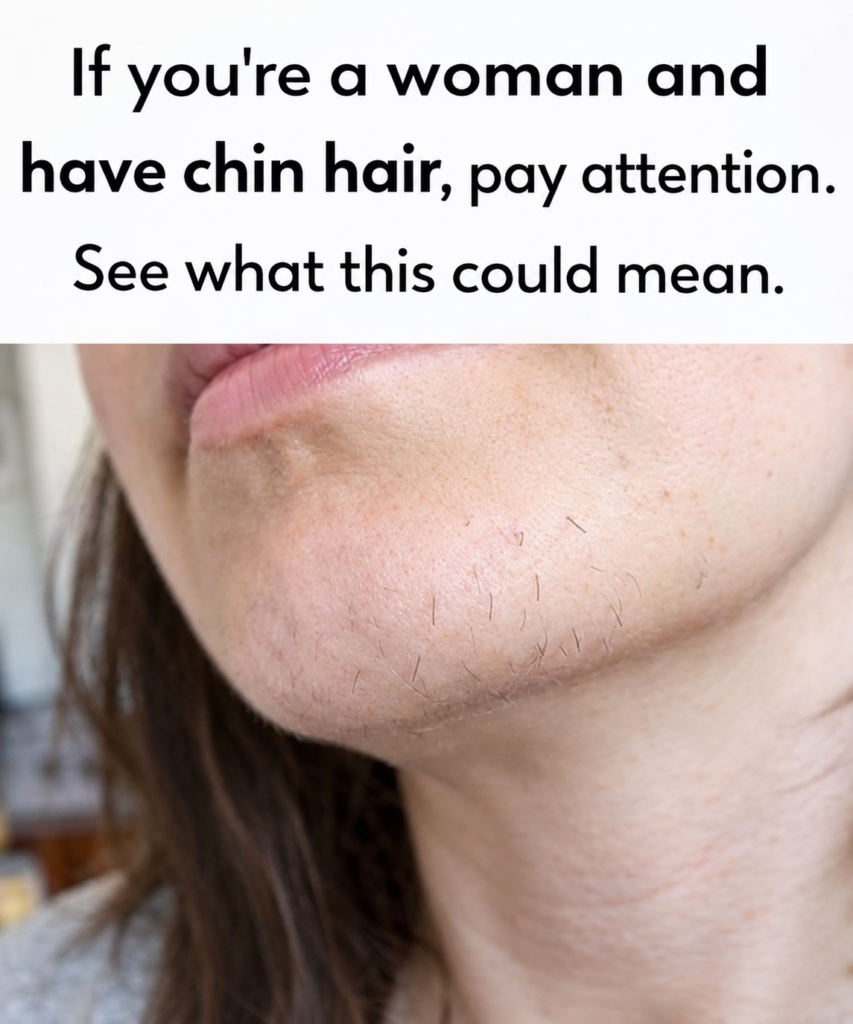
Facial hair growth follows the same natural cycle as hair elsewhere on the body. During the active growth phase, known as the anagen phase, hair grows continuously before entering a brief transition period and eventually a resting phase. Hormones called androgens, including testosterone, play an important role in regulating this process. Although women naturally produce small amounts of these hormones, higher levels or increased sensitivity to them can stimulate thicker or darker facial hair.
Hormonal changes are among the most common reasons chin whiskers become more noticeable. Conditions such as polycystic ovary syndrome (PCOS) may increase androgen levels and lead to hirsutism, a condition characterized by excessive hair growth in areas where men typically grow hair. Menopause can also contribute, as declining estrogen levels may allow the effects of androgens to become more noticeable. In addition, certain medications and hormonal contraceptives may influence facial hair growth in some individuals.
Genetics also play a significant role. If close female relatives, such as your mother or grandmother, experienced chin whiskers, you may be more likely to develop them as well. Ethnic background can also influence hair growth patterns, with women of Middle Eastern, Mediterranean, South Asian, and some other ancestries naturally tending to have more facial hair. In many cases, this is simply a normal inherited trait rather than a medical concern.
For many women, the emotional impact of facial hair can be just as significant as the physical appearance. Some feel embarrassed or self-conscious, while others experience anxiety or frustration over the need for frequent grooming. Social expectations and beauty standards can intensify these feelings, even though facial hair is a common and natural variation. Fortunately, growing awareness around body diversity and body positivity is helping reduce stigma and encourage more open conversations.
Several options are available for managing unwanted chin whiskers. Temporary methods include tweezing, shaving, waxing, threading, and depilatory creams. Longer-lasting solutions such as laser hair removal or electrolysis may provide more permanent reduction for suitable candidates. In cases where excessive hair growth is linked to hormonal imbalances, healthcare providers may recommend prescription medications to address the underlying cause.
Healthy lifestyle habits may also support hormonal balance. Maintaining a balanced diet, exercising regularly, managing stress, and treating underlying medical conditions can all contribute to overall well-being. While these measures may not eliminate facial hair, they can be part of a broader approach to supporting hormonal health.
If chin whiskers suddenly become much thicker, darker, or are accompanied by symptoms such as irregular menstrual cycles, acne, deepening of the voice, or rapid hair growth elsewhere on the body, it is important to seek medical evaluation. A healthcare professional can determine whether an underlying hormonal or medical condition requires treatment.
Ultimately, chin whiskers are a normal experience for many women and do not define beauty or health. Whether you choose to remove them or embrace them is a personal decision. The most important goal is feeling comfortable, confident, and informed about your own body.
{"post":109420,"page":2,"next":[{"id":109417,"title":"A DNA Test Meant for Fun Revealed a Family Secret That Changed Everything","url":"https:\/\/new24.info\/109417"},{"id":109415,"title":"The Answer I Gave My Daughter at the Farmers Market Ended Years of Being Her Doormat","url":"https:\/\/new24.info\/109415"},{"id":109413,"title":"The Vacation My Family Stole Taught Them Exactly What Only For Family Costs","url":"https:\/\/new24.info\/109413"},{"id":109410,"title":"At 6, I Promised My Best Friend with Down Syndrome We\u2019d Go to Prom Together \u2013 12 Years Later, Mom Said I Could Go with Him Only on One Condition","url":"https:\/\/new24.info\/109410"},{"id":109407,"title":"A Friendly Waiter Invited My Son Into the Hotel Kitchen to Make His Own Pizza \u2013 10 Minutes Later, the Head Chef Locked Every Exit","url":"https:\/\/new24.info\/109407"},{"id":109405,"title":"My Husband Said the Old Storage Unit Was Empty \u2013 Then I Found Out He Paid Rent on It for 14 Years","url":"https:\/\/new24.info\/109405"},{"id":109402,"title":"I Overheard My Husband and His Grandfather Discussing My Sister\u0027s \u0027Amazing Figure\u0027 \u2013 Listening a Little Longer Split My Life Into Before and After","url":"https:\/\/new24.info\/109402"},{"id":109399,"title":"The Pocket-Dial That Let A Grandmother Hear Exactly What They Planned","url":"https:\/\/new24.info\/109399"},{"id":109397,"title":"A Birthday Exile and the Unexpected Grace of a Quiet Neighborhood Witness","url":"https:\/\/new24.info\/109397"},{"id":109394,"title":"The Hidden Architect: Understanding the Mysterious Object Found on Your Bedroom Floor","url":"https:\/\/new24.info\/109394"},{"id":109391,"title":"Understanding Unexplained Bruising and When to Seek Professional Medical Guidance for Your Health Concerns","url":"https:\/\/new24.info\/109391"},{"id":109388,"title":"The Silent Guardian at Sarah\u0027s Grave: A Husband\u0027s Discovery of Hidden Grace","url":"https:\/\/new24.info\/109388"},{"id":109385,"title":"Understanding Chin Hair in Women: Causes, Biological Factors, and Effective Management Strategies","url":"https:\/\/new24.info\/109385"},{"id":109382,"title":"The Resilient Journey of Lee Grant: From Hollywood Blacklist to Artistic Triumph and Longevity","url":"https:\/\/new24.info\/109382"},{"id":109376,"title":"Greedy Brothers Mocked My Borrowed Dress Until Miriam Locked Chapel Doors","url":"https:\/\/new24.info\/109376"},{"id":109372,"title":"Entitled Stranger Ruins My Grandmother\u2019s Ninetieth Birthday Cabana But Regrets It","url":"https:\/\/new24.info\/109372"},{"id":109367,"title":"My Brothers Fled Our Family Debt Until One Document Changed Everything","url":"https:\/\/new24.info\/109367"},{"id":109363,"title":"How A Father Destroyed His Arrogant Son-In-Law To Save His Daughter","url":"https:\/\/new24.info\/109363"},{"id":109359,"title":"How A Cruel Birthday Joke Cost My Father His Brand New Truck","url":"https:\/\/new24.info\/109359"},{"id":109355,"title":"My Daughter Disappeared at 17 \u2013 16 Years Later, I Saw the Bag I Knitted for Her on a Stranger\u0027s Shoulder","url":"https:\/\/new24.info\/109355"}]}