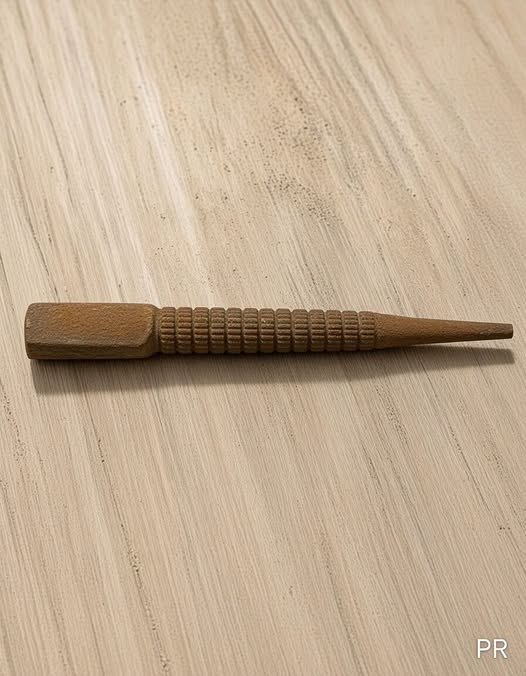
This simple act of recessing the metal allows the craftsperson to achieve a seamless, professional finish that hides the mechanical evidence of assembly. By placing the cupped or flat tip of the punch directly onto the head of a driven nail and delivering a controlled strike with a hammer, the user forces the fastener deeper into the grain. This creates a small, uniform cavity that is perfectly suited for filling with wood putty or a color-matched filler. Once the filler cures and the surface is sanded flush, the nail becomes entirely invisible beneath a coat of paint or stain. This technique is the hallmark of quality craftsmanship, distinguishing a rushed job from one built to last and impress.
The history of the nail punch is rooted in the necessity of clean aesthetics. In the era before pneumatic nailers and sophisticated wood fillers, craftsmen still required a way to hide fasteners in visible areas like furniture joints, decorative trim, and door frames. The tool has evolved little in its fundamental design because its geometry is already optimized for its task. Typically forged from hardened steel, these tools are built to withstand thousands of high-impact strikes without deforming or shattering. The durability of the material ensures that a single punch can remain a staple in a toolbox for decades, outliving many electronic devices that require constant updates or battery replacements.
Variations in design exist primarily to accommodate different types of fasteners and specific project requirements. Most standard punches feature a concave tip, which is specifically engineered to center itself on the head of a nail, preventing the tool from slipping and marring the surrounding wood. Other versions include spring-loaded mechanisms, which eliminate the need for a separate hammer entirely. These self-striking models are particularly advantageous when working in tight, awkward spaces where swinging a hammer would be difficult or would risk damaging delicate surfaces. Additionally, manufacturers offer a range of tip diameters to ensure that the punch matches the size of the nail head, as using an incorrectly sized tool can lead to unsightly damage or ineffective seating.
Beyond the realm of high-end furniture, the nail punch is an indispensable ally in home restoration and renovation. When working on historic homes or repairing antique woodwork, the ability to remove or reset old, protruding nails without damaging the surrounding material is invaluable. The compact nature of the tool allows for surgical precision, making it far superior to larger, more aggressive tools that might splinter aged, brittle timber. Because it operates entirely on manual force, it provides the user with tactile feedback, allowing them to feel exactly when the nail has reached the desired depth. This sensory connection is something that even the most advanced power tools struggle to replicate.
The enduring popularity of the nail punch serves as a testament to the idea that complexity is not always synonymous with utility. In an age dominated by high-speed, automated equipment, there remains a profound satisfaction in utilizing a tool that relies on human skill and mechanical simplicity. It is inexpensive, virtually indestructible, and requires no specialized training to master. For the homeowner or the hobbyist, it represents a low-barrier entry point into the world of fine woodworking, offering an immediate improvement in the quality of their finished projects. It reminds us that sometimes the most effective way to address a challenge is through a focused, well-engineered solution that has been refined over centuries of practice.
To get the most out of your nail punch, always ensure that your strike is centered and square to the nail head. If you are working with softwoods, use a lighter touch to avoid creating a crater that is too deep to fill effectively. When selecting a punch for your kit, consider purchasing a set that includes multiple tip sizes, as this will prepare you for everything from delicate finish nails to larger framing fasteners. By incorporating this simple step into your workflow, you elevate your work from functional to polished, ensuring that your projects stand the test of time both structurally and visually. Always keep your punches organized and clean, as a well-maintained tool is the first step toward a flawless, professional-grade finish on every piece of woodwork you undertake.