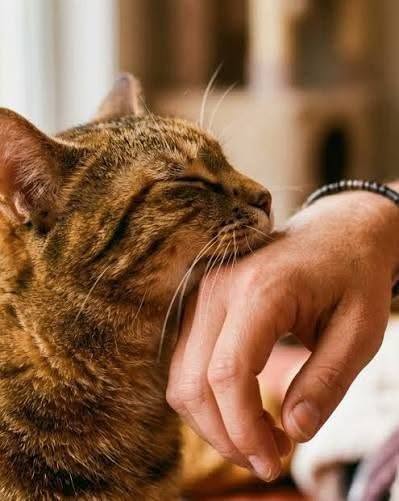
delicate check on your own emotional state. By depositing pheromones from the scent glands located around their cheeks, lips, and forehead, cats create a communal scent profile that binds you to their safe environment. This process, known as bunting, is a clear indicator that the cat views you as a trusted member of its inner circle. Because cats are highly sensitive to their surroundings, they are remarkably adept at detecting subtle shifts in your energy, stress levels, or even changes in your daily routine.
When you return home after a particularly difficult day, your cat may be the first to notice the tension in your shoulders or the change in your gait. In these moments, their act of rubbing against you serves a dual purpose: it reinforces their sense of security while simultaneously offering you a form of silent, grounding comfort. This behavior acts as a bridge between species, allowing the cat to express empathy in a way that aligns with its natural instincts for social bonding and territorial stability.
It is a testament to the depth of the feline-human connection that they can perceive our internal struggles and respond with such consistent, quiet devotion. Beyond the biological function of scent marking, this physical contact is a profound expression of vulnerability. A cat will only choose to get this close when it feels entirely secure in its surroundings and confident in your presence. When they lean their weight against you, they are essentially lowering their defenses, signaling that they feel protected by your companionship.
This trust is not given lightly, and it is a privilege that reflects the strength of the bond you have cultivated over time. Furthermore, cats are creatures of habit who thrive on predictability. If you have recently altered your schedule, moved furniture, or introduced new stressors into the home, your cat may use this rubbing behavior to re-establish a sense of familiarity. By marking you, they are essentially re-integrating you into their stable world, helping to soothe their own anxiety while keeping you close.
Understanding this behavior requires us to look past our own human-centric interpretations and appreciate the feline perspective. They are not merely pets; they are observant partners who navigate the world through a complex sensory landscape. By paying attention to these subtle cues, we can better understand their needs and deepen the mutual respect that defines a healthy relationship. When you notice your cat initiating this contact, try to acknowledge it as the meaningful interaction it truly is.
It is a sophisticated dialogue that requires no words, only presence and mutual recognition. This interaction is not just about the cat; it is a collaborative effort between two species to maintain harmony. When your cat approaches you in this manner, they are essentially inviting you to participate in their emotional ecosystem, asking for reassurance while providing it in return. This reciprocal exchange is the cornerstone of a healthy, long-term relationship between a human and their feline companion.
To foster this bond, observe the patterns in your cat’s behavior. If you notice an increase in rubbing during times of high stress, recognize it as their way of providing support. To reciprocate, offer gentle, slow strokes in the areas where they have scent glands, such as the base of the ears or the cheeks. This mirrors their own communication style and reinforces the security they are seeking. If you find that your cat is rubbing more frequently after a change in routine, maintain as much consistency as possible in other areas of their life, such as feeding times and play sessions. By being mindful of their sensitivity to your moods and environment, you can create a home atmosphere that feels safe and predictable for both of you. Ultimately, this behavior is a gift of trust; by responding with patience and calm, you ensure that your cat continues to feel secure enough to share their world with you.
{"post":108941,"page":2,"next":[{"id":108938,"title":"The Vital Safety Logic Behind the Flight Attendant Brace Position During Takeoff and Landing","url":"https:\/\/new24.info\/108938"},{"id":108935,"title":"I Reclaimed My Home and My Autonomy After My Husband Crossed the Final Line","url":"https:\/\/new24.info\/108935"},{"id":108932,"title":"The Silent Threat: How AI Voice Cloning Turns Your Own Words Against You","url":"https:\/\/new24.info\/108932"},{"id":108929,"title":"Understanding the Bilberry: Nutritional Insights and the Role of Antioxidants in Supporting Long-Term Wellness and Eye Health","url":"https:\/\/new24.info\/108929"},{"id":108926,"title":"What a Landmark Swedish Study Reveals About the Biological Markers of Exceptional Longevity","url":"https:\/\/new24.info\/108926"},{"id":108923,"title":"The Blue Enigma: Finding Wonder in the Quiet Corners of the Natural World","url":"https:\/\/new24.info\/108923"},{"id":108920,"title":"A Deleted Classroom Photo Reveals the Hidden Exhaustion Behind a Young Student\u0027s Perfect Facade","url":"https:\/\/new24.info\/108920"},{"id":108915,"title":"I Kept My Prom Dress for 55 Years Waiting for My High School Love Who Went to Vietnam \u2013 When We Finally Married, His First Night Confession Changed Everything","url":"https:\/\/new24.info\/108915"},{"id":108909,"title":"They Handcuffed Her and Thought They Had Won\u2014Then One Officer Reached Into Her Pocket and Froze","url":"https:\/\/new24.info\/108909"},{"id":108910,"title":"My Husband Kicked Our 18-Year-Old Daughter Out While I Was Out of Town \u2013 One Year Later, She Returned Holding a Newborn and Said One Sentence That Made Me Pale","url":"https:\/\/new24.info\/108910"},{"id":108902,"title":"An entitled guy stole my 92-year-old grandfather\u2019s football seats, claiming he wouldn\u2019t remember the game anyway\u2014until karma caught up with him just five minutes later","url":"https:\/\/new24.info\/108902"},{"id":108903,"title":"Astonishing Family Secrets Revealed During An Unexpected Luxury Boutique Encounter","url":"https:\/\/new24.info\/108903"},{"id":108899,"title":"My Grandmother Left Me The House No One Wanted, And A Locked Box Inside The Wall","url":"https:\/\/new24.info\/108899"},{"id":108897,"title":"Understanding Why Your Pizza Cheese Develops Bubbles During the Baking Process","url":"https:\/\/new24.info\/108897"},{"id":108891,"title":"Shocking Gender Reveal Party Exposed A Secret Betrayal By My Partner","url":"https:\/\/new24.info\/108891"},{"id":108887,"title":"Sudden Caregiver Discovers Secret Bank Code That Exposes Hidden Family Wealth","url":"https:\/\/new24.info\/108887"},{"id":108884,"title":"Bringing My Abandoned Quadruplets To Christmas Exposed Deep Reynolds Family Secrets","url":"https:\/\/new24.info\/108884"},{"id":108880,"title":"Heartbroken Bride Left At Altar Discovers Shocking Secret With Widowed Farmer","url":"https:\/\/new24.info\/108880"},{"id":108872,"title":"We Drained Our Family Pool for the First Time in 24 Years\u2014Under the Tiles Was the Name of My Daughter Who \u201cDied\u201d at Birth","url":"https:\/\/new24.info\/108872"},{"id":108874,"title":"Hidden Family Will Revealed At Graduation Completely Flipped Our Wealthy Dynasty","url":"https:\/\/new24.info\/108874"}]}