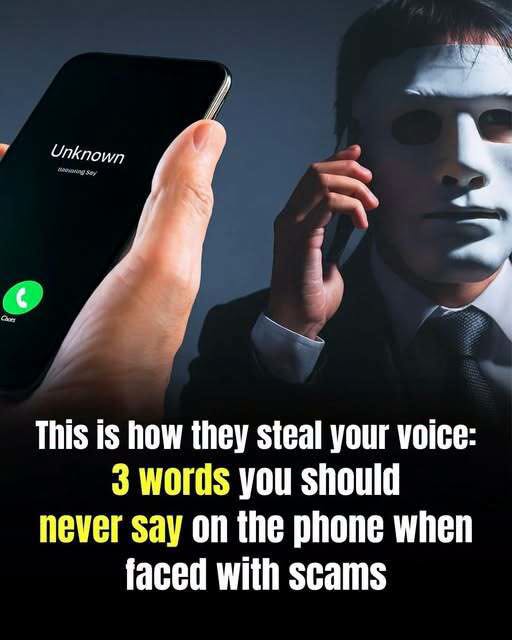
that can be used to bypass security protocols or deceive your loved ones. Once a scammer has captured enough of your vocal cadence, tone, and pitch, they possess a digital key capable of unlocking various forms of biometric identification. In the current landscape, your voice is no longer just a tool for communication; it is a biometric asset as sensitive as a fingerprint or a retinal scan. When this data is compromised, the consequences can be severe, ranging from unauthorized financial transactions to the sophisticated impersonation of your persona in high-stakes social engineering attacks.
The mechanics of these scams are often deceptively simple. A common strategy involves the “yes” scam, where an unknown caller prompts you to answer a question that requires an affirmative response. By recording your “yes,” scammers can splice that audio into a different conversation to fake your consent for fraudulent charges or to authorize access to secure systems. Because these AI tools are now capable of mimicking human emotion, urgency, and natural pacing, the resulting audio is often indistinguishable from the real thing. This high level of realism exploits human psychology, as victims are naturally inclined to trust the familiar sound of a friend or family member, often acting on instructions before they have the chance to verify the caller’s identity.
Beyond the “yes” scam, even answering the phone with a standard “hello” can provide enough data for advanced algorithms to begin mapping your vocal profile. Scammers frequently use these recordings to initiate automated calls that sound authentic, allowing them to scale their operations with minimal effort. This creates a dangerous environment where every unsolicited call carries the risk of data extraction. Criminals may pose as bank representatives, government officials, or even distressed relatives, using your own voice to lend credibility to their fabricated stories. The goal is always the same: to manipulate you into providing sensitive information, transferring funds, or granting access to private accounts under the guise of an urgent, legitimate need.
The sophistication of these attacks is increasing as the barrier to entry for criminals drops. Previously, voice synthesis required professional-grade equipment and hours of audio. Today, accessible software allows anyone with a basic internet connection to create a high-fidelity clone of your voice in minutes. This democratization of technology means that you do not need to be a high-profile target to be at risk. Average individuals are now routinely targeted by automated systems that scan for vulnerable, unsuspecting people who might inadvertently provide the necessary audio samples during a routine telemarketing or spoofed call.
Protecting yourself in this new era requires a fundamental shift in how you handle telephone interactions. The most effective defense is to adopt a policy of skepticism toward any unknown caller. If you receive a call from an unrecognized number, do not feel obligated to respond immediately. Let the caller speak first, and if they do not identify themselves clearly, do not hesitate to hang up. Avoid participating in phone surveys or answering questions that require a simple “yes” or “no” response, as these are prime opportunities for data harvesting. If a caller claims to represent a business or institution, do not provide any personal information; instead, hang up and call the organization back using a verified phone number found on their official documentation or website.
Furthermore, consider implementing “safe words” or secret phrases with your family members. If a loved one ever calls claiming to be in an emergency and requesting money, having a pre-established code can help you instantly verify their identity. If they cannot provide the correct answer, you can be certain that you are dealing with a synthetic impersonation. It is also wise to be cautious about the amount of your voice that is publicly available online, such as in social media videos or public recordings, as these can serve as source material for sophisticated cloning software.
Ultimately, the best defense is constant vigilance. Treat your voice as a sensitive piece of personal data that should not be shared freely with strangers. By limiting your exposure and verifying the identity of anyone who asks for your cooperation, you can significantly reduce the risk of falling victim to these AI-powered schemes. While technology continues to advance, your awareness remains your most powerful tool in maintaining the security of your digital and personal identity. Stay informed, remain cautious, and prioritize verification over convenience whenever you receive an unexpected call.
{"post":108932,"page":2,"next":[{"id":108929,"title":"Understanding the Bilberry: Nutritional Insights and the Role of Antioxidants in Supporting Long-Term Wellness and Eye Health","url":"https:\/\/new24.info\/108929"},{"id":108926,"title":"What a Landmark Swedish Study Reveals About the Biological Markers of Exceptional Longevity","url":"https:\/\/new24.info\/108926"},{"id":108923,"title":"The Blue Enigma: Finding Wonder in the Quiet Corners of the Natural World","url":"https:\/\/new24.info\/108923"},{"id":108920,"title":"A Deleted Classroom Photo Reveals the Hidden Exhaustion Behind a Young Student\u0027s Perfect Facade","url":"https:\/\/new24.info\/108920"},{"id":108915,"title":"I Kept My Prom Dress for 55 Years Waiting for My High School Love Who Went to Vietnam \u2013 When We Finally Married, His First Night Confession Changed Everything","url":"https:\/\/new24.info\/108915"},{"id":108909,"title":"They Handcuffed Her and Thought They Had Won\u2014Then One Officer Reached Into Her Pocket and Froze","url":"https:\/\/new24.info\/108909"},{"id":108910,"title":"My Husband Kicked Our 18-Year-Old Daughter Out While I Was Out of Town \u2013 One Year Later, She Returned Holding a Newborn and Said One Sentence That Made Me Pale","url":"https:\/\/new24.info\/108910"},{"id":108902,"title":"An entitled guy stole my 92-year-old grandfather\u2019s football seats, claiming he wouldn\u2019t remember the game anyway\u2014until karma caught up with him just five minutes later","url":"https:\/\/new24.info\/108902"},{"id":108903,"title":"Astonishing Family Secrets Revealed During An Unexpected Luxury Boutique Encounter","url":"https:\/\/new24.info\/108903"},{"id":108899,"title":"My Grandmother Left Me The House No One Wanted, And A Locked Box Inside The Wall","url":"https:\/\/new24.info\/108899"},{"id":108897,"title":"Understanding Why Your Pizza Cheese Develops Bubbles During the Baking Process","url":"https:\/\/new24.info\/108897"},{"id":108891,"title":"Shocking Gender Reveal Party Exposed A Secret Betrayal By My Partner","url":"https:\/\/new24.info\/108891"},{"id":108887,"title":"Sudden Caregiver Discovers Secret Bank Code That Exposes Hidden Family Wealth","url":"https:\/\/new24.info\/108887"},{"id":108884,"title":"Bringing My Abandoned Quadruplets To Christmas Exposed Deep Reynolds Family Secrets","url":"https:\/\/new24.info\/108884"},{"id":108880,"title":"Heartbroken Bride Left At Altar Discovers Shocking Secret With Widowed Farmer","url":"https:\/\/new24.info\/108880"},{"id":108872,"title":"We Drained Our Family Pool for the First Time in 24 Years\u2014Under the Tiles Was the Name of My Daughter Who \u201cDied\u201d at Birth","url":"https:\/\/new24.info\/108872"},{"id":108874,"title":"Hidden Family Will Revealed At Graduation Completely Flipped Our Wealthy Dynasty","url":"https:\/\/new24.info\/108874"},{"id":108869,"title":"My Neighbor Filled My Pool With Concrete Because My Kids Were \u0027Too Loud\u0027 \u2013 She Never Expected What Happened Next","url":"https:\/\/new24.info\/108869"},{"id":108865,"title":"Early in the morning, I went outside to get some fresh air and found this w...","url":"https:\/\/new24.info\/108865"},{"id":108862,"title":"I Got a Breast Reduction After Years of Pain \u2013 When I Came Home, My Husband Gave Me an Ultimatum","url":"https:\/\/new24.info\/108862"}]}