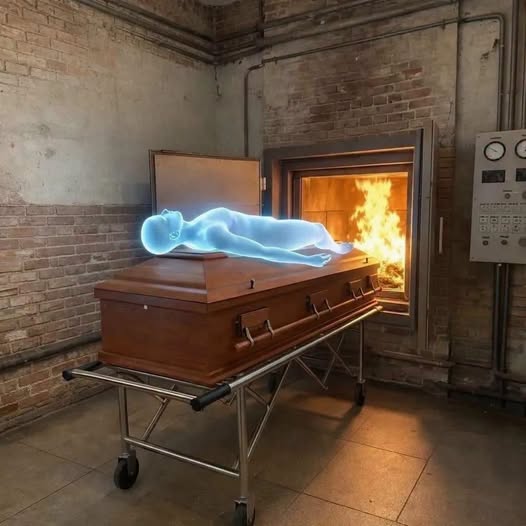
as they weigh personal preferences against historical church customs. It is essential to clarify that the Bible contains no explicit prohibition against cremation. Throughout the Old Testament, the patriarchs were indeed buried, establishing a cultural norm that became deeply embedded in the Judeo-Christian worldview. This tradition was further solidified by the entombment of Jesus Christ. His burial serves as a powerful theological metaphor, often compared by the Apostle Paul to the sowing of a seed in the ground, which eventually yields a new, transformed life. This imagery of planting a body to await a future resurrection has long served as the primary rationale for the church’s historical preference for interment over other methods.
However, the absence of a direct commandment forbidding cremation is a critical distinction in theological discourse. In ancient times, the burning of bodies was frequently associated with pagan cultures, which often used such practices to signify a denial of the resurrection or a disregard for the sanctity of the human frame. Because the early church sought to distinguish itself from these practices, burial became a way to honor the body as the temple of the Holy Spirit. Yet, theologians consistently argue that God’s sovereign power to resurrect the dead is not constrained by the physical state of human remains. Whether a body returns to dust through natural decay or is reduced to ashes through fire, the promise of a glorified, eternal body remains entirely within the realm of divine capability.
In the modern era, the shift toward cremation is rarely motivated by a theological rebellion against the resurrection. Instead, it is almost exclusively driven by practical considerations such as the high cost of traditional funerals, the scarcity of available burial plots in urban environments, and the desire for simpler arrangements. Most Christian denominations have recognized this shift, concluding that cremation does not constitute an impediment to salvation. The focus of the faith is not on the preservation of earthly matter, but on the hope of the life to come. The physical remains are viewed as a temporary vessel, and the method of their final disposition is ultimately a secondary concern compared to the spiritual reality of the soul’s destination.
The debate often centers on the tension between honoring the dignity of the body and acknowledging the limitations of earthly resources. While the church continues to hold the body in high regard as a creation of God, this respect does not necessitate a specific burial method. Many clergy members now emphasize that the dignity afforded to the deceased is found in the love and remembrance of the community, the prayers offered during the funeral service, and the celebration of the deceased’s life in Christ, rather than the specific mechanics of the interment process. This perspective allows families to make decisions that are both respectful and financially sustainable without the burden of perceived spiritual failure.
Ultimately, the choice between burial and cremation is a matter of Christian liberty. Families are encouraged to consider their own traditions, the wishes of the departed, and their local church’s guidance. If a family chooses cremation, they can still hold a meaningful service that honors the life of the deceased and reaffirms the hope of resurrection. It is entirely possible to maintain a deep, faithful commitment to Christian teachings while utilizing modern methods of disposition. The most important aspect of any funeral arrangement is that it reflects the hope found in the resurrection of Jesus Christ, which remains the central pillar of the faith regardless of whether one is laid to rest in a grave or remembered through an urn. By focusing on the eternal promise rather than the earthly method, believers can find peace in the knowledge that nothing can separate them from the love of God, and that the promise of a future, transformed existence is secure for all who place their trust in Him.
In practical terms, if you are considering cremation, you should begin by discussing your preferences with your family and your local church leadership. Many parishes now offer specific guidance on how to conduct a memorial service that aligns with congregational practices, even when traditional burial is not chosen. By communicating these desires clearly and focusing on the spiritual significance of the transition, you can ensure that the final arrangements serve as a dignified witness to your faith and a comforting conclusion for those you leave behind.