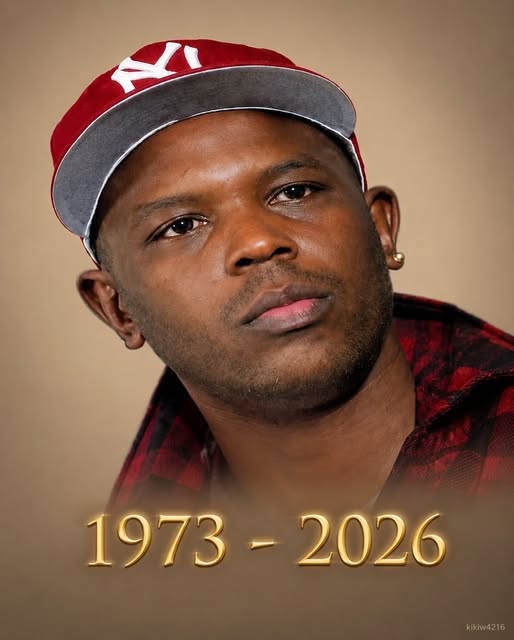
Grant was a quintessential example of this behind-the-scenes influence, serving as a vital strategic visionary who helped guide the early trajectory of the Wu-Tang Clan. During the early 1990s, a transformative era when hip-hop was actively defining its own boundaries and industry standards, the Wu-Tang Clan emerged with a collective structure that challenged existing norms. Grant played a foundational role in reinforcing this unconventional direction, possessing the foresight to recognize that the group’s immense potential extended far beyond the confines of recorded music into a broader, more enduring cultural entity. His contributions were defined by a commitment to long-term planning rather than the pursuit of public performance or individual fame.
Collaborating closely with iconic members such as Method Man and GZA, Grant championed a philosophy that seamlessly blended raw creative expression with rigorous organizational independence. He understood that achieving sustained success required more than just exceptional talent; it demanded a disciplined approach to business and a clear, strategic roadmap. This professional mindset proved instrumental in transforming the group’s early, unrefined artistry into a sustainable and formidable cultural force that would eventually resonate on a global scale. By providing the necessary administrative and structural support, he allowed the artists to focus on their craft while he navigated the complexities of the music business.
A central pillar of this vision was the pursuit of ownership and total entrepreneurial control. In an era where the vast majority of artists were tethered to the restrictive mandates of major record labels, the Wu-Tang Clan sought a path of independence that was considered radical at the time. Grant was a primary architect of this shift, most notably through the creation and development of Wu Wear. As one of the very first artist-driven fashion brands in the history of hip-hop, this initiative served as a practical demonstration that musical success could be successfully expanded into the realms of lifestyle, commerce, and branding. This move not only solidified the group’s financial autonomy but also established a blueprint for future generations of artists who sought to control their own intellectual property and business interests.
As the influence of the Wu-Tang Clan expanded across international borders, the robust foundation that Grant helped establish allowed the collective to maintain its distinct identity while continuing to evolve creatively. His work ensured that the group’s internal structure and business strategy remained aligned with the creative vision of its members, which was essential for maintaining their relevance throughout the decades. He viewed the collective not merely as a musical act, but as a multifaceted business entity that required careful management and strategic foresight to endure in a notoriously volatile industry. His ability to bridge the gap between street-level authenticity and corporate-level planning was perhaps his greatest contribution to the group’s longevity.
Even in the absence of widespread public recognition, the impact of his work remains undeniably significant. Grant consistently prioritized substance over visibility, focusing his energy on meaningful, high-level contributions rather than the fleeting nature of public attention. His legacy is now woven into the very fabric of the Wu-Tang Clan’s continued influence, serving as a reminder that the most significant cultural movements are frequently shaped by those who work with dedication and purpose away from the glare of the spotlight. By fostering an environment where independence and artistry could thrive in tandem, he helped secure a place for the group in the annals of music history. His death at 52 marks the loss of a pivotal figure whose strategic acumen helped define the business model for modern hip-hop, and he remains remembered for his pivotal role in creating a legacy of independence that continues to inspire artists and entrepreneurs alike today. The industry continues to recognize his role as a foundational architect of the collective’s success, acknowledging that his professional contributions were as vital to the group’s identity as the music itself. His life stands as a testament to the power of strategic vision in the arts, leaving behind a blueprint that remains highly relevant in the contemporary landscape of music management and independent brand development.
{"post":108685,"page":2,"next":[{"id":108681,"title":"The Truth Behind a Daughter\u0027s Prom Night and the Long Road to Family Reconciliation","url":"https:\/\/new24.info\/108681"},{"id":108677,"title":"I Kept My Prom Dress for 55 Years Waiting for My High School Love Who Went to Vietnam \u2013 When We Finally Married, His First Night Confession Changed Everything","url":"https:\/\/new24.info\/108677"},{"id":108674,"title":"A Mother\u2019s Quiet Exit Exposes Her Son\u2019s Hidden Deception","url":"https:\/\/new24.info\/108674"},{"id":108670,"title":"My Son Put Me in a Nursing Home So He Could Sell My House \u2013 I Quietly Let Him Do It, but Just a Few Days After I Moved In, He Called and Shouted, \u2018How Could You Do This to Me?!\u2019","url":"https:\/\/new24.info\/108670"},{"id":108667,"title":"The Kids Next Door Spent Every Sunday Cleaning Our Neighborhood \u2013 Then I Noticed What They Were Actually Doing","url":"https:\/\/new24.info\/108667"},{"id":108664,"title":"If you\u2019re over 60, eating a banana a day causes\u2026","url":"https:\/\/new24.info\/108664"},{"id":108661,"title":"5 colors to avoid after 50: they can dull your glow","url":"https:\/\/new24.info\/108661"},{"id":108656,"title":"My Brother Expected My House But Found Only Empty Walls","url":"https:\/\/new24.info\/108656"},{"id":108651,"title":"How Escaping A Freezing Montana Cabin Exposed An Ultimate Family Betrayal","url":"https:\/\/new24.info\/108651"},{"id":108647,"title":"How I Acquired My Neglectful Father\u2019s Company And Confronted Him On Father\u2019s Day","url":"https:\/\/new24.info\/108647"},{"id":108643,"title":"How My Ruined Wedding Gowns Led To My Proudest Military Moment","url":"https:\/\/new24.info\/108643"},{"id":108639,"title":"How My Parents Tried To Overturn A Sixty Seven Million Dollar Inheritance","url":"https:\/\/new24.info\/108639"},{"id":108637,"title":"An Unexpected Gesture of Grace Transforms a Difficult First Date into a Moment of Lasting Connection","url":"https:\/\/new24.info\/108637"},{"id":108634,"title":"The Architect of Memory: How Sarah Found Purpose After a Wedding Day Tragedy","url":"https:\/\/new24.info\/108634"},{"id":108630,"title":"My Parents Missed My Husband and Children\u2019s Funeral for My Sister\u2019s Birthday, But Six Months Later One Headline Made Them Panic","url":"https:\/\/new24.info\/108630"},{"id":108627,"title":"I Was Breastfeeding My 5-Month-Old Baby When the Woman Sitting Next to Me on the Plane Said, \u2018Lock Yourself in the Toilet\u2019 \u2013 Then My Older Daughter Put Her in Her Place","url":"https:\/\/new24.info\/108627"},{"id":108624,"title":"My Stepmom Took Photos of My Prom Dress and Showed Up in an Identical Copy \u2013 What My Prom Date Did Next Left 200 People Speechless","url":"https:\/\/new24.info\/108624"},{"id":108621,"title":"My 5-Year-Old Daughter Whispered One Sentence Just Minutes Before My Wedding \u2013 What I Discovered Made Me Grab Her Hand and Run from My Own Celebration","url":"https:\/\/new24.info\/108621"},{"id":108613,"title":"The last pictures of this Oscar-nominated heartthrob actor breaks our hearts","url":"https:\/\/new24.info\/108613"},{"id":108615,"title":"Understanding the Purpose of Your Kitchen Island Ledge and How to Maximize Its Potential","url":"https:\/\/new24.info\/108615"}]}