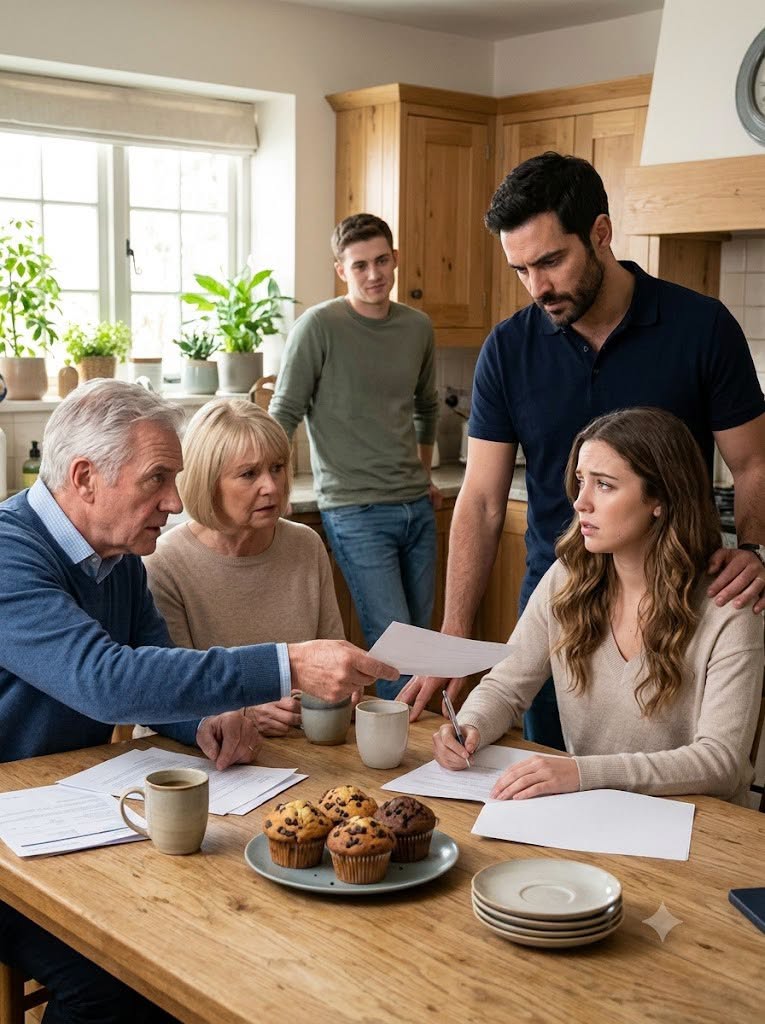
The documents my family presented did not surprise us.
A year earlier, after receiving legal advice, Sam and I had arranged the ownership of the property in a way that protected both of us and ensured that any future decisions would follow the law rather than emotional pressure.
After my family left, Sam and I spent the evening carefully packing our belongings, family keepsakes, and wedding gifts.
Before dawn, everything that belonged to us had been loaded onto a moving truck.
We left behind a letter explaining the legal situation clearly and respectfully.
Then we began the drive toward a quiet historic town in rural Pennsylvania, where we hoped to begin married life free from constant conflict.
As the miles passed, I felt something I had not experienced in a long time.
Relief.
Not because I was leaving people behind.
But because I was finally leaving behind a pattern that had quietly shaped much of my life.
The Reality of Shared Ownership
When Damian later returned expecting to move into the house, he discovered that the legal situation was different from what he had assumed.
While I had transferred my own interest according to the documents presented, I had never been the sole owner.
Sam, who legally held the remaining ownership interest, had already exercised his own rights through an independent transaction arranged in advance.
The result was not intended as punishment.
It simply reflected the legal reality of shared ownership.
From that point, the future of the property would be determined through the ordinary legal process available to all parties.
Sometimes the clearest answer is not confrontation but allowing agreements to function exactly as they were written.
Living With Consequences
The property was eventually sold according to the applicable legal arrangements.
The outcome disappointed my family, but it also required everyone involved to begin making decisions based on responsibility rather than expectation.
No one could continue assuming that my work, savings, or future would always be available to solve someone else’s problems.
Those lessons were difficult.
Yet they proved necessary.
Healthy relationships cannot be built upon one person’s endless sacrifice.
A Different Beginning
In the months that followed, something unexpected happened.
The distance created room for change.
Damian eventually found steady employment and began supporting himself more consistently.
My parents also started approaching our conversations with greater respect than they had shown for many years.
Not every wound disappeared.
Trust, once damaged, takes time to rebuild.
But healthier boundaries allowed each of us to relate to one another more honestly than before.
What I Learned
Looking back, I realized that protecting my future did not mean abandoning my family.
It meant refusing to confuse love with unhealthy obligation.
Real generosity must remain voluntary.
When it is demanded without gratitude or fairness, it eventually becomes a burden rather than a gift.
Today, life in the countryside is quieter.
Sam and I have built a home shaped by mutual respect, shared responsibility, and peace.
The greatest freedom I found was not in winning a conflict.
It was in discovering that firm boundaries can exist alongside compassion, and that caring for others should never require surrendering the future we have worked honestly to build.