
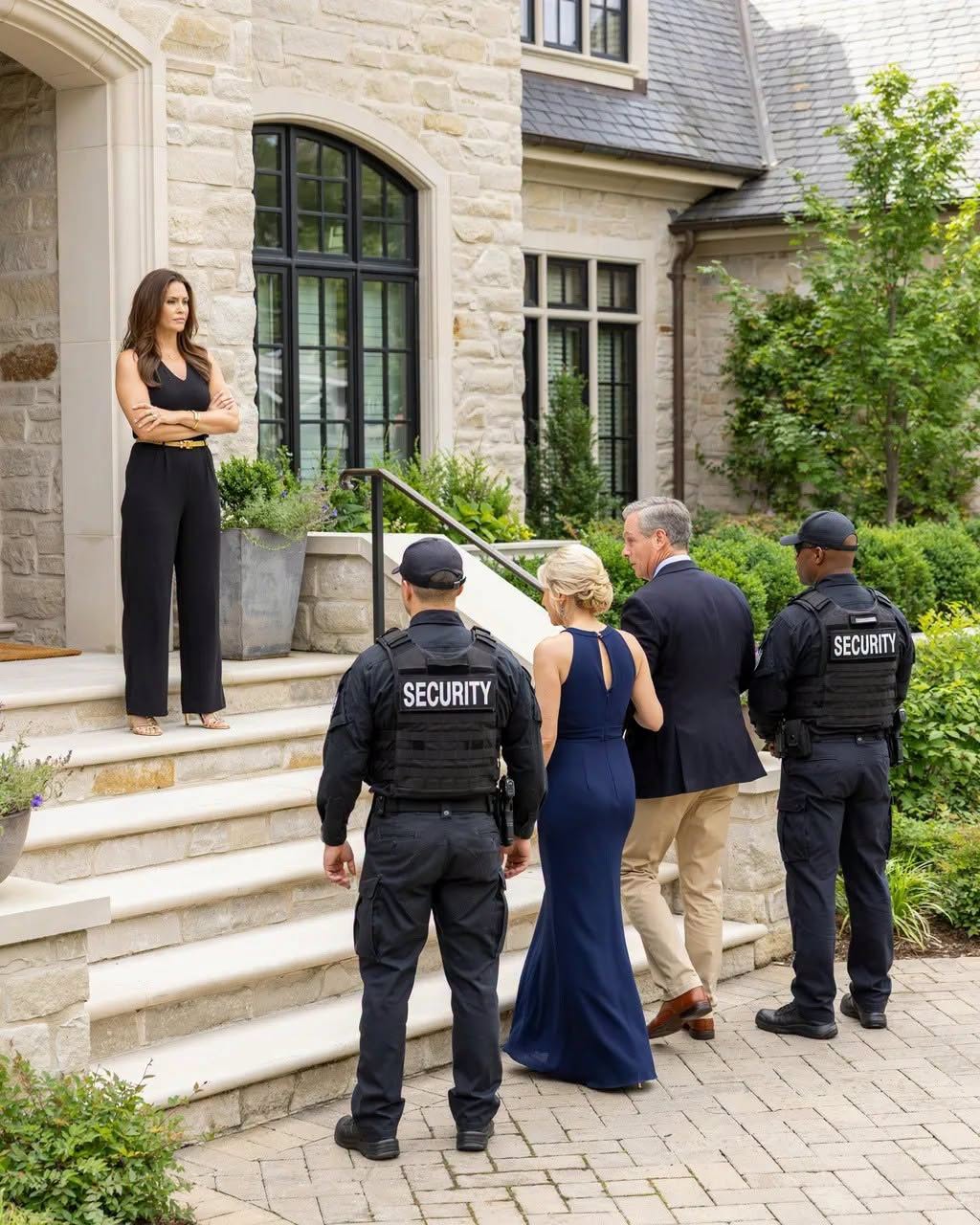
Less than a day after the estate became public knowledge, my parents and Caleb arrived at the property.
They believed they were entitled to part of the inheritance and demanded immediate access.
Because tensions were rising, the head of the estate’s security team—a former state trooper—asked them to leave peacefully in accordance with the property’s legal ownership.
The situation ended without further confrontation, though it was clear the disagreement was far from over.
The following day, I received notice that members of my family intended to challenge my uncle’s will.
They claimed I had improperly influenced him during his final months.
Although the accusations were painful, I knew they would have to be answered with evidence rather than emotion.
Letting the Facts Speak
Fortunately, my uncle had planned carefully.
His estate documents had been prepared with independent legal counsel.
Medical evaluations confirmed that he possessed full decision-making capacity when the will was executed.
Meetings concerning the estate had also been documented thoroughly.
Around the same time, security records showed that Caleb had returned to the property before dawn and attempted to access the estate without authorization.
The incident was reported through the appropriate legal channels, and the court later issued temporary restrictions while the matter was reviewed.
It was an unfortunate development, but clear boundaries were necessary to prevent further conflict.
The Court’s Decision
When the case came before the court, both sides were given the opportunity to present their evidence.
My attorney, Dana, carefully organized the documentation supporting my uncle’s wishes, including medical records, legal testimony, and security evidence.
Rather than focusing on personal accusations, she allowed the documented facts to guide the proceedings.
After reviewing the evidence, the court upheld my uncle’s estate plan and dismissed the legal challenge.
Protective orders regarding the property were also confirmed.
The outcome did not erase the sadness of what had happened within my family, but it provided clarity and legal certainty during a deeply emotional time.
When reporters later asked for a comment, I simply said that my greatest responsibility was to honor my uncle’s intentions faithfully.
Nothing more needed to be added.
A Responsibility Greater Than Wealth
As the weeks passed, I assembled a professional advisory team to oversee the estate responsibly.
My first concern was not expanding the wealth I had received.
It was ensuring that employees, tenants, and everyone connected to my uncle’s business experienced stability during a period of transition.
Meanwhile, some relatives continued reaching out, hoping to persuade me to reverse my decisions.
I listened where appropriate, but I also understood that compassion does not require surrendering healthy boundaries.
Sometimes the most loving response is also the clearest one.
Carrying Forward a Legacy
In time, I chose to dedicate part of the inheritance to establishing a housing stability grant for young adults who had been forced from their homes because of coercion, manipulation, or unsafe family circumstances.
It felt like a fitting way to honor both my uncle’s generosity and my own journey.
Looking back, I realized that his greatest gift had never been the size of the estate.
It was the confidence he placed in qualities that had often gone unnoticed—quiet discipline, steady work, and the willingness to build a life honestly even when no one else seemed to value those efforts.
Money can provide opportunities.
Character determines how those opportunities are used.
That lesson became the inheritance I treasured most.