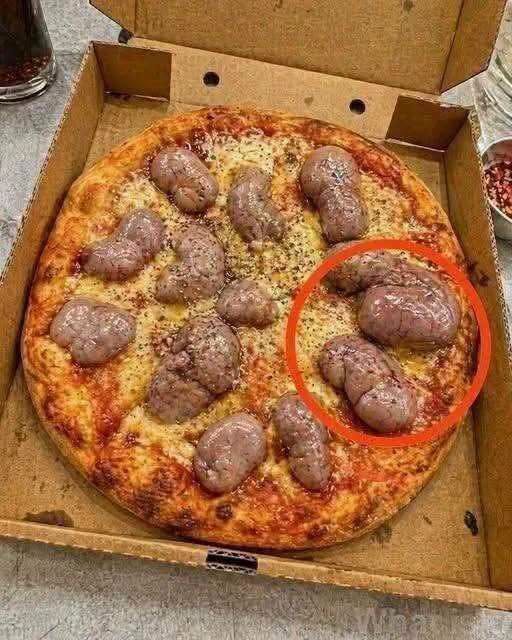
air, replaced by a sudden, sharp spike of unease. The surface of the pizza was not the smooth, golden landscape of melted mozzarella I had anticipated. Instead, it was covered in a series of peculiar, raised bubbles, each one standing out against the cheese like a miniature, hardened blister. In the dim light of my kitchen, these protrusions seemed alien, almost sinister. My brain, tired and seeking patterns, immediately began to construct a narrative of contamination or catastrophic failure in the kitchen. I stood motionless, the box held open, feeling a strange sense of betrayal by a meal that should have been harmless. Was the cheese spoiled? Had the oven malfunctioned in some dangerous way? My pulse quickened as I stared at the strange, dome-like structures, convinced that I was looking at evidence of something fundamentally wrong. I felt a wave of suspicion wash over me, a defensive reaction born from a lack of immediate recognition. I found myself pacing the small space, the box still open on the counter, as I debated whether the pizza was even fit for consumption. I felt foolish for being so rattled, yet the physical evidence in front of me felt like a warning I could not ignore. The silence of the house seemed to amplify my anxiety, turning a simple dinner into a minor psychological crisis. I realized then how quickly my mind could pivot from hungry anticipation to defensive paranoia, all because of a visual anomaly I could not immediately categorize. The pizza, which had been a source of comfort moments ago, now sat there as a silent, perplexing puzzle that I felt compelled to solve before I could take a single bite.
Driven by a sudden, frantic need for clarity, I abandoned the kitchen and retreated to my sofa, phone in hand. I began to type out descriptions of the pizza, using search terms that felt increasingly desperate and absurd. I felt like a detective investigating a crime scene where the only victim was my own dinner. As I scrolled through forums and culinary articles, the tension in my shoulders began to subside. I found thread after thread of people who had experienced the exact same phenomenon, accompanied by calm, technical explanations. The bubbles, it turned out, were merely the result of air and moisture trapped beneath the cheese during the high-heat baking process. As the steam expanded, it pushed the melting cheese upward, creating those distinct, dome-like pockets. There was no contamination, no failure, and certainly no danger. It was a perfectly normal, albeit visually striking, byproduct of physics and heat.
The relief I felt was immediate and profound, yet it was quickly followed by a wave of self-reflection. I looked back at the kitchen, where the pizza now sat, looking exactly as it had minutes before. The bubbles had not changed, the cheese had not shifted, and the ingredients remained identical. The only thing that had undergone a transformation was my own perspective. I had allowed my lack of knowledge to dictate my emotional response, turning a mundane culinary occurrence into a source of genuine dread. It was a humbling realization. How often, I wondered, do I apply this same flawed logic to other areas of my life? How many times have I looked at an unfamiliar situation, a strange remark, or a sudden change in plans and immediately assumed the worst, simply because I lacked the context to understand the truth? I had been so ready to condemn the pizza, to call the restaurant and complain, or perhaps even throw the meal away, all based on a snap judgment that was entirely disconnected from reality. The bubbles were not a sign of neglect; they were simply a sign of the cooking process.
I walked back to the kitchen, feeling a newfound sense of calm. I picked up a slice, observing the bubbles with a curious, rather than suspicious, eye. They were just pockets of air, trapped and transformed by the heat of the oven. I took a bite, and the flavor was exactly what I had hoped for—rich, salty, and satisfying. The experience had been a masterclass in the psychology of perception. My brain had sought to protect me by identifying a threat where none existed, a primitive instinct that, in this modern context, served only to create unnecessary stress. I sat at my table, eating my dinner in the quiet of the evening, and found that the meal tasted better for the lesson it had provided. I had learned that the unknown is not synonymous with the dangerous, and that a moment of patience is often the best antidote to the impulse to jump to conclusions. By the time I finished the last slice, the strange bubbles were no longer a mystery, but a reminder to pause, breathe, and seek the truth before letting my imagination run wild. The pizza had arrived as a simple meal, but it ended as a quiet, necessary reminder of the importance of perspective in navigating the complexities of everyday life.