
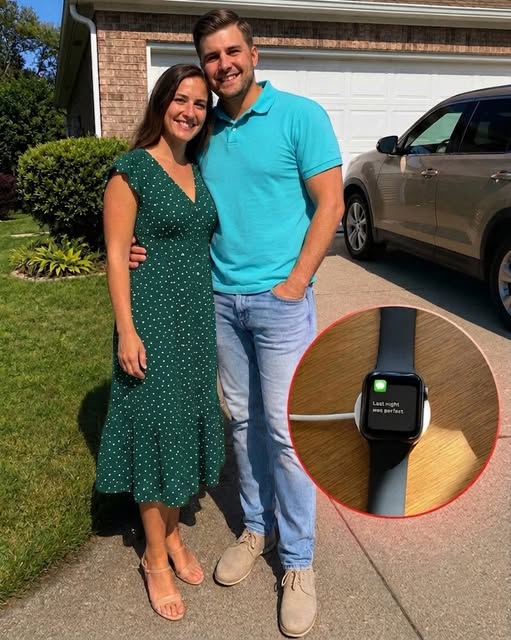
and reeling as I watched the screen fade back into darkness, leaving me to wonder if the man I had woken up next to for nearly a decade was, in fact, a stranger wearing a familiar face. My hands trembled as I gripped the edge of the counter, the ceramic coffee mug clattering against the stone with a sound that seemed deafening in the quiet house. Cameron’s footsteps echoed from the floor above, rhythmic and steady, a sound that had once brought me comfort but now felt like the ticking of a countdown clock. I forced myself to breathe, to regulate the frantic rhythm of my heart, as I moved toward the sink to wash the phantom residue of our domestic normalcy from my shaking hands. When he finally descended the stairs, his tie perfectly knotted and his expression unburdened by the weight of deception, I felt a surge of nausea. He reached for the watch, his movements fluid and careless, and strapped it to his wrist without a second glance. He leaned down to press a lingering, practiced kiss to my cheek, his skin smelling of the expensive soap I had bought him for our anniversary, and the sheer audacity of his composure made my skin crawl. He spoke of the project, of the relentless demands of his team, and of the late hours that would surely stretch into the evening, his voice smooth and devoid of the jagged edges of a lie. I watched him, a mask of supportive wife firmly in place, nodding at the right intervals, offering the appropriate murmurs of understanding, while behind my eyes, a cold, analytical fire began to burn. I did not ask him to elaborate. I did not mention the watch. I simply watched him walk out the door, the heavy front door clicking shut with a finality that signaled the end of my old life.
I waited in the driveway, the engine of my car idling with a low, vibrating hum that mirrored the agitation in my soul. When his silver sedan finally pulled away, I gave him a lead of two blocks, my movements mechanical and precise. The streets were crowded with the usual morning rush, a sea of commuters oblivious to the quiet drama unfolding in their midst. I kept his taillights in view, a small red beacon guiding me through the labyrinth of the city. Every turn he made, I followed, my grip on the steering wheel so tight my knuckles turned white. We traveled through neighborhoods I barely recognized, moving further away from the comfortable suburban life we had curated together. My mind replayed the last few weeks, searching for cracks in the facade, for the subtle shifts in his behavior that I had dismissed as work-related stress. There were the late dinners, the missed calls, the nights he came home smelling faintly of a perfume that was not mine, a scent I had foolishly attributed to the crowded office environment. The realization that I had been blind for so long brought a wave of hot, stinging tears to my eyes, but I blinked them away. This was not the time for grief; this was the time for the truth.
He pulled into a parking garage downtown, a massive concrete structure that swallowed his car into its dark, cavernous depths. I parked a level below, my heart hammering against my ribs like a trapped bird. I watched from the shadows as he emerged, his posture changing the moment he was out of sight of the street. He walked with a lighter step, a spring in his gait that I hadn’t seen in years. He bypassed the office building where he claimed to work and instead crossed the street toward a small, secluded café tucked away in an alleyway. I followed at a distance, my breath hitching as I saw him stop at a table near the back. A woman stood up to greet him, her face lighting up with a radiance that made my stomach drop. She was younger, vibrant, and looked at him with an intensity that spoke of a shared history I was not a part of. He reached out, taking her hands in his, and the way he looked at her—with a tenderness that was raw and unfiltered—shattered the last remnants of my doubt. I stood behind a pillar, the cold stone pressing against my back, and watched as they leaned in, their foreheads touching in a gesture of profound intimacy. The words from the watch echoed in my mind, a cruel validation of the reality I had been trying to deny. It wasn’t just a project. It wasn’t just work. It was a life I had been excluded from, a secret existence he had been cultivating while I kept his dinner warm and waited for him to come home.
I didn’t confront them. I didn’t scream or demand answers in the middle of the crowded café. Instead, I stood there, watching the man I loved share a life that didn’t include me, and in that moment, the weight of the last nine years shifted. The facade of our marriage, once a fortress, now looked like a fragile, hollow shell. I realized that the betrayal wasn’t just the affair; it was the systematic erosion of our truth, the way he had allowed me to believe in a version of us that had ceased to exist long ago. I turned away, the sound of their laughter fading into the background noise of the city. As I walked back to my car, the air felt different—sharper, colder, and undeniably real. I drove home in silence, the radio off, the world outside the window blurring into a smear of grey and green. I arrived at the house, which now felt like a museum of a life that no longer belonged to me. I walked through the rooms, touching the objects we had collected together, the photographs on the mantle, the books on the shelves, and felt a strange, detached sense of peace. The mystery was gone, replaced by the stark, undeniable reality of my own solitude. I went upstairs and packed a small bag, not with the intention of running away, but with the intention of finally walking toward something that was actually mine. When Cameron returned that evening, expecting the same warm house and the same unsuspecting wife, he would find the house empty and the truth waiting for him in the silence. I had followed him to find the truth, and in doing so, I had finally found the strength to leave the lie behind. The path forward was uncertain, but for the first time in nine years, it was entirely my own.