Many classic wooden nut bowls—often called nut trenchers—were thoughtfully designed to make shelling nuts easier and more enjoyable. Some featured a built-in metal nutcracker attached to the bowl, allowing users to crack walnuts, pecans, hazelnuts, and other hard-shelled nuts without damaging the edible kernels. The sturdy wooden construction also helped keep shells contained while protecting furniture from scratches.
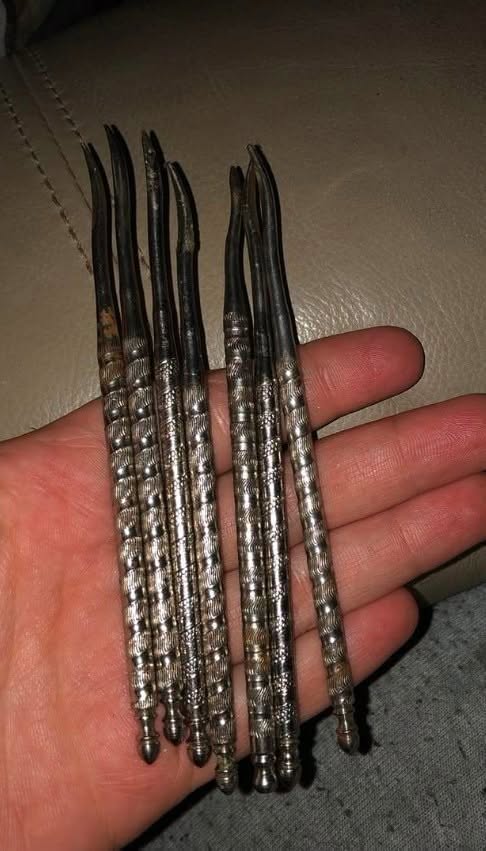
Accompanying these sets were small metal tools known as nut picks or nut forks. Their slender, pointed design made it easy to remove nutmeats from tight shells that fingers alone couldn’t easily reach. Although originally intended for nuts, similar picks remain popular today for eating seafood such as crab, lobster, and other shellfish, making them versatile additions to the kitchen.
Beyond their nostalgic appeal, these traditional tools can also encourage gentle hand exercise. Cracking shells and using nut picks require grip strength, coordination, and fine motor control. For many people—particularly older adults—these small, repetitive movements can help keep the hands active while providing a relaxing, hands-on activity that doesn’t involve screens or technology.
The nuts themselves offer impressive nutritional benefits. Walnuts, almonds, pecans, hazelnuts, and pistachios are rich in heart-healthy unsaturated fats, fiber, plant protein, vitamins, minerals, and antioxidants. When enjoyed in moderation as part of a balanced diet, they can support cardiovascular health, promote satiety, and contribute to overall wellness.
These vintage serving sets also fit beautifully into modern entertaining. A wooden nut bowl can be paired with fresh fruit, cheeses, whole-grain crackers, olives, or avocado-based dips to create an inviting snack board that blends traditional charm with contemporary healthy eating. The presentation encourages guests to slow down, enjoy conversation, and savor simple, wholesome foods.
Perhaps the greatest appeal of these heirloom pieces is the reminder they offer about intentional living. They encourage us to appreciate well-made objects, spend time with family and friends, and enjoy the small rituals that often make everyday life more meaningful. Rather than rushing through a snack, cracking nuts by hand becomes part of the experience itself.
Today, vintage wooden nut bowls, classic nutcrackers, and nut picks remain treasured collectibles as well as practical kitchen tools. They represent craftsmanship, tradition, and the enduring value of slowing down to appreciate simple pleasures. In a fast-paced world, these timeless pieces remind us that some of the most satisfying moments come from ordinary routines shared with the people we love.