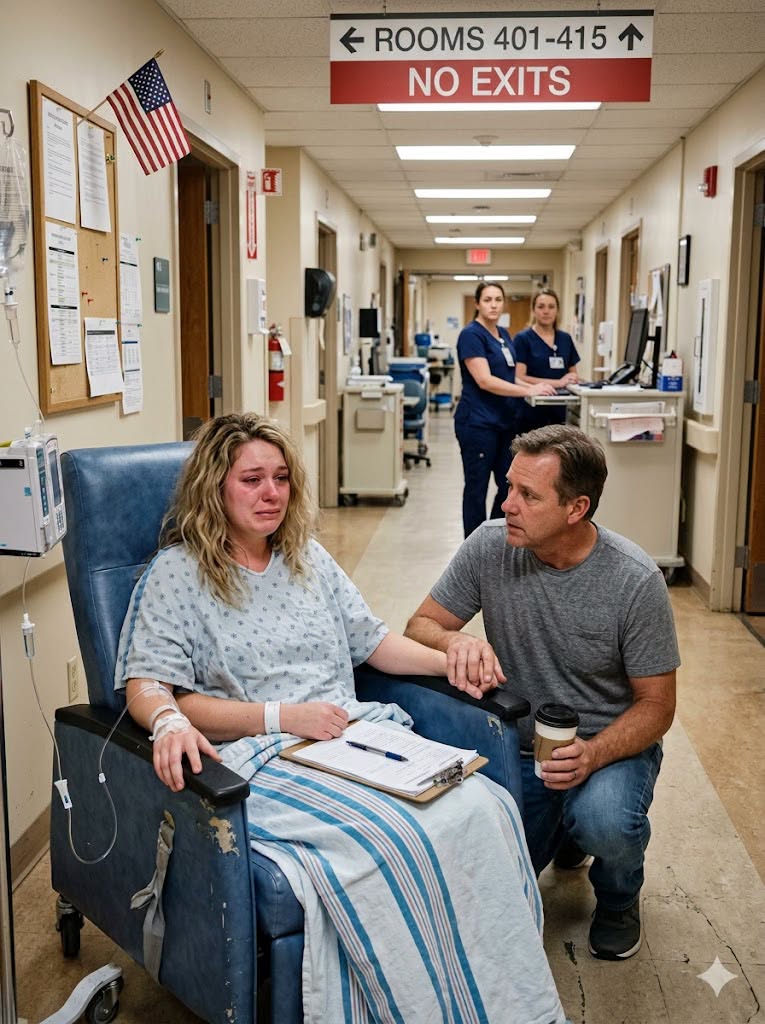
She carried everything in silence.
When she saw me, she tried to hide the paperwork in her lap.
A nurse approached and asked if someone could join Emily for the discharge discussion.
Without thinking, I said,
“I’ll go.”
The doctor explained that Emily had delayed seeking treatment because she didn’t want to burden anyone.
She had listed me as her emergency contact.
Even after everything, she hadn’t changed that.
Afterward, I drove her home.
She insisted she’d be fine on her own.
I didn’t argue.
I made tea, left her prescriptions on the kitchen counter, and wrote down the date of her next appointment before heading home.
The next week, I offered to drive her again.
Then the appointment after that.
Slowly, our conversations returned.
Not about getting back together.
About how we had stopped talking long before we signed divorce papers.
We admitted the grief we shared had become something we faced separately instead of together.
Over the following months, her health improved.
We spent time cooking simple meals, taking short walks, and learning how to be honest with each other again.
One evening in early autumn, we sat in the car after another follow-up appointment.
Emily looked at me and smiled.
“This is the first time in years I haven’t felt alone.”
Neither had I.
Sometimes love doesn’t return through grand declarations.
Sometimes it comes back one ordinary ride, one cup of tea, and one kept promise at a time.