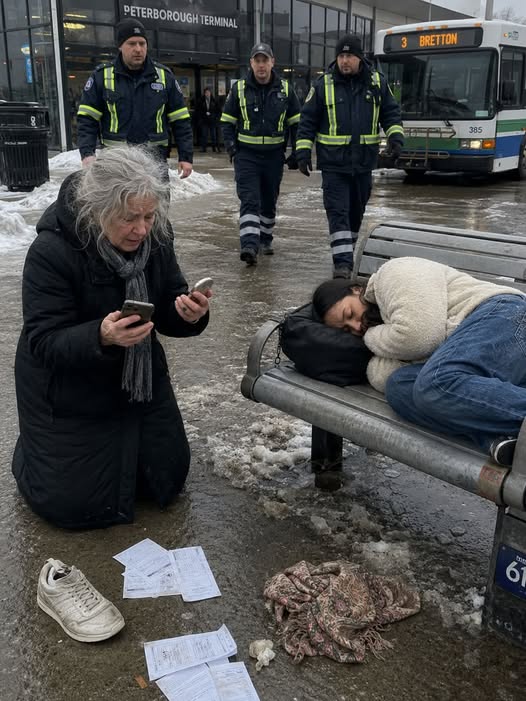
He spoke with the detached boredom of a man disposing of refuse, informing me that my daughter, Chloe, was waiting at the downtown bus terminal after a supposed hysterical breakdown. I knew better. Chloe, a brilliant engineer, was the most composed person I had ever known. She did not break; she was broken. When I arrived at the terminal, the sight of her shivering on a cold metal bench, battered and abandoned, shattered the fragile peace I had maintained for years. She whispered the names of her tormentors: Marcus and his mother, Sylvia. They had discarded her to make room for a mistress at their holiday table, believing that as a retired federal prosecutor, I was merely an invisible, harmless widow who would accept their cruelty as a family nuisance. They were profoundly mistaken.
I did not scream. I did not panic. Instead, I reached into the lockbox I had kept since my days in the courtroom, retrieving the badge that represented a lifetime of holding powerful men accountable. I called 911, and my voice was as steady as a gavel strike. I provided the dispatcher with the precise details of the assault, the location, and the necessity for immediate police intervention, ensuring that every word was recorded as official evidence. I knew that in the architecture of justice, the first hour is the most critical. By the time the police arrived, I had already secured the terminal’s security footage, capturing the exact moment Marcus and Sylvia dumped their victim and callously removed her wedding ring. I watched with clinical detachment as the evidence mounted, transforming their smug holiday gathering into a crime scene.
When the officers arrived at their residence, the turkey was still on the table, but the illusion of their untouchable status had evaporated. As I sat in the hospital, monitoring Chloe’s slow recovery, I felt no need for theatrical outbursts. I had spent years watching guilty men adjust their ties and smile for the cameras, only to see them crumble when the weight of the law finally caught up to them. Marcus and Sylvia were arrested, their arrogance stripped away by the very legal system they assumed I had left behind. Chloe is healing now, surrounded by a support system that values her humanity rather than treating her as a disposable inconvenience.
I remain the woman who bakes pies and clips coupons, but the badge remains in its box, a quiet reminder that justice is not a matter of volume, but of evidence. The narrative of their cruelty has been rewritten by the cold, hard facts of the law, and in the quiet aftermath, I have found the only resolution that truly matters: the truth, preserved and protected, standing firm against the shadows of the past. The legal process is a slow, grinding machine, but it is one I know how to operate with absolute precision. My daughter’s recovery is a testament to the resilience of the human spirit when it is no longer forced to endure the weight of abuse, and my own composure is the result of a life spent understanding that the law, when applied correctly, is the only true equalizer. We have moved beyond the terror of that morning, and while the scars remain, they are no longer a mark of victimhood, but a record of survival. The dining room where Marcus once stood is now empty of his influence, and the table at my home is set for those who truly belong. Justice, in its most profound sense, is not merely the punishment of the guilty, but the reclamation of one’s own life from the wreckage they left behind. We are whole again, and the silence in our home is no longer a vacuum of fear, but a space of peace, earned through the unwavering application of the truth. The case is closed, the evidence is filed, and we have finally stepped into a future where the only voices that matter are our own.