He looked at me once.
Then he decided I had betrayed him.
That same night, he packed a suitcase and left.
Within days, he was openly dating his coworker, Paola—a woman who had once sat in my kitchen asking for recipes and complimenting our marriage.
The betrayal hurt.
The disbelief hurt even more.
The following morning, Diego’s mother arrived to collect the rest of his belongings.
She looked at my growing stomach with open contempt, saying nothing that could comfort, only confirming what she already believed.
Soon the neighborhood had its own version of my story.
People whispered.
Old friends stopped calling.
I became the woman who had “cheated on her husband.”
Two weeks later, Diego insisted we meet at a café.
Paola sat beside him.
He slid a legal folder across the table.
If a future paternity test proved the baby wasn’t his, he wanted me to surrender our house and repay marital expenses.
I closed the folder.
“I won’t sign.”
That was the only answer he received.
After that meeting, I spent many evenings alone inside my house, locking every door more out of emotional exhaustion than fear.
When the day of my ultrasound arrived, I went by myself.
I chose my clothes carefully, took a deep breath, and reminded myself that whatever happened, this child deserved a mother who could still stand.
Dr. Salinas greeted me with quiet kindness.
She asked gentle questions, never once judging me when I explained that my husband denied the pregnancy could possibly be his.
The room darkened.
Cold gel touched my stomach.
Moments later, the steady rhythm of a tiny heartbeat filled the room.
I cried.
For the first time in weeks, hope became louder than humiliation.
Then Dr. Salinas became unusually quiet.
She moved the ultrasound probe again.
Paused.
Zoomed in.
Checked my records.
Then looked back at me.
“When exactly was your husband’s vasectomy?”
“Two months ago,” I answered.
She nodded slowly.
“The baby looks healthy,” she said reassuringly. “But I’ve noticed something unexpected.”
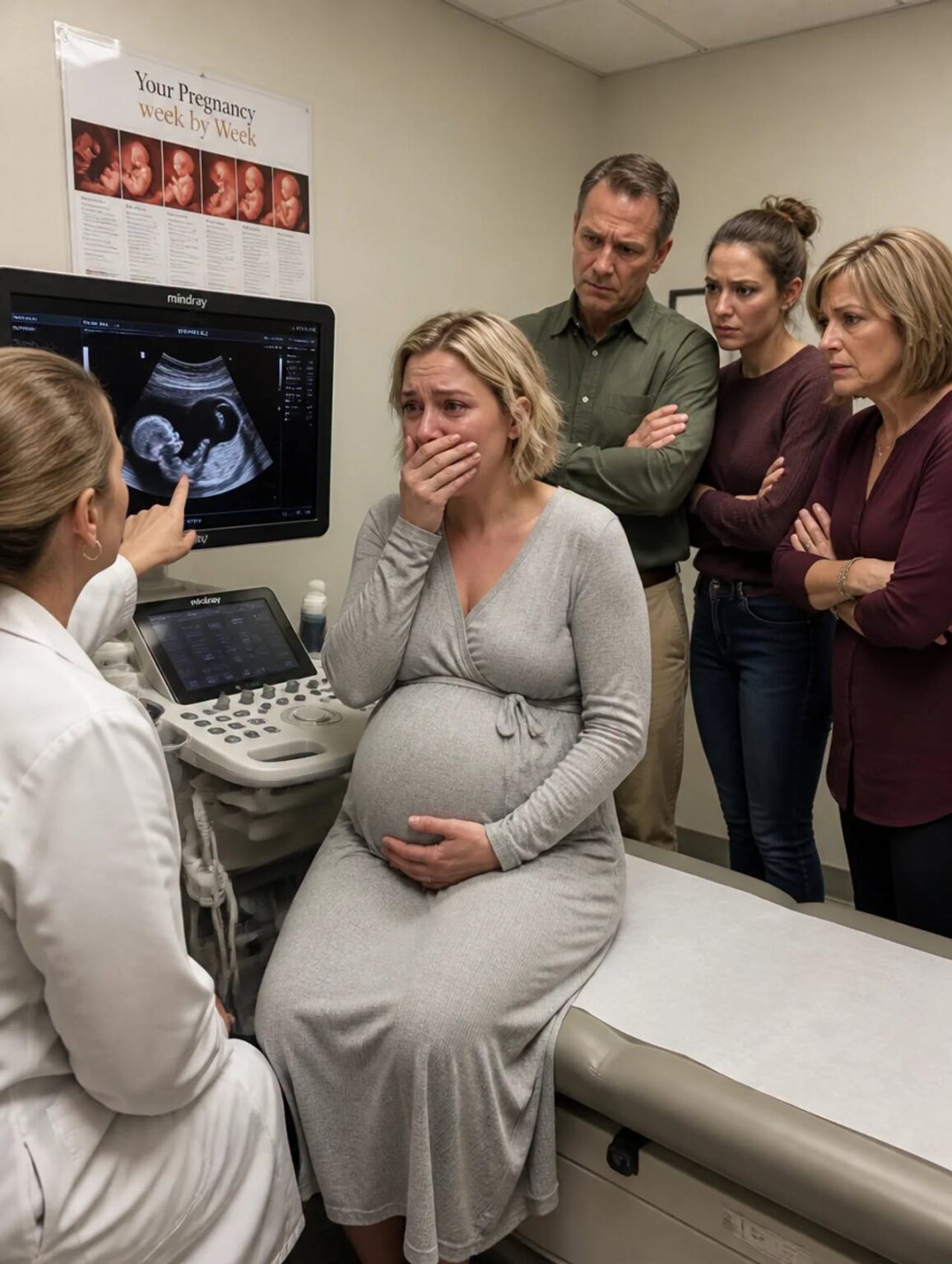
Before I could ask another question, the examination-room door opened.
Diego and Paola walked inside without permission.
He looked at the monitor with the same certainty he had carried since leaving me.
“Tell us the gestational age,” he demanded. “That’ll settle everything.”
Dr. Salinas turned toward him.
Her expression remained calm.
“Before you accuse your wife again,” she said, “I’d like you to look carefully at the screen.”
She pointed toward the measurements.
“The pregnancy dates are fully consistent with conception after your vasectomy—but that does not automatically mean the child isn’t yours.”
She explained what Diego had never bothered to learn.
A vasectomy does not create immediate sterility.
Until follow-up testing confirms that no sperm remain, pregnancy is still medically possible.
“The dates,” she continued, “fit exactly within that window.”
The room became silent.
For weeks, Diego had treated suspicion as certainty.
Yet a five-minute medical explanation had undone everything he believed.
He looked at the screen.
Then at me.
For the first time since leaving, he had no accusation left.
Only silence.
I realized something in that moment.
Whether he apologized or not could never return what had already been broken.
Trust cannot survive where judgment arrives before truth.
As I watched my baby’s heartbeat continue across the screen, I stopped thinking about proving my innocence.
I had already been given something far more important.
The quiet certainty that truth does not need to shout.
It only needs enough time to be seen.