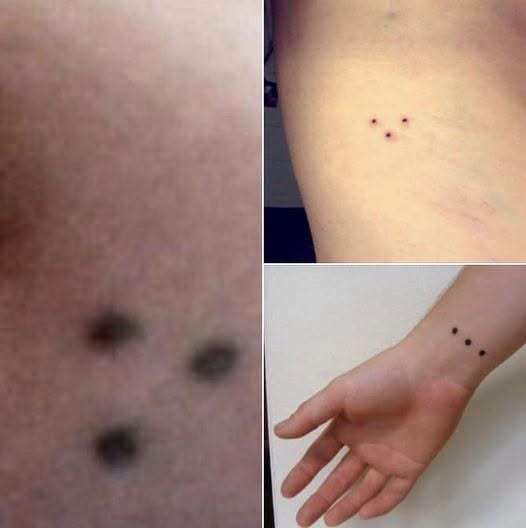
permanently ink this design onto their skin. To understand the true significance of the three-dot motif, it is necessary to look past the sensationalized headlines and recognize that symbols are inherently context-dependent. While it is true that the symbol has been historically associated with the phrase “mi vida loca,” or “my crazy life,” within specific subcultures and gang environments, this is far from the only interpretation. In many instances, the dots represent a narrative of survival rather than a declaration of criminality. For many individuals, the design serves as a testament to navigating through periods of intense personal chaos, hardship, or systemic struggle. It is a mark of resilience, signifying that the wearer has endured difficult circumstances and emerged on the other side. By reducing this symbol to a singular, negative connotation, we ignore the strength and the personal history that the wearer may be trying to honor.
Beyond the realm of subculture, the three-dot tattoo is frequently used to represent deeply personal milestones that have nothing to do with external affiliations. For many, the dots serve as a minimalist tribute to children, cherished family members, or significant others. In this context, the three dots might symbolize a trio of loved ones, the birth order of children, or a specific date that holds profound emotional weight. The beauty of such a design lies in its simplicity; it is a discreet, intimate way to carry a piece of one’s heart on their sleeve, literally. When viewed through this lens, the tattoo becomes a symbol of connection and devotion rather than a source of alarm.
Furthermore, the symbol often carries spiritual or philosophical weight. In various belief systems, the number three is considered significant, representing concepts like the past, present, and future, or the harmony of mind, body, and spirit. For some, the dots are a reminder of their faith or a commitment to maintaining balance in a hectic world. Others may choose the design simply for its aesthetic appeal. The minimalist nature of three small dots fits well with modern tattoo trends that favor subtlety and geometric simplicity. In these cases, the choice is purely artistic, reflecting a personal preference for clean, understated lines that do not require an elaborate explanation to be meaningful to the person who wears them.
The tendency to judge individuals based on a single, isolated symbol is inherently reductive. It ignores the reality that human beings are multifaceted, and their choices are rarely defined by one aspect of their appearance. When we rely on broad, fear-based generalizations, we risk mischaracterizing people and fostering unnecessary social friction. A tattoo is a form of self-expression, but it is not a complete biography. It cannot tell us about a person’s character, their current intentions, or the kindness they might show to a stranger. By replacing knee-jerk reactions with curiosity and empathy, we can move toward a more nuanced understanding of the people around us.
Ultimately, the most practical approach to encountering a symbol like the three-dot tattoo is to avoid making assumptions altogether. Symbols are fluid; they change meaning depending on the person, the culture, and the time period in which they are used. Instead of relying on internet-fueled panic, recognize that a person’s character is defined by their actions and their interactions with others, not by a small cluster of ink on their skin. If you find yourself wondering about the meaning of a tattoo, the best course of action is to remember that you are looking at a fragment of someone else’s personal story. Respecting that complexity is the most mature and accurate way to navigate social interactions in an increasingly diverse world. When in doubt, prioritize the individual’s behavior over the symbols they wear, as a person’s true nature is always revealed through their deeds, not through static, ambiguous imagery.