The morning it began was painfully ordinary.
The kitchen smelled of the same cheap coffee I had brewed every day since David died. I poured it into his old chipped mug, even though I had told myself a hundred times that I should throw it away.
Outside the window, the maple tree in our small backyard had begun shedding its leaves.
Inside, the house held the particular silence a widowed mother eventually learns to live inside without noticing.
I moved through the morning routine on instinct.
Peanut butter on wheat bread.
Apple slices in the blue container.
A folded napkin with a smiley face, which I still drew even though Ethan pretended not to notice.
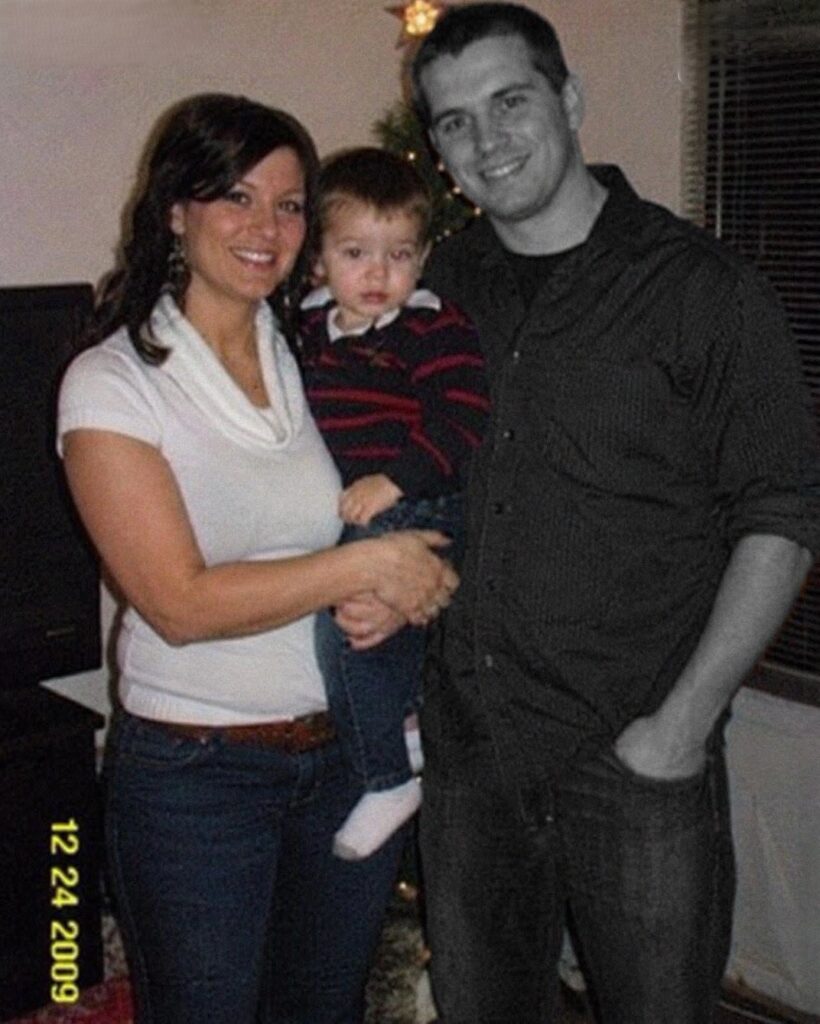
On the living-room shelf, our family photograph caught the pale morning light.
David, me, and Ethan at four years old, all squinting into the summer sun.
It had been taken months before David died.
“Ethan, breakfast,” I called.
He came downstairs slowly, his hair sticking up on one side and his backpack already hanging from one shoulder.
“I’m not hungry.”
“You said that yesterday.”
He shrugged and ran one finger along the edge of the counter.
Lately, he had been doing that often.
Shrugging.
Drifting.
Asking me small questions that felt much heavier than they sounded.
“Mom?”
“Yes?”
“Do you think Dad would have liked me?”
I looked at him.
“Of course he would.”
“I mean me now. Not when I was little.”
I set the knife down.
“He loved you, Ethan. He would love the person you are now.”
“But you don’t know for sure.”
“I knew your father.”
He looked toward the family photograph.
“That is enough,” I added.
He nodded but did not seem convinced.
He took two small bites of toast, chewing as though his mind was somewhere else.
“Is something happening at school?” I asked.
“No.”
“You would tell me?”
For one brief moment, something appeared in his eyes.
Fear, perhaps.
Or guilt.
Then it vanished.
“Yeah, Mom.”
I kissed the top of his head and pretended I believed him.
A few minutes later, the school bus carried him away.
I stood at the window longer than usual, watching until it disappeared around the corner.
Then I returned to my coffee and the careful life I had built after David’s funeral.
A life in which I was both mother and father.
A life where nothing new could hurt us because I had stopped allowing anything new to enter.
The phone rang at 9:17 that evening.
I remember the exact time because I had just looked at the microwave clock and considered calling my sister.
“Hello?”
“Hi, this is Mrs. Carter from Lincoln Elementary.”
Her voice was cautious.
“I wanted to confirm something with you. Is everything all right with Ethan’s father?”
I frowned at the empty kitchen.
“I’m sorry?”
“He picked Ethan up from school yesterday.”
A laugh escaped me.
It was small, sharp, and completely involuntary.
“That is not possible.”
Mrs. Carter went silent.
“My husband died eight years ago,” I said.
The silence on the line changed.
It became heavier.
“I’m so sorry,” she whispered. “I did not know.”
“What exactly happened?”
“The man came into the office and signed Ethan out. He said he was his father.”
My hand tightened around the phone.
“You released my child to a stranger?”
“He knew Ethan’s full name, his birthday, and several emergency details. Ethan recognized him and ran straight to him.”
My knees weakened.
“There is something else,” she continued. “Our receptionist took a photograph for the visitor record. I’m sending it now.”
My phone buzzed.
I opened the message.
The man in the photograph stood inside the school office looking directly into the camera.
It was David.
Not someone who resembled him.
Not a stranger with the same build or hair.
It was my husband’s face.
Older, perhaps.
Thinner.
But unmistakably his.
The phone slipped from my hand and struck the counter.
“I’m coming to the school,” I said.
The drive was a blur.
I do not remember stopping at red lights or even closing the garage door.
Twenty minutes later, I rushed into the school office still wearing my house slippers.
Mrs. Carter stood behind the counter with her hands clasped tightly.
“I am so sorry.”
“I need to see Ethan.”
She nodded to the receptionist.
A moment later, Ethan entered.
His smile vanished when he saw me.
“Mom?”
I crossed the room.
“Who picked you up yesterday?”
He froze.
“Mom—”
“Answer me.”
His eyes dropped to the floor.
“He said not to tell you yet.”
I knelt in front of him and held his shoulders.
“Who said that?”
His lip trembled.
“My dad.”
The word seemed to split the room apart.
“Ethan, your father died when you were two.”
“I know what you told me.”
My hands fell away from his shoulders.
“What does that mean?”
“He showed me pictures.”
“What pictures?”
“Pictures of us at the beach. Grandma’s birthday. The old house.”
His voice grew more urgent.
“He knew about Rusty.”
My mouth went dry.
Rusty had been David’s childhood dog.
The dog had died years before Ethan was born.
I had mentioned him perhaps twice.
“How long have you been talking to this man?”
Ethan stared at the floor.
“A few weeks.”
“Weeks?”
“He waits near the fence sometimes. Yesterday was the first time he came inside.”
I pulled him into my arms.
He did not resist, but he did not hug me back.
“He isn’t dangerous,” Ethan whispered. “He cried when he saw me.”
“You do not know him.”
“He said he had waited his whole life to meet me.”
Every warning inside me was sounding at once.
Yet beneath the terror was something worse.
Hope.
A tiny, shameful part of me wanted the photograph to be real.
Mrs. Carter waited until Ethan had returned to class before turning the visitor log toward me.
I scanned the signatures.
Then I saw it.
David Carter.
The handwriting was his.
The looping capital D.
The sharp hook at the end of his surname.
I had not seen that handwriting in eight years, yet I recognized it instantly.
“That is his signature.”
Mrs. Carter turned her monitor toward me.
Security footage showed a tall man in a dark jacket entering the building.
He signed the sheet and waited calmly.
When Ethan appeared, the man crouched and opened his arms.
My son ran directly into them.
I gripped the counter.
“Did he say anything strange?”
“He claimed he had been overseas for work. He said his wife would call to confirm everything and apologized for the confusion.”
“His wife?”
Mrs. Carter nodded.
“He was polite. Almost too calm. Something about it did not feel right, which is why I contacted you.”
“Should we call the police?” she asked.
I should have said yes immediately.
Instead, I thought about Ethan.
About the hope in his face.
“Give me twenty-four hours,” I whispered.
I drove home with the photograph glowing on the passenger seat.
My mind kept circling the same impossible thought.
David was dead.
I had buried him.
I had chosen the suit.
I had touched the closed coffin.
I had stood beside his brother Marcus while flowers were lowered into the ground.
Marcus.
He had attended every holiday since the funeral.
He had paid for Ethan’s summer camp twice and refused repayment.
He had known David longer than anyone still alive.
I sat in the driveway with the engine running and called him.
He did not answer.
That night, after Ethan finally cried himself to sleep, I carried three cardboard boxes from the basement into the kitchen.
David’s belongings.
Letters.
Documents.
An old address book with softened corners.
I began calling people from his family shortly after sunrise.
His cousin Ruth answered first.
“I know it’s early,” I said. “I need to ask you something strange.”
“Of course.”
“Did David have another brother?”
The pause was too long.
“Why are you asking?”
“Please answer me.”
“You should talk to Marcus.”
She ended the call.
My hands turned cold.
I called four more relatives.
Two avoided the question.
One said David had never discussed his childhood.
The last person, an old college roommate, gave a nervous laugh.
“You should ask his brother.”
“Marcus?”
“No. The other one.”
Then he hung up.
The other one.
Ethan came downstairs wearing pajamas.
I poured him cereal and sat across from him.
“Did the man ever ask you to leave town with him?”
“No.”
“Did he ask you to go anywhere?”
“He said maybe soon.”
My chest tightened.
“What exactly did he say?”
“He said you needed more time to understand.”
I called Marcus again.
This time, he answered.
“I need you to come over.”
“Is everything all right?”
“No.”
He arrived within an hour.
He looked tired, but beneath that fatigue was the same guilty softness he had carried to every family dinner for eight years.
“You look terrible,” he said.
“Sit down.”
He obeyed.
I placed the school photograph on the table.
“Did David have a twin?”
Marcus looked at the picture.
His expression barely changed.
That was how I knew.
“Where did you hear that?”
“Answer me.”
“It is complicated.”
“My son has been secretly meeting a man who looks exactly like my dead husband. Do not tell me it is complicated.”
Marcus looked at his hands.
“I do not know anything about that.”
“You are lying.”
He remained silent.
“Get out.”
He stood and left without defending himself.
His silence told me more than any confession could have.
That evening, I drove to the park where Ethan said the man sometimes waited.
I sat inside my car wearing sunglasses, watching children play and mothers push strollers.
Twenty minutes passed.
Then I saw him.
He stood beside the fountain wearing a gray jacket, his hands in his pockets.
He had David’s shoulders.
David’s posture.
Even the same slight tilt of the head when he was searching for someone.
I threw open the car door.
“You!”
His head turned.
For one impossible moment, I looked directly into my husband’s face.
Then the man walked quickly toward the farmers’ market.
“Stop!”
I chased him between stalls selling fruit, flowers, and jars of honey.
A woman pushing a stroller crossed in front of me.
By the time I stepped around her, he had vanished.
I stood in the middle of the market shaking.
That night, Mrs. Carter and I arranged a trap.
If the man came to the school again, she would contact me before allowing Ethan outside.
For three days, he did not appear.
On the fourth night, I opened Ethan’s bedroom door to kiss him goodnight.
His bed was empty.
The window stood open.
The curtains moved in the cold air.
A folded sheet of notebook paper rested on the pillow.
My hands shook as I opened it.
Went to meet Dad. Be back soon. Don’t be mad.
I called Marcus before I called the police.
“He is gone,” I said. “Ethan is gone. If you know anything, tell me now.”
There was a long silence.
Then Marcus whispered, “His name is Daniel.”
My heart stopped.
“Who?”
“David’s twin.”
I gripped the phone.
“Tell me everything.”
“They were identical. They had not spoken in almost thirty years.”
“Why?”
“It is not my story to tell.”
“My child is missing. It is my story now.”
Marcus’s voice broke.
“David made everyone promise never to mention Daniel.”
“Why?”
“They had a terrible falling-out when they were young. Daniel left the country. David said he never wanted to see him again.”
“Then how did Daniel find Ethan?”
Another silence.
“Marcus.”
“He contacted me after the funeral.”
My breath caught.
“Eight years ago?”
“Yes.”
“What did he want?”
“To know about David. About you. About Ethan.”
“And you told him?”
“I sent him photographs. I gave him your neighborhood.”
“You gave a stranger information about my child?”
“He was not a stranger. He was David’s brother.”
“He pretended to be Ethan’s dead father.”
“I never thought he would do that.”
“Where are they?”
“I don’t know.”
I screamed his name.
“There is a diner off Route Nine,” he said quickly. “They used to go there as children. Daniel was obsessed with that place. If he took Ethan anywhere, it would be there.”
I grabbed my keys.
“If my son is hurt, I will never forgive you.”
“I understand.”
I hung up.
The road to Route Nine was dark and mostly empty.
My headlights caught the reflectors along the shoulder, one after another, like a line of warnings.
I drove too fast.
I prayed to the husband who had hidden a brother from me that his final secret would not cost me our son.
The diner sat at a quiet intersection.
Its windows were fogged with steam.
Through the glass, I saw Ethan sitting in a booth drinking a milkshake.
Across from him sat a man with David’s face.
I pushed open the door so hard that the bell struck the frame.
“Ethan. Put on your coat.”
Both of them looked up.
Daniel’s expression collapsed.
“Please,” he said. “Let me explain.”
“You had weeks to explain. You chose lies.”
Ethan looked between us.
“Mom, he said he was Dad.”
“He is not your father.”
I moved closer and took Ethan’s coat from the seat.
“He is your uncle. Your father had a twin brother nobody told me about.”
Ethan stared at Daniel.
“You lied?”
Daniel’s eyes filled with tears.
“I wanted to tell you.”
“You told him you were his father,” I said.
“I lost David. I never got to say goodbye.”
“So you used a nine-year-old boy to grieve him?”
“I only wanted to know my nephew.”
“Then you should have introduced yourself as his uncle.”
Daniel lowered his head.
“I was afraid you would refuse.”
“You were right.”
He looked up.
“But not because you exist. Because you entered our lives wearing the face of a dead man.”
Ethan’s hand slipped into mine.
Daniel stared at us.
“I never intended to hurt him.”
“You told a child that his father returned from the dead.”
My voice cracked.
“Do you understand what that did to him? What it did to me?”
Daniel nodded.
“I do now.”
“No. You understand that you were caught.”
He flinched.
Ethan pulled on his coat.
“Are you angry with him?” he asked.
“Yes.”
“Are you angry with me?”
I immediately knelt in front of him.
“Never.”
“I thought he was Dad.”
“I know.”
“He knew things.”
“I know.”
“I wanted it to be true.”
The words broke something inside me.
I pulled him close.
“So did I,” I whispered.
When I stood, Daniel was crying.
“If you ever want to know my son,” I said, “it will happen at my table, in daylight, with my permission.”
He nodded.
“No more meetings near the school. No more secret photographs. No more pretending.”
“Anything you say.”
“And if you break one rule, you will never see him again.”
“I understand.”
I walked Ethan into the cold night, his hand tight around mine.
Forgiveness did not come quickly.
For weeks, Ethan asked questions I could barely answer.
Why had David never mentioned Daniel?
Why had Marcus lied?
Why would an uncle pretend to be a father?
I asked myself the same things.
Daniel eventually told me what had happened.
He and David had grown up inseparable.
As young men, they had started a business together. A financial dispute turned bitter. Accusations were made. Their father chose David’s side, and Daniel left the country.
By the time either brother understood the damage they had done, pride had hardened into silence.
David told everyone Daniel was dead to him.
Daniel told himself he no longer had a family.
Then David died before either of them found the courage to repair what they had broken.
That did not excuse what Daniel had done.
But over time, it helped me understand it.
Our first supervised visit lasted twenty minutes.
Daniel sat at my kitchen table with his hands wrapped around a cup of coffee.
He answered every question I asked.
He apologized to Ethan without blaming grief.
He apologized to me without asking for forgiveness.
Some visits ended peacefully.
Others ended with me asking him to leave.
There were days when looking at him felt like being haunted.
He smiled like David.
He laughed like David.
Sometimes, when he stood near the window, I forgot for half a second which brother I was seeing.
Then guilt would strike me for forgetting.
Months passed.
Daniel slowly became part of Ethan’s life as his uncle, never again as a substitute father.
He attended school events only when invited.
He stopped bringing old photographs unless I asked.
He told Ethan stories about David, but he also corrected himself whenever memory turned into mythology.
“Your father was not perfect,” he once said. “Neither am I.”
That honesty mattered.
One afternoon, I watched Daniel and Ethan repairing a bicycle in the backyard.
Their laughter drifted through the open window.
For the first time, it did not sound like David had returned.
It sounded like Ethan had found someone new.
Weeks later, I removed the old family photograph from the shelf.
I cleaned the dust from its frame and placed it back.
Beside it, I set a newer picture.
Ethan and Daniel sat at my kitchen table, both smiling.
One photograph did not replace the other.
David was still gone.
Daniel was not him.
But grief had taught me that acknowledging a new chapter did not erase the one that came before it.
For eight years, I believed peace meant sealing the past away.
I was wrong.
Peace came when the secrets stopped.
It arrived slowly, through painful conversations, firm boundaries, and one honest answer at a time.
I never forgave the lie completely.
Perhaps some betrayals should leave a scar.
But I stopped allowing that scar to decide the rest of our lives.
The man who walked into Ethan’s school was not my husband returned from the dead.
He was a grieving brother who had made an unforgivable choice.
And somehow, carefully, he became family again—not because we forgot what he had done, but because he finally learned to stand before us as himself.