Despite the devastating diagnosis, the couple chose to cherish every moment they could with both of their daughters. They named the baby with anencephaly Skye and prepared themselves for the difficult days ahead while continuing the pregnancy.
When the twins were born, Skye lived for just three hours. During that brief time, her parents held her, loved her, and created precious memories they would treasure forever. Although her life was short, they wanted everyone to know that Skye was, and always would be, an important part of their family.
After returning home with their surviving daughter, Callie, Millie noticed something that made her grief even harder to bear. Many people only saw one baby and assumed she had given birth to a single child. Conversations focused solely on Callie, leaving Skye’s existence unacknowledged. While often unintentional, those moments made Millie feel as though her daughter had been forgotten.
One experience stayed with her more than any other. While visiting the neonatal intensive care unit, another parent remarked that she was “lucky not to have twins” because caring for two babies would have been much more difficult. The person had no way of knowing that Millie had, in fact, given birth to twins and had already lost one of them.
The comment was not meant to be hurtful, but it highlighted a problem many bereaved parents face. Hospital staff, visitors, and other families often have no way of knowing that a baby in a multiple birth has died, which can unintentionally lead to painful conversations.
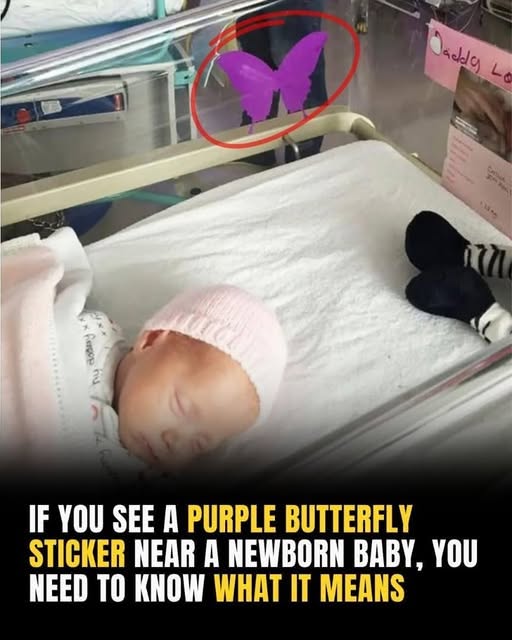
Determined to help spare other parents from similar experiences, Millie came up with a simple but powerful idea: a small purple butterfly sticker placed on an incubator or cot to quietly indicate that one or more babies from a multiple pregnancy had passed away.
She chose a butterfly because it has long been associated with remembrance, hope, and the brief beauty of life. The color purple was selected because it is gender-neutral, allowing the symbol to represent any baby regardless of sex.
The sticker does not invite questions or require grieving parents to explain their loss repeatedly. Instead, it gently informs healthcare workers, volunteers, and visitors that a family has experienced the death of one of their babies, encouraging greater sensitivity and understanding during an incredibly difficult time.
What began as one mother’s effort to honor her daughter soon grew into a movement. Millie and Lewis established the Skye High Foundation, named in memory of Skye, to distribute the butterfly stickers, educate healthcare professionals, and raise awareness about pregnancy and infant loss involving multiple births.
Today, purple butterfly stickers are used in hospitals across numerous countries, helping countless families feel acknowledged during one of the most painful experiences imaginable. The symbol has become a quiet reminder that while one baby may have survived, another was deeply loved and will never be forgotten.
Millie’s idea has transformed personal heartbreak into a lasting legacy of compassion. Through a simple purple butterfly, families who have experienced the loss of a twin, triplet, or other multiple can feel seen, supported, and reassured that every child, no matter how briefly they lived, matters.