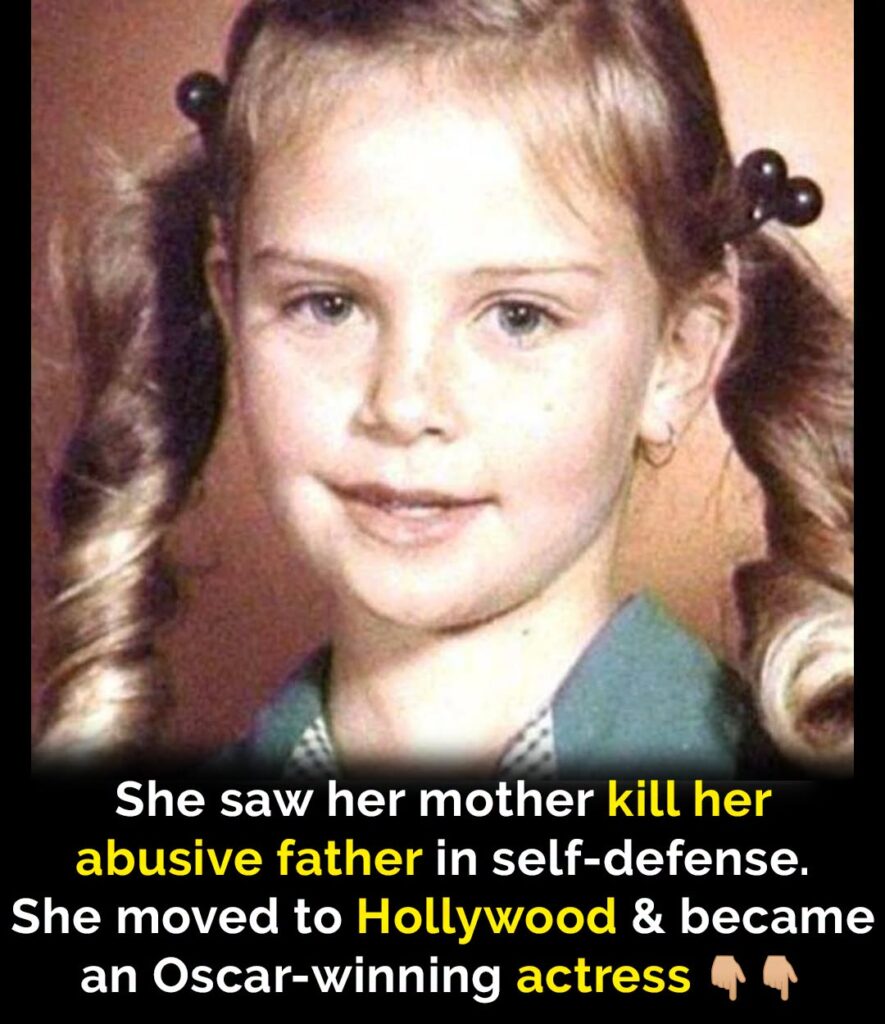
Charlize Theron was born on August 7, 1975, in Benoni, South Africa. Raised in an Afrikaner family with Dutch, French, and German ancestry, she spent her early years on her parents’ farm outside Johannesburg. Her first language was Afrikaans, and long before Hollywood knew her name, she was growing up in an environment that combined privilege with painful family struggles.
School wasn’t easy for Theron. She has spoken openly about feeling like an outsider during her childhood, describing herself as an awkward girl who wore thick glasses because of poor eyesight. While many of her classmates seemed to fit in effortlessly, she struggled with confidence and often found herself on the receiving end of bullying.
“I wore really nerdy glasses because I was blind as could be,” she once recalled. “I didn’t have any boyfriends, but lots of crushes.”
She has admitted she desperately wanted to belong and even became fascinated with one of the popular girls at school, hoping to earn her friendship. Looking back, she laughs at some of the lengths she went to in order to fit in, but at the time the rejection was deeply painful.
Her classmates mocked everything from her glasses to her hairstyle and clothes.
“I got a lot of the mean girl stuff from the ages of 7 to 12,” Theron said. “I was pretty much a mess in primary school.”
Fortunately, she says those experiences became easier once she reached high school, where she gradually grew more confident and less affected by other people’s opinions.
Far more difficult than school, however, was life at home.
Theron’s father struggled with alcoholism, and she has described him as a man who could be loving and funny but whose addiction brought volatility into their household. Although she has said he never physically abused her, she has spoken about the emotional impact of living with an alcoholic parent and the verbal abuse that often accompanied his drinking.
Everything changed forever on June 21, 1991.
Charlize was just 15 years old when her father returned home intoxicated and enraged. Earlier that evening, a family member had called to warn them that he appeared especially agitated. Theron later said she instinctively felt something terrible was about to happen.
As her father grew increasingly violent, Charlize and her mother, Gerda, retreated to a bedroom and pushed against the door, trying to keep him from entering.
“He took a step back and just shot through the door three times,” Theron later recalled.
Miraculously, none of the bullets struck either of them.

Fearing for their lives, Gerda used her own firearm to shoot her husband. Authorities later ruled that she had acted in self-defense, and no charges were filed.
Although the legal case was quickly resolved, the emotional scars remained.
Theron has spoken candidly about the lasting effects of growing up in a home affected by addiction and domestic violence. Rather than hiding her experiences, she believes discussing them openly can help others realize they are not alone.
“I’m not ashamed to talk about it,” she has said. “The more we talk about these things, the more we realize we are not alone.”
She has emphasized that the defining challenge of her childhood was not a single night of violence but the years spent living with addiction in the family and the emotional consequences that followed.
Instead of allowing those experiences to define her future, Theron used them as motivation.
“I survived that, and I’m proud of that,” she once said. “I’ve worked hard for that.”
At 19, she moved to Los Angeles carrying little more than determination and the hope of building a new life. She had no family connections in Hollywood and no guaranteed opportunities.
According to one of Hollywood’s most famous discovery stories, Theron’s big break began during a heated argument with a bank teller over a bounced check. A talent agent happened to witness the exchange and was impressed by her presence and confidence. That chance meeting led to an introduction that opened the first doors of her acting career.
Her breakthrough arrived in 1997 with *The Devil’s Advocate*, where she starred alongside Al Pacino and Keanu Reeves. The performance introduced audiences to her dramatic abilities, but it was only the beginning.
In 2003, Theron took on the role that transformed her career forever.
To portray serial killer Aileen Wuornos in *Monster*, she underwent a remarkable physical transformation, gaining weight and abandoning Hollywood glamour in favor of authenticity. Her fearless performance earned widespread acclaim and won her the Academy Award for Best Actress.
Critics praised the role as one of the finest performances of its time. Film critic Roger Ebert famously described it as “one of the greatest performances in the history of cinema.”
Theron has explained that she was drawn not simply to the crimes Wuornos committed but to understanding the circumstances that shaped her life.

“People like Aileen Wuornos are often just labeled and pushed aside,” she said. “No one asks, ‘Why did this happen?'”
That question—the desire to understand what drives human behavior—has remained central to many of the characters Theron has chosen throughout her career.
Rather than settling into predictable leading roles after winning an Oscar, she continued challenging herself with diverse performances across drama, comedy, and action films. She also expanded her career as a producer, helping create stronger opportunities for women both in front of and behind the camera.
In 2015, she once again surprised audiences by starring as Imperator Furiosa in *Mad Max: Fury Road*. At an age when many actresses find fewer leading roles available, Theron delivered one of the year’s most celebrated performances, proving that reinvention was one of her greatest strengths.
Today, Charlize Theron’s life story stands as a testament to resilience. Despite enduring bullying, family trauma, and profound personal loss, she refused to let those experiences determine her future. Instead, she transformed adversity into strength, building one of Hollywood’s most respected careers while using her voice to encourage conversations about addiction, domestic violence, and healing.
Her journey is a reminder that even the darkest beginnings do not have to define where a person ultimately ends up.