Two weeks later, I left Ohio with three hundred dollars, a scholarship, and the painful understanding that some people will never give the love we spend years trying to earn.
I stopped asking for it.
Over the next eleven years, I quietly built a new life in Boston. I became Dr. Hannah Whitaker, a reconstructive surgeon, and poured my energy into helping people regain not only their health, but often their confidence and hope.
Then, without warning, an invitation arrived.
Sloane was getting married at a vineyard outside Columbus.
I almost declined.
Instead, I went.
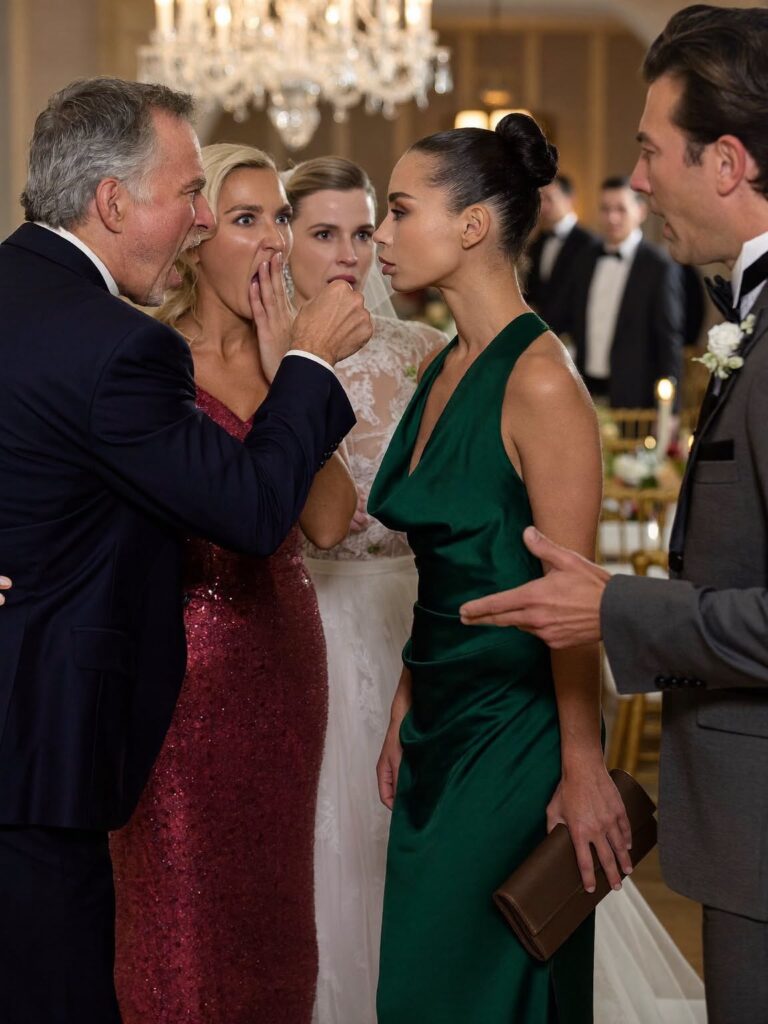
The moment I entered the reception hall, my parents recognized me. Their surprise quickly turned into discomfort, but it was the groom’s reaction that caught everyone off guard.
Nathan Reed stared at me in disbelief.
Then he smiled.
“We’ve met before,” he said.
Three years earlier, I had treated his brother, Evan, after a devastating factory accident near Worcester. Over several months, I performed multiple reconstructive surgeries that helped him recover and return to everyday life.
Nathan looked from me to Sloane, visibly confused.
“Why did you never tell me she was your sister?”
The room became very quiet.
He explained that he had been told I abandoned the family out of jealousy and resentment. Calmly, I shared my side of the story—not with anger, but with honesty. I spoke about the scholarship, the years of ridicule, and the day I realized I could no longer keep begging to be accepted by people who had already decided I wasn’t enough.
Sloane tried to end the conversation, insisting I was trying to ruin her wedding.
My parents dismissed everything as old family misunderstandings.
Nathan wasn’t convinced.
His mother, Marianne Reed, stepped forward and quietly reminded everyone that the woman standing before them was the same surgeon who had helped her son through one of the darkest seasons of his life. The person she had come to know bore no resemblance to the bitter portrait she had been given.
In the middle of the discussion, Sloane made one admission she couldn’t take back.
She confessed that she never imagined Nathan already knew me.
The room fell silent again.
Nathan looked at her for a long moment before saying he needed time to reconsider the marriage.
I left before the evening ended.
What happened afterward was no longer my decision to make.
Several weeks later, I learned the wedding had been canceled. Nathan told me my unexpected arrival hadn’t ended the relationship on its own—it had simply forced him to confront a pattern of dishonesty he could no longer ignore.
Months later, I received a graduation photograph from Evan with a handwritten note thanking me for helping him face the world again after his accident.
I kept that photograph far more carefully than I ever kept the wedding invitation.
It reminded me that the words spoken about us do not define who we become.
For years, my family convinced me I was the problem.
Time taught me something very different.
The deepest wounds were never the ones they claimed I carried on my face.
They were the lies that taught a young girl to doubt her own worth.
One year later, I legally changed my last name to Hale.
Not to erase my past, but to stop allowing it to define my future.