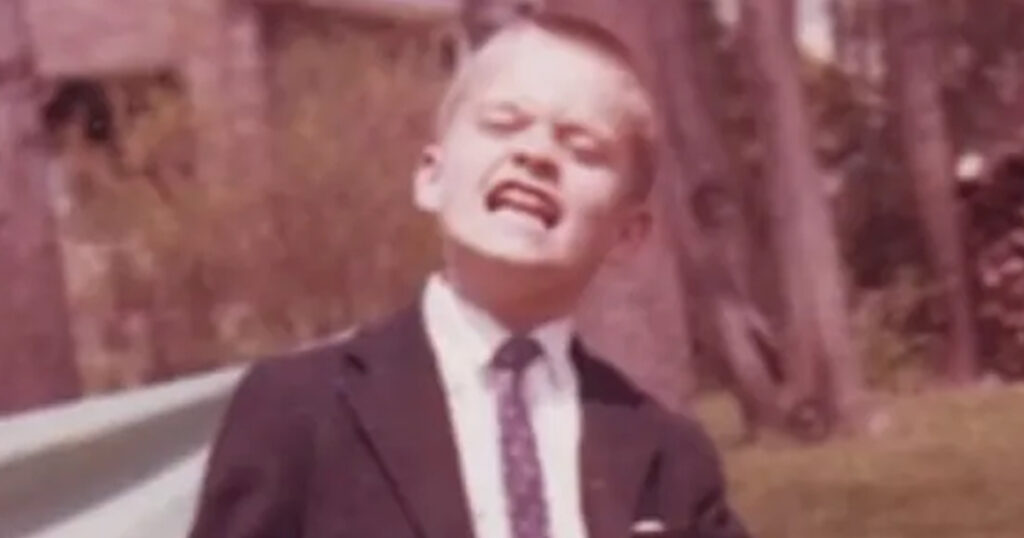
Born in 1955 in Saint Thomas in the U.S. Virgin Islands, Grammer experienced instability from an early age.
After his parents divorced, he moved to New Jersey, where he was raised by his mother and maternal grandparents.
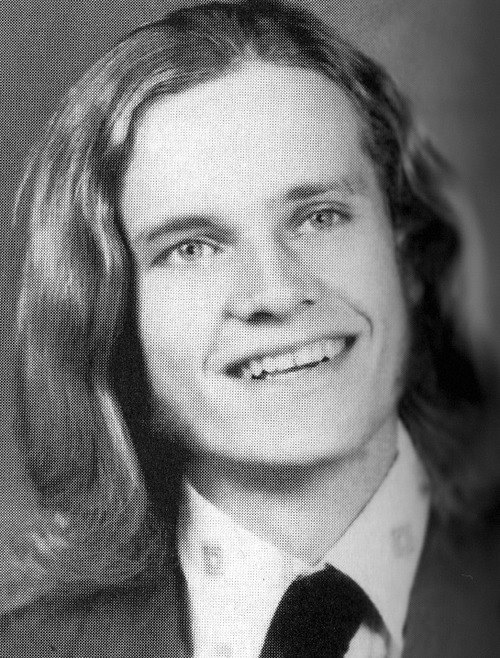
His grandfather, Gordon, became the most important father figure in his childhood.
Because Grammer’s biological father remained in the Virgin Islands, Gordon filled the emotional space his father had left behind.
Then, when Grammer was only twelve, his grandfather died of cancer.
The loss deeply affected him.
Years later, Grammer recalled that his grandfather had become less patient near the end of his life, leaving the young boy with the painful belief that something might be wrong with him.
Only one year later, another tragedy struck.
When Grammer was thirteen, his father was shot and killed outside his home.
The man responsible was later found not guilty by reason of insanity.
For a child already grieving the loss of his grandfather, his father’s violent death created another wound that would stay with him for decades.

But the most devastating loss was still to come.
Seven years later, Grammer’s younger sister, Karen, was abducted, sexually assaulted, and murdered in Colorado Springs.
She was only eighteen.
Grammer was twenty years old and studying theater at Juilliard in New York when he received the news.
He later admitted that the loss nearly destroyed him.
Although he had no responsibility for what happened, he carried the irrational guilt many surviving siblings experience.
He felt that, as her older brother, he should have protected her.
The man convicted of Karen’s murder, Freddie Glenn, was also found guilty of two other killings.
He was initially sentenced to death, though the sentence was later overturned.
Years afterward, Grammer continued opposing Glenn’s attempts to gain parole.
In a letter to the parole board, he wrote that he missed his sister profoundly and had never stopped carrying the pain of failing to protect her.
In 2014, Grammer addressed Glenn directly through a video hearing.
His words reflected both forgiveness and firm opposition.

He acknowledged the possibility that Glenn lived with remorse and said he accepted his apology.
However, Grammer refused to support his release, explaining that doing so would feel like a betrayal of his sister’s life.
His ability to forgive did not mean forgetting or abandoning accountability.
The tragedies did not end with Karen’s death.
In 1980, Grammer lost two half-brothers, Billy and Stephen, in a scuba-diving accident.
Billy failed to return to the surface during a dive.
Stephen went back into the water to search for him and died from an air embolism.
Billy’s body was never recovered.
By then, Grammer had lost his grandfather, father, sister, and two half-brothers.
The accumulation of grief became overwhelming.
During the 1990s, he struggled with alcohol and substance abuse.
He later explained that drinking became a way to numb the pain he could not face.
At the darkest point of his life, he found it impossible to forgive himself for Karen’s death, even though he had done nothing to cause it.
Grammer also admitted that grief pushed him away from his faith.
Over time, however, his perspective changed.
He later encouraged people experiencing terrible loss not to turn away from God, even when suffering makes it feel as though life has become unbearably unfair.
He has been sober since 1996.
His recovery did not erase the past, but it gave him a way to live with it.
Grammer has spoken openly about the fact that everyone eventually experiences loss, though he acknowledges that he received an unusually heavy share.
Instead of viewing tragedy as something that singled him out forever, he gradually came to see suffering as part of the human experience.

Still, some fears remained difficult to escape.
Grammer once admitted that he carried a profound fear of abandonment because nearly everyone he had loved had eventually left or died.
That fear followed him into adulthood and affected both his personal relationships and his understanding of family.
Despite his private suffering, Grammer built one of television’s most celebrated careers.
He began working in theater in the late 1970s and made his Broadway debut in 1981 as Lennox in Shakespeare’s Macbeth.
His breakthrough arrived in 1984 when he was cast as psychiatrist Dr. Frasier Crane on the hit sitcom Cheers.
The character was originally expected to appear briefly.
Instead, Frasier Crane became one of the most beloved figures in American television.
Grammer later carried the role into the successful spin-off Frasier, where his sophisticated voice, comic timing, and ability to balance arrogance with vulnerability turned the character into a cultural icon.
Across the two series and later revivals, Grammer played Frasier Crane for decades.
The performance earned him numerous awards, including multiple Emmy victories, and established him as one of the most recognizable actors in television history.
His distinctive voice also became part of his appeal.
Deep, theatrical, and instantly recognizable, it gave Frasier an air of authority even when the character’s life was falling apart.
Audiences saw a polished and witty psychiatrist.
Few knew how much real grief the actor behind him carried.
Grammer’s romantic life was often complicated as well.
After several marriages and public difficulties, he found lasting companionship with English flight attendant Kayte Walsh.
The two met on a flight to London and formed an immediate connection.
They married at The Plaza Hotel in New York City in February 2011.
Walsh is significantly younger than Grammer, but he has credited her with transforming his life.
He described her as someone who softened a heart that had become hardened by years of pain.
Their relationship gave him a renewed sense of energy and optimism.
Grammer has eight children from different relationships and marriages.
He has spoken honestly about the ways his career, addiction, and personal struggles affected his role as a father.
He admitted that he was not always as present as he should have been, particularly with his older children.
Rather than pretending those failures never happened, he has said he is trying to repair them by showing up now.
That desire to reconnect appears deeply connected to the losses of his childhood.
After so many relatives were taken from him, family became something he wanted to protect, even when he had not always known how.
Grammer has also tried to teach his children not to let anger control their lives.
His children have understandably expressed rage toward the man who murdered Karen.
Grammer tells them that while their anger is valid, they must eventually want more from life than revenge.
That lesson comes from his own decades-long struggle.
He knows what it means to carry fury.
He also knows that allowing it to define a life only gives tragedy more power.
Several of Grammer’s children have entered creative fields.
His daughters Spencer and Greer pursued acting, while other children have shown interest in film production and entertainment.
He is also a grandfather and has spoken warmly about the importance of maintaining close family relationships.
His children and grandchildren appear to represent a second chance.
They cannot replace the people he lost, but they give him new reasons to remain present.
Kelsey Grammer’s story is not simply one of celebrity success.
It is the story of a man who repeatedly lost the people closest to him and still found a way to keep living.
He turned pain into performance.
He confronted addiction.
He rediscovered faith.
He learned that forgiveness does not require forgetting.
Most importantly, he continued seeking love even after grief taught him that love could be taken away without warning.
Behind the laughter he brought into millions of homes was a man carrying memories most people could hardly imagine.
His life is a reminder that public success reveals very little about private suffering.
The person making everyone else laugh may be fighting the hardest battle in the room.
Grammer’s journey does not suggest that pain disappears.
Some losses remain forever.
But his life shows that grief does not have to become the final chapter.
A person can carry sorrow and still experience joy.
They can remember the dead without surrendering the rest of their life.
They can forgive without excusing.
They can fall apart, recover, and begin again.
After everything Kelsey Grammer endured, perhaps his greatest achievement is not an Emmy, a famous character, or a long Hollywood career.
It is that he remained capable of hope.