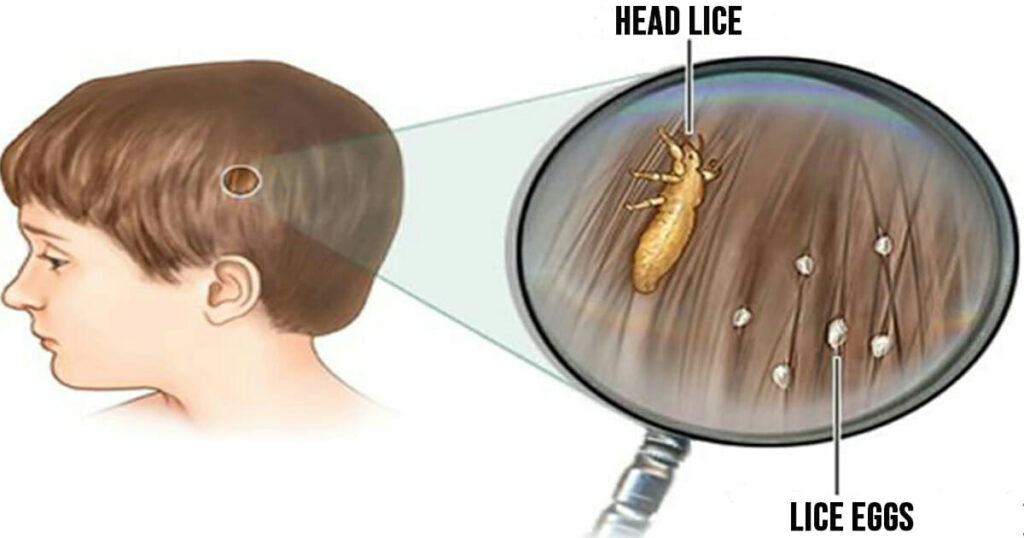
Head lice are tiny insects that live on the scalp and feed on small amounts of blood. They cannot jump or fly. Instead, they spread by crawling from one person’s hair to another during close contact.
Children are especially likely to spread lice because they often play closely together at school, daycare, sports activities, sleepovers, and camps.
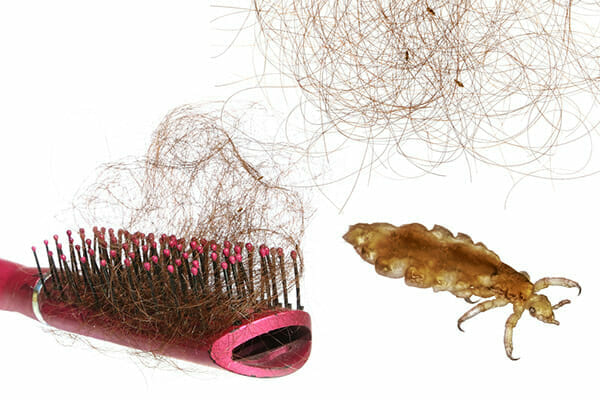
While it’s possible for lice to spread through shared hats, brushes, or pillows, this is thought to be much less common than direct head-to-head contact.
Signs of Head Lice
One of the first symptoms is often an itchy scalp, although itching may not begin for several weeks after someone becomes infested.
Other signs include:
- A tickling sensation on the scalp.
- Small bugs moving through the hair.
- Tiny white or yellowish eggs (nits) attached firmly to hair shafts close to the scalp.
- Red or irritated areas caused by scratching.
Because lice move quickly and avoid light, they can be difficult to spot.
How to Check for Lice
The most reliable way to detect head lice is by using a fine-toothed lice comb on wet, conditioned hair.
Comb through small sections from the scalp to the ends of the hair, wiping the comb after each pass and looking carefully for live lice or attached nits.
Finding empty eggshells alone does not necessarily mean there is an active infestation. They can remain attached to hair long after the lice are gone.
The Best Treatment
Health authorities generally recommend treating only when live lice are found.
Effective treatment usually includes:
- An over-the-counter or prescription lice treatment recommended by a healthcare professional.
- Thorough combing with a lice comb to remove lice and nits.
- Repeating treatment if instructed on the product label, since some products do not kill newly hatched lice.
Because treatment recommendations vary depending on the product, always follow the directions carefully.
Do Home Remedies Work?
Many home remedies—including mouthwash, vinegar, mayonnaise, olive oil, and essential oils—are widely shared online.
However, there is limited scientific evidence that these methods reliably eliminate head lice or their eggs. In particular:
- Vinegar has not been shown to consistently loosen or destroy nits.
- Mouthwash is not an approved lice treatment and may irritate the scalp or eyes, especially in children.
For these reasons, healthcare professionals generally recommend using treatments that have been tested for safety and effectiveness instead of relying on unproven remedies.
Preventing Head Lice
While no method can completely prevent lice, these steps may reduce the risk:
- Avoid prolonged head-to-head contact during play.
- Teach children not to share combs, brushes, hats, helmets, or hair accessories.
- Check children’s hair regularly during school outbreaks.
- Tie back long hair during school or group activities when practical.
The Bottom Line
Head lice are unpleasant, but they are common and treatable. Early detection with a lice comb and prompt treatment using proven methods offer the best chance of eliminating an infestation.
Although many home remedies are popular on social media, current medical evidence does not support mouthwash or vinegar as reliable treatments. If you’re unsure whether someone has lice or if treatment isn’t working, consult a healthcare professional for guidance on the most appropriate next steps.