I had known Troy since we were five years old.
Our families lived next door to each other, which meant our childhoods were almost impossible to separate.
We rode bicycles through the same streets.
We attended the same school.
We spent long summer afternoons building forts, chasing fireflies, and promising that adulthood would never change us.
At sixteen, he took me to my first school dance.
At twenty, we were married.
Back then, it did not feel too young.
It felt inevitable.
We had grown up side by side. Marrying Troy seemed less like choosing a future and more like continuing a story that had already begun.
We did not have much money in those early years, but we were happy.
We rented a small apartment with thin walls and a heater that groaned through winter. We ate dinner on mismatched plates and saved coins in a jar for furniture.
Then our daughter was born.
Our son arrived two years later.
We bought a house in the suburbs, planted a maple tree in the backyard, and took one family vacation every summer, usually somewhere close enough to reach by car.
Our children fought in the back seat.
Troy complained about traffic.
I passed out sandwiches from a cooler between my feet.
It was ordinary.
Comfortable.
Safe.
For most of my life, I believed ordinary happiness was the strongest kind.
I never imagined something could be rotting beneath it.
We had been married thirty-five years when I noticed the missing money.
Our son had recently repaid part of a loan we had given him. I logged into our joint account intending to move the money into savings.
The deposit was there.
But the balance was much lower than it should have been.
At first, I assumed I had forgotten a large payment.
I checked the mortgage.
The utilities.
The insurance.
Nothing explained the difference.
Then I found several transfers made over the previous few months.
Some were for a few hundred dollars.
Others were much larger.
Altogether, thousands were gone.
I checked the numbers twice.
Then a third time.
There was no mistake.
That evening, Troy sat in his usual chair watching the news while I placed the laptop on the coffee table.
“Did you move money out of checking?”
He barely glanced at the screen.
“I paid some bills.”
“What bills?”
“The usual things.”
“This is more than the usual things.”
He rubbed his forehead.
“I move money around sometimes. You know that.”
“Not this much.”
“It will balance out.”
I turned the laptop toward him.
“Troy, several thousand dollars are missing.”
He stared at the television.
“Where did it go?”
“House expenses.”
“Which expenses?”
“I don’t remember every payment.”
His answers were vague, but after knowing someone for most of your life, you learn when pushing will only make them retreat further.
I told myself I would ask again later.
A week passed.
Then the television remote stopped working.
I went into Troy’s office to look for batteries.
Inside the bottom drawer of his desk, beneath old mail and instruction manuals, I found a stack of hotel receipts.
At first, they did not alarm me.
Troy sometimes traveled to California for work.
Then I saw the address.
Massachusetts.
The same hotel appeared on every receipt.
The same room number.
The dates stretched back several months.
I sat on the edge of the guest bed and counted them.
Eleven receipts.
Eleven stays.
Eleven trips I knew nothing about.
I searched my memory for those dates.
On one weekend, Troy had told me he was attending a conference.
Another time, he claimed he was helping a former colleague move.
Once, he had said he was driving north to inspect a property for work.
Every explanation had sounded ordinary.
Every one of them had been a lie.
My hands shook as I searched for the hotel’s phone number.
A receptionist answered.
“Good afternoon. How may I help you?”
I forced my voice to remain steady.
“Hello. I’m calling for Troy Bennett. I’m his new assistant, and I need to reserve his usual room.”
“Of course,” she replied immediately. “Mr. Bennett is one of our regular guests. Would he like the same room?”
My throat tightened.
“Yes.”
“When will he be arriving?”
“I’ll have to call you back.”
I ended the call before my voice broke.
That evening, I placed the receipts across the kitchen table.
Troy stopped in the doorway when he saw them.
His keys were still in his hand.
“What is this?” I asked.
He looked at the papers.
Then at me.
“It’s not what you think.”
“Then tell me what it is.”
His jaw tightened.
He set his keys down slowly.
“I’m not doing this.”
“Doing what?”
“This interrogation.”
“Troy, you have been secretly staying in the same hotel for months.”
“You’re exaggerating.”
“I counted eleven receipts.”
He looked away.
“And thousands of dollars are missing from our account.”
“I told you, I handled some expenses.”
“What expenses?”
He said nothing.
“Were you seeing someone?”
“No.”
The answer came quickly.
Too quickly, I thought at the time.
“Then why were you there?”
“I can’t explain it.”
“You can’t or you won’t?”
He pressed his lips together.
“You’re supposed to trust me.”
The words stunned me.
“I did trust you.”
“Then trust me now.”
“That is not how trust works. You do not disappear, drain our account, lie to me, and then demand that I pretend none of it matters.”
He stood completely still.
“Tell me the truth.”
“I can’t.”
“Are you protecting someone?”
He did not answer.
That silence became an answer of its own.
I slept in the guest room.
The next morning, I tried once more.
Troy sat at the kitchen table with a cup of coffee between his hands.
“If there is something happening, tell me.”
He looked exhausted.
“I can’t.”
“We have known each other for more than fifty years.”
“I know.”
“We raised children together.”
“I know.”
“Then why are you shutting me out?”
His eyes filled with something I could not identify.
Fear, perhaps.
Or shame.
At the time, I mistook it for guilt.
“I cannot live inside this kind of lie,” I told him. “I cannot wake up every morning wondering where my husband goes and why I am not allowed to know.”
Troy nodded once.
“I thought you might say that.”
That response hurt more than anger would have.
He did not beg.
He did not defend himself.
He did not fight for us.
So I called a lawyer.
Two weeks later, we sat across from each other in a quiet office.
Troy stared down at the documents.
He answered the attorney’s questions in a low voice and signed wherever he was instructed.
Thirty-six years of marriage ended beneath fluorescent lights with a stack of legal forms and two pens.
When we left, he paused beside me in the parking lot.
For one moment, I thought he would finally speak.
Instead, he said, “Take care of yourself.”
Then he walked away.
No woman appeared after the divorce.
No public scandal emerged.
There was no surprise child, no second family, no confession.
Nothing.
That almost made it worse.
If there had been another woman, at least the lies would have formed a recognizable shape.
Instead, I was left with unanswered questions.
I saw Troy occasionally at our children’s homes.
We attended the same birthdays and holiday dinners.
We spoke politely.
He asked whether my roof had stopped leaking.
I asked how his knee was feeling.
Neither of us mentioned the hotel.
Sometimes I caught him watching me from across the room.
There was sadness in his expression, but I refused to interpret it as regret.
He had been given chances to tell me the truth.
He had chosen silence.
Two years after our divorce, Troy died unexpectedly.
Our daughter called from the hospital.
Her voice broke before she managed to say the words.
A sudden complication.
Doctors had tried everything.
Our son drove three hours but arrived too late.
I sat on the edge of my bed holding the phone long after the call ended.
I had spent two years teaching myself not to think of Troy as my husband.
Grief did not care.
At the funeral, the church was crowded.
People I had not seen in years hugged me and said, “He was a good man.”
Others whispered, “We are sorry for your loss.”
I thanked them while feeling like an impostor.
Was it still my loss?
I had left him.
I had signed the papers.
Yet every memory of childhood, marriage, and parenthood still carried his face.
Near the end of the reception, Troy’s father approached me.
Frank was eighty-one and unsteady on his feet.
The smell of whiskey reached me before he did.
His eyes were bloodshot.
His shirt collar had come undone.
He stopped too close and gripped my arm.
“You don’t know what he did for you.”
“Frank, you have been drinking.”
“You think I don’t know about the hotel?”
My body went rigid.
“What did you say?”
“The hotel room. The money.”
His voice was thick, but his words were clear enough.
“He told me everything.”
“Everything about what?”
Frank laughed bitterly.
“Poor fool thought he could hide it forever.”
The room seemed to narrow around us.
“Was there another woman?”
Frank shook his head hard enough to lose his balance.
“There are things worse than affairs.”
“What does that mean?”
His eyes filled with tears.
“He made his choice, and it cost him his marriage.”
“Frank, tell me what was happening.”
“He said you could know after.”
“After what?”
“After it couldn’t hurt you anymore.”
My daughter appeared beside me and touched my elbow.
“Mom, are you all right?”
Frank pulled away.
“He didn’t lie because he wanted somebody else,” he muttered. “He lied because he was scared.”
My son guided him toward a chair while people nearby pretended not to listen.
I remained standing, frozen.
There are things that are not affairs.
There are lies that do not come from wanting someone else.
The words followed me home.
That night, I sat at the kitchen table where I had once spread out the hotel receipts.
I remembered Troy’s expression when I confronted him.
Closed.
Frightened.
Almost resigned.
I had always believed his silence meant he had chosen another life.
What if the hotel room had not been used to hide another person?
What if it had been where Troy went to hide from me?
Three days after the funeral, a courier delivered a large envelope.
My name was typed across the front.
Inside was a handwritten letter.
I recognized Troy’s writing immediately.
The first sentence read:
I need you to understand this plainly: I lied to you, and I chose to do it.
My knees weakened.
I sat in the nearest chair and continued.
I was receiving medical treatment.
I stared at the sentence.
Then I read it again.
The treatment was not available near home. I traveled to Massachusetts for appointments and stayed overnight when I was too weak to drive back.
The room seemed to disappear around me.
I did not tell you because I was afraid. Not only of the diagnosis, but of what it would do to us.
My hands began shaking.
You had spent years caring for your mother when she was ill. I saw what it took from you. I watched you lose sleep, work less, and carry the fear even after she died.
I covered my mouth.
My mother’s illness had consumed nearly four years of our lives.
Troy had driven her to appointments.
He had cooked meals when I was too tired.
He had held me when the grief finally came.
I could not bear the thought of becoming another person you had to save.
Tears blurred the page.
I wanted to remain your husband, not your patient. I wanted you to look at me and see the man who fixed the fence, complained about the weather, and argued over which movie to watch.
I was ashamed of being frightened.
I was ashamed that my body was failing.
So I moved money. I booked rooms. I invented work trips. And when you found out, I answered your questions badly because the truth felt impossible to say.
I paused.
The hotel rooms.
The missing money.
The exhaustion I had mistaken for distance.
All of it rearranged itself in my memory.
None of that excuses what I did.
You gave me every chance to tell you. I chose silence each time.
When you asked for a divorce, I knew I had no right to stop you without giving you the truth. And I was still too afraid to give it.
A tear landed on the page.
You made your decision based on the life I allowed you to see. You did nothing wrong.
I closed my eyes.
That was the sentence that broke me.
For two years, I had wondered whether I had abandoned our marriage too quickly.
Troy was telling me I had not.
And somehow, that made the grief worse.
The treatment worked for a while. Then it did not.
By the time I understood I was running out of time, I did not know how to return and ask you to carry something I had deliberately kept from you.
I hope you can forgive me one day, but I do not expect it.
I loved you for almost my entire life.
I loved you when we were children, when we had nothing, when our children were born, and even when we sat across from each other signing papers that ended our marriage.
I loved you badly at the end.
But I loved you.
The final line read:
You lost me because I refused to let you stand beside me. Please never blame yourself for that.
I lowered the letter into my lap.
For a long time, I did not cry.
I simply sat there while thirty-eight years of memories moved through me.
Troy at five, holding out a scraped knee and asking me to fix it.
Troy at twenty, trembling as he said his wedding vows.
Troy carrying our sleeping daughter from the car.
Troy sitting across from me at the kitchen table, refusing to tell me why he was disappearing.
He had spent his whole life beside me.
Then, when he became most afraid, he had chosen to face it alone.
I understood his fear.
That did not make his decision right.
Love cannot protect someone by denying them the truth.
Silence does not spare pain.
It only delays it until there is no time left to repair what it has broken.
I folded the letter and placed it back inside the envelope.
A week later, I drove to the cemetery.
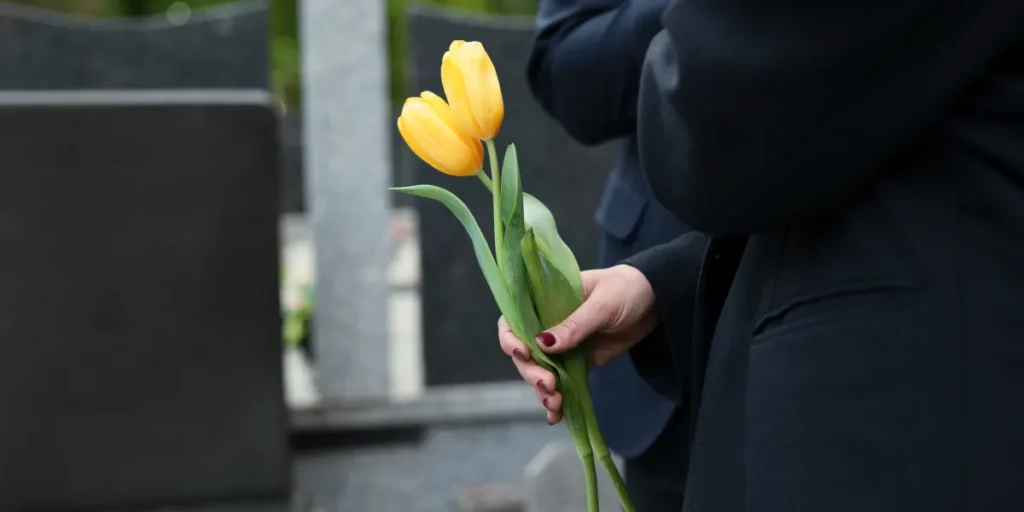
Troy’s grave was still covered with fresh flowers.
I sat on the damp grass beside the stone and read his letter aloud.
When I finished, I said the words I had not been able to say while he was alive.
“I would have stayed.”
My voice broke.
“I would have been afraid. I would have been tired. I might have been angry. But I would have stayed.”
The wind moved through the trees.
“I did not need you to be strong every day. I only needed you to let me know you.”
I rested my hand against his name.
“I forgive you for being afraid.”
I paused.
“But I do not forgive the silence yet.”
That was the most honest goodbye I could give him.
In the months that followed, I learned more from Frank and from Troy’s doctors.
The hotel was close to a specialist clinic.
The missing money had paid for experimental treatments, medication, and travel.
Troy had gone alone every time.
He had sat in waiting rooms by himself.
He had returned home after procedures and pretended he was simply tired from work.
I hated imagining it.
I hated knowing he had been suffering while I stood only feet away, unaware.
But grief is not made easier by rewriting the past.
Troy had made his decision.
I had made mine.
Both of us had acted with incomplete truth.
Today, his letter remains in the top drawer of my bedside table.
Sometimes I read it.
Not because it gives me peace.
Because it reminds me that love and honesty are not the same thing.
A person can love you deeply and still hurt you through fear.
A person can believe they are protecting you while quietly destroying the trust between you.
And sometimes the greatest tragedy is not that love disappears.
It is that love remains while two people become separated by everything they are too frightened to say.
I lost Troy twice.
First to his silence.
Then to death.
The second loss was permanent.
The first one never had to happen.