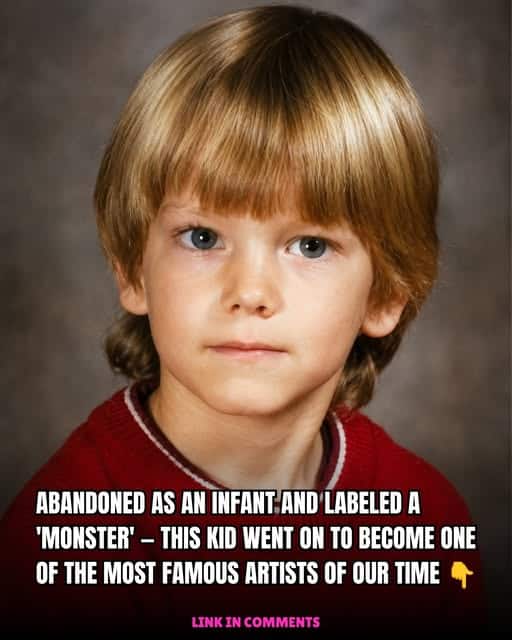
could even understand the weight of the debris. His mother, struggling to maintain a foothold in a precarious economy, moved the family constantly between Missouri and the gritty urban landscape of Detroit. These frequent relocations meant that Marshall was perpetually the outsider, the new kid in school who became an immediate target for those seeking to exert power through violence. He spent his formative years navigating hallways that felt like gauntlets, enduring physical assaults that left him bruised, battered, and at one terrifying point, unconscious after being struck by a heavy object hidden inside a snowball. This specific incident, which resulted in a concussion and temporary vision loss, became a defining moment of his vulnerability, leaving him to grapple with the realization that the world was an inherently hostile place where he had to constantly watch his back.
This environment of hostility was not confined to the schoolyard. Within the walls of his own home, the atmosphere was thick with the tensions of his mother’s struggles, leading to a fractured relationship that would eventually spill over into public legal battles. The accusations of neglect and abuse were met with counter-claims of defamation, turning their private misery into a public spectacle. For a young boy, the home was meant to be a sanctuary, yet for Marshall, it was a place where he felt the sting of instability and the weight of being labeled a problem child. He was often cast as the monster in a story he never asked to be part of, a narrative of survival that left him feeling isolated and misunderstood by those who were supposed to be his protectors. The constant friction and the lack of a stable, nurturing presence forced him to grow up far too quickly, absorbing the harsh lessons of a life lived on the margins.
At the age of fourteen, however, the trajectory of his life shifted with the discovery of rap music. In the rhythmic cadence of hip-hop, he found a language for his rage and a vessel for his memories. He began to channel the bullying, the poverty, and the domestic turmoil into verses that were as sharp as they were honest. This was not merely an escape; it was a transmutation of pain into something tangible and powerful. By the time he reached his late teens, the music had become his primary identity, a way to reclaim the narrative that had been dictated by others for so long. He was no longer just a victim of circumstance; he was an architect of his own expression, finding that the very things that made him feel like an outcast were the same things that gave his voice such profound resonance with others who felt equally marginalized.
The breakthrough arrived when he caught the attention of Dr. Dre, a partnership that would launch The Slim Shady LP and propel him onto the global stage. Yet, even as his fame grew, his personal life remained a turbulent sea. The birth of his daughter, Hailie, acted as a grounding force, a realization that the cycle of trauma he had endured could, and must, be broken. He became determined to provide his children with the security, presence, and love that he had been denied. This commitment defined his evolution from a troubled youth into a man who prioritized the well-being of his family above the allure of celebrity, even during his darkest periods of substance abuse. He recognized that his success was hollow if it did not serve the purpose of protecting those he loved from the same ghosts that haunted his own childhood.
His cinematic debut in 8 Mile served as a poignant reflection of his journey, a semi-autobiographical exploration of the grit required to escape a life of dead-end circumstances. Winning an Academy Award for the anthem “Lose Yourself” was not just a professional milestone; it was a validation of the years he spent honing his craft in the shadows. He had taken the most painful chapters of his life and turned them into a legacy that resonated with millions, proving that one’s origins do not have to dictate the final destination. He transformed the very trauma that threatened to erase him into the fuel that propelled him to the pinnacle of his field, demonstrating that even the most damaged past can be repurposed into a life of immense creative significance.
Today, Marshall Mathers stands as a titan of the music industry, not because of the controversy that once surrounded him, but because of the raw, unflinching humanity he brought to his art. Beyond the accolades and the records, he has found a sense of resolution in his role as a father to Hailie, Alaina, and Stevie. He has retreated from the relentless glare of the spotlight, choosing instead to cultivate a life of relative privacy. The boy who was once beaten in school hallways has become a man who has mastered his own story, proving that while the past is indelible, it is also the very thing that can forge an unbreakable spirit. He remains, ultimately, a testament to the idea that even from the most broken beginnings, one can build a life defined by purpose, protection, and profound artistic achievement. He has successfully closed the chapter on his own suffering, ensuring that the legacy he leaves behind is one of strength, stability, and enduring love for those he holds most dear, finally finding the peace that eluded him for so long.