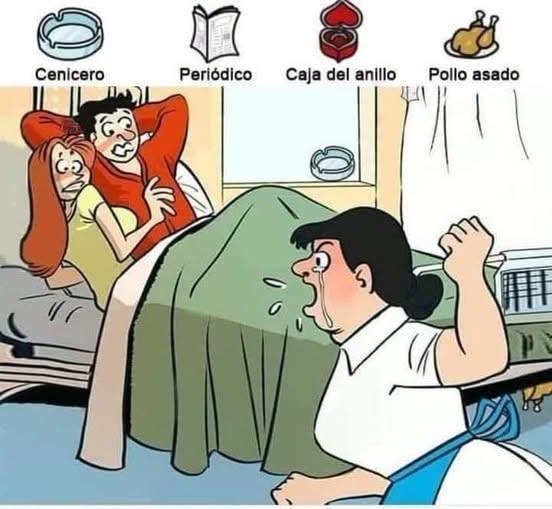
These items are tucked away with such deliberate skill that they essentially vanish into the background, challenging your perception. The reason most people struggle to find these objects is rooted in basic cognitive psychology. Our brains are wired for efficiency, meaning we prioritize the most obvious elements of a scene, such as human faces and emotional expressions, while filtering out background details that seem irrelevant. This mental shortcut is exactly what makes these visual puzzles so delightful and tricky. By forcing yourself to look past the primary subjects, you are essentially training your brain to override its natural tendency to ignore the peripheral environment. It is a fantastic exercise in mindfulness and visual acuity that rewards patience and a systematic approach to scanning the entire composition. When you move beyond the immediate emotional pull of the characters, you begin to see the scene as a collection of shapes and textures rather than just a story.
Let us begin our search by examining the curtain folds located on the right side of the bed. While you might intuitively scan the furniture for an ashtray, you will find it cleverly integrated into the fabric itself. The circular geometry of the ashtray is mimicked by the shadows and folds of the curtain, allowing it to blend into the scenery. It is a masterclass in visual camouflage where the artist uses light and shadow to trick the eye. Next, shift your attention to the man in the scene. You might expect a newspaper to be lying on a table, but here it is disguised within his hair. The shading and lines of his locks are crafted to mimic the print and folds of a newspaper, making it nearly invisible until you adjust your focus to look for the specific texture of newsprint. It is a humorous touch that rewards those who look at the character’s features with a high level of scrutiny.
The third item, a ring box, is equally well-hidden, this time nestled within the woman’s hairstyle. It is camouflaged as a vibrant hair accessory, complete with sharp edges and a clasp that mimics the appearance of a jewelry box. It is a brilliant example of how color and shape can be used to mislead the eye. Finally, look toward the upper portion of the frame near the curtain rod. There, you will find the roast chicken. It is positioned in a way that makes it appear like a shadow or a piece of wall molding, but once you identify the distinct silhouette of the poultry, it becomes impossible to unsee. The contrast between the expected domestic setting and the presence of a roast chicken in such an odd location is precisely what makes this puzzle so engaging for the viewer.
To summarize your search, remember that the ashtray is tucked into the curtain folds, the newspaper is woven into the man’s hair, the ring box is hidden within the woman’s hair, and the roast chicken is perched near the curtain rod. If you missed any of these, do not feel discouraged. These puzzles are designed to be challenging, and missing a few is part of the process. To improve your skills, try breaking the image into quadrants and scanning each section slowly rather than looking at the image as a whole. This practical approach prevents your brain from skipping over details and ensures that you catch every subtle inconsistency. Keep practicing these types of visual challenges, and you will soon find that your ability to spot hidden details in everyday life becomes significantly sharper and more reliable. By consistently engaging with these exercises, you are essentially strengthening your cognitive muscles, allowing you to process visual information with greater speed and accuracy in your daily activities.