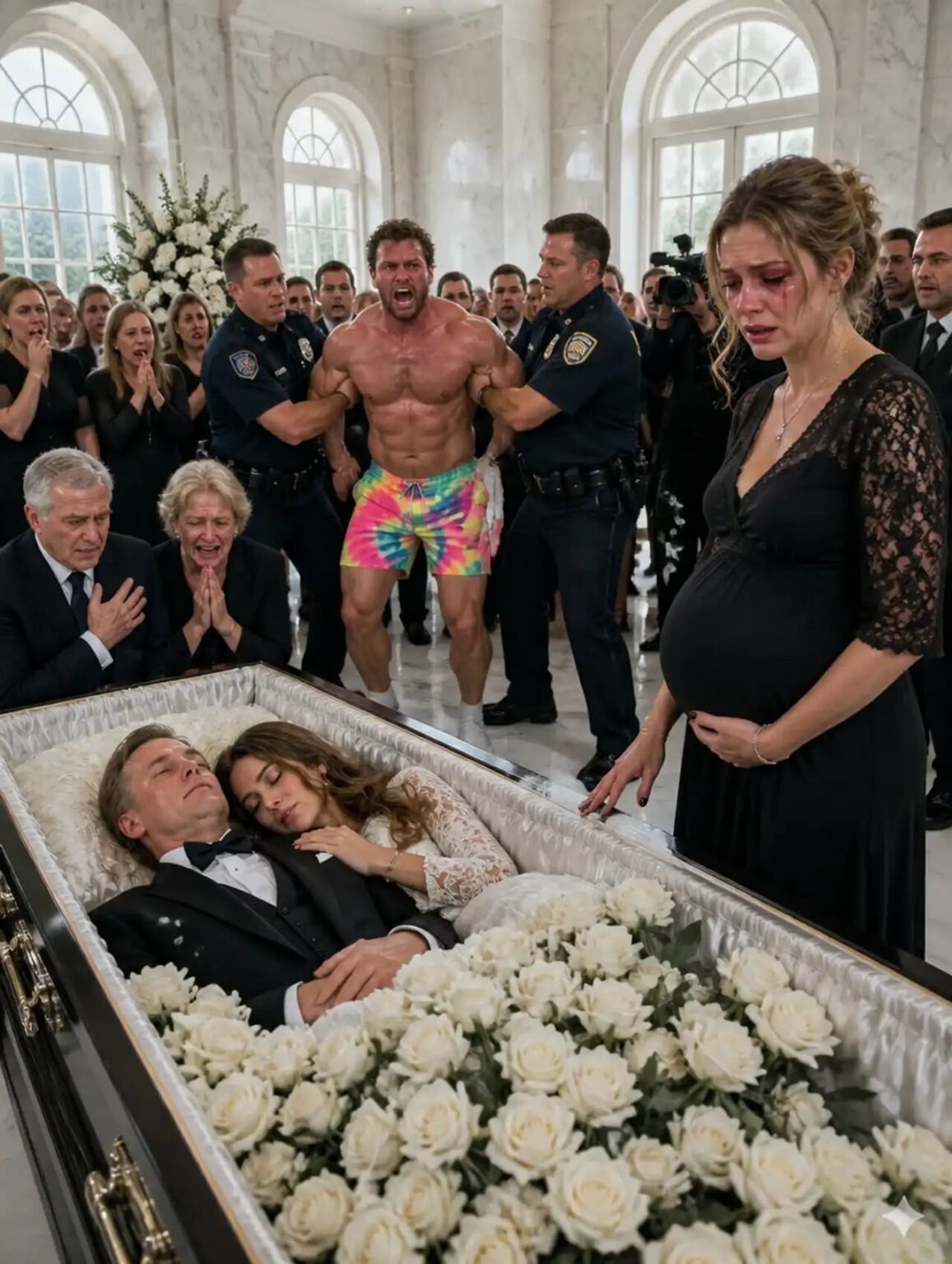
But grief had carried me somewhere beyond tears.
I simply stood there.
A few minutes earlier, my phone had vibrated.
It was a message from my mother.
She had sent a cheerful photograph of herself, my father, and my brother Marcus sitting beneath bright tropical skies, smiling over colorful drinks.
Her message was short.
Flights were too expensive.
Our tragedy was not important enough to interrupt their vacation.
She added one final sentence.
“Call later. We need to discuss the estate.”
I read it once.
Then I turned the screen off.
Some words reveal more about the speaker than the person receiving them.
Three days later, the silence inside my house was interrupted by impatient knocking.
When I opened the door, my parents and Marcus stood outside carrying suitcases that still looked dusty from travel.
They did not ask how I was sleeping.
They did not ask whether I had eaten.
They did not ask whether I needed company in a home that had suddenly become unbearably quiet.
Instead, my father spoke about money.
He explained that Marcus had secured a commercial investment and needed $40,000 in cash immediately.
My mother said I owed them.
After all they had done raising me, she insisted, helping the family was simply my responsibility.
I invited them inside.
They mistook my calmness for agreement.
In the kitchen, I placed a thick black binder in the center of the oak table.
The three of them leaned forward eagerly.
They believed they were about to discuss an inheritance.
Instead, they were about to meet the truth.
I opened the binder.
Samuel and Penelope had died because a commercial truck owned by Zenith Logistics failed to stop at a red light.
The brakes had failed.
At first, investigators believed it had been a tragic mechanical malfunction.
But grief has a way of asking questions that comfort never does.
While settling Samuel’s affairs, I began reviewing public records, maintenance reports, insurance filings, and financial statements connected to the trucking company.
The pattern that emerged was impossible to ignore.
Money allocated for critical brake repairs had repeatedly disappeared.
Instead of maintaining the fleet, funds had been redirected through fraudulent invoices into offshore accounts.
One of those accounts belonged to Marcus.
Only days before the collision, he had received a substantial payment connected to the scheme.
The numbers were not speculation.
The transfers were documented.
The signatures were authenticated.
The dates aligned with maintenance records that should never have been ignored.
No amount of money could explain away what those documents revealed.
My father’s confidence vanished.
My mother began insisting there had to be some mistake.
Marcus stood abruptly and demanded I stop talking.
Then he started making threats.
That was when another voice answered him.
“Please stay where you are.”
My sister-in-law, Fiona, stepped into the room.
Beside her stood Detective Henderson and other officers.
Throughout the conversation, my phone had remained connected.
The discussion had been monitored with proper legal authorization as part of the ongoing investigation.
The officers had heard enough.
Marcus was arrested in my kitchen.
He looked toward our parents as though expecting rescue.
But there are moments when the weight of truth leaves no place to hide.
The investigation moved quickly after that.
Others involved in the financial scheme began cooperating.
Additional records surfaced.
Accounts were frozen.
The network that had treated public safety as a source of profit slowly unraveled under documented evidence.
My parents also faced the consequences of choices they had defended for far too long.
The life they had carefully built around denial could no longer protect them from reality.
The civil case against Zenith Logistics ended with a substantial settlement.
People assumed the money would finally bring me comfort.
They misunderstood what grief asks for.
No amount could return Samuel.
No settlement could let Penelope run through our front yard again.
I decided the money should become something neither tragedy nor greed could easily destroy.
Near the local elementary school, I purchased a large piece of land.
There, we built the Penelope Memorial Playground.
Bright yellow slides stretched across the center because yellow had always been her favorite color.
Near a large shade tree, I placed a quiet reading bench dedicated to Samuel, who believed every child deserved someone willing to read one more story before bedtime.
The playground was never intended to erase loss.
Nothing can.
It was built so that joy would continue growing where sorrow once threatened to remain forever.
On quiet mornings, I sometimes visit before the children arrive.
Other days, I sit with Fiona while laughter fills the air around us.
Children climb, run, fall, stand up again, and laugh without knowing the names carved into the memorial plaques nearby.
That feels right.
Memories are not always preserved through sadness.
Sometimes they live most faithfully wherever life continues.
My parents once believed inheritance meant money waiting to be claimed.
Samuel taught me that the greatest inheritance is the character we leave behind.
Penelope taught me that even a short life can fill the world with immeasurable love.
In the end, I did not free myself through revenge.
I was freed by refusing to let grief become another form of possession.
The people I loved could no longer walk beside me.
But because of them, countless children now run through a place built not from bitterness, but from hope.
And every time their laughter rises into the morning sky, it reminds me that love can still build something beautiful long after loss has spoken.