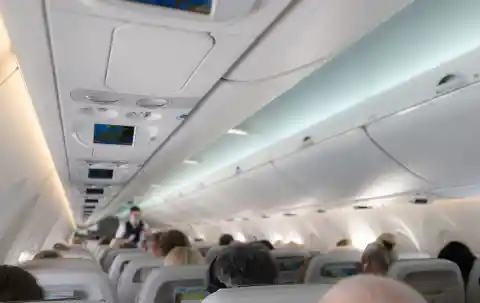
Minutes later, a flight attendant noticed a strange note printed at the bottom of Mom’s boarding pass.
What happened next brought the captain out of the cockpit—and gave us a message from my father eight years after his death.
I booked the window seat because my mother had always loved the sky.
When I was a child, she would stop whatever she was doing whenever the sunset turned pink. She could be washing dishes, folding laundry, or rushing to prepare dinner, but the moment she noticed the color outside, everything else had to wait.
She would stand at the kitchen window with a towel draped over one shoulder and call for me.
“Daniel, come look. You never get the same sky twice.”
At the time, I thought it was just something mothers said.
Years later, I understood that she was teaching me to notice beautiful things before they disappeared.
Six months before our flight, Mom was diagnosed with lymphoma.
After that, our lives became a blur of hospital corridors, blood tests, plastic chairs, medication schedules, and doctors choosing their words too carefully.
Mom lost weight.
Most of her hair fell out.
Some mornings, she had to sit on the edge of the bed for ten minutes before she had enough strength to stand.
There were days when walking from her bedroom to the kitchen felt like crossing a city.
But she never stopped looking up.
On the way to chemotherapy, she would study the clouds through the passenger window and point out shapes.
“That one looks like a rabbit,” she said once.
“It looks like a shoe.”
She glanced at me.
“You have no imagination.”
“I have excellent eyesight.”
She laughed, and for a few precious seconds, cancer was no longer sitting between us.
The trip was her idea.
Her latest scans had shown improvement, and my cousin Rachel had invited us to visit her family in Oregon.
When Mom suggested flying, I thought she was joking.
“That’s almost a five-hour flight,” I said.
“I know how airplanes work, Daniel.”
“You get tired walking to the mailbox.”
“Then move the mailbox to Oregon.”
The next morning, she appeared at breakfast fully dressed, with her blue suitcase packed beside the front door.
Apparently, the discussion was over.
I booked two tickets that afternoon.
I paid extra for seats near the front and chose the window for her. I requested wheelchair assistance, early boarding, and help getting through security.
I wanted the trip to feel like a reward.
After everything she had endured, she deserved one day when someone else worried about the details.
But the moment we arrived at the airport, I realized she was terrified.
She checked her purse for her identification three times.
She asked whether her medication could go through security, even though we had already confirmed it.
When an airport employee began pushing her wheelchair toward the gate, Mom gripped the armrests so tightly that her knuckles turned white.
“Are you okay?” I asked.
“I’m perfectly fine.”
“You’re trying to crush the chair.”
“I don’t trust wheels I’m not controlling.”
“You haven’t been trusted with wheels since you backed into Mrs. Fowler’s mailbox.”
“That mailbox moved.”
“It was made of bricks.”
“It still came out of nowhere.”
I kept talking because I knew it helped her.
I pointed out airplanes through the terminal windows. I complained about the price of coffee. I offered her water, snacks, a sweater, and several things she had not asked for.
Every time she smiled, I felt useful.
We were among the first passengers allowed onto the plane.
Mom settled into the window seat. I sat beside her, and an older woman took the aisle seat.
Across from us sat a man in a gray blazer. He glanced at Mom’s scarf, the wheelchair being folded near the door, and the medication pouch in my hands.
Then he opened a magazine without saying anything.
During takeoff, Mom grabbed my hand.
“That sound is normal,” I assured her.
“What about that one?”
“Also normal.”
“The shaking?”
“Still normal.”
She stared at the wing through the window.
“If the wing falls off, are you going to tell me that’s normal too?”
“At that point, I’ll admit something unusual has occurred.”
The older woman beside me laughed.
Mom did too, although she refused to release my hand until the plane leveled above the clouds.
For the next hour, we talked quietly.
Mom asked me to identify the towns below us.
I told her I had no idea what we were looking at, so she began inventing names.
“That’s Millersburg,” she said confidently.
“How can you tell?”
“It looks like a Millersburg.”
“What does a Millersburg look like?”
“Exactly like that.”
A little later, she mentioned my father.
Dad had died eight years earlier after a sudden heart attack.
He had complained of chest discomfort for weeks but dismissed it as stress. By the time anyone realized how serious it was, there was nothing the doctors could do.
He was gone before any of us had the chance to prepare.
“He would have loved this view,” Mom whispered.
“He would have complained about the legroom.”
“He would have done both.”
We smiled.
Then the man across the aisle slammed his magazine shut.
The sound made Mom jump.
He leaned toward us, his face tight with anger.
“Could you keep it down or get out?”
His voice carried through several rows.
People looked up from their phones.
Someone behind us released an irritated sigh.
Heat rushed into my face.
“I’m sorry,” I said. “We’re trying not to disturb anyone.”
The man gave a bitter laugh.
“Trying? You’ve been talking since takeoff. Some of us paid for a peaceful flight.”
“We’re speaking quietly.”
“No, you aren’t.”
Mom immediately turned toward the window.
Her shoulders folded inward, and she suddenly looked smaller than she had moments before.
I wanted to tell him that she had spent six months listening to chemotherapy pumps, hospital alarms, and doctors discussing survival rates.
I wanted to ask how much peace he believed she had experienced lately.
Instead, I swallowed my anger.
“We’ll lower our voices,” I said.
Mom squeezed my hand.
“It’s okay,” she whispered.
“No,” I whispered back. “It isn’t.”
The man heard us.
“There. You’re doing it again.”
The older woman in the aisle seat turned toward him.
“They aren’t being loud.”
“I wasn’t speaking to you.”
That was when a flight attendant approached.
Her name tag read Maria.
“Is there a problem here?” she asked.
Before I could answer, the man pointed toward us.
“They have been talking through the entire flight. Either move them or make them stop.”
Maria looked at Mom.
“Ma’am, are you feeling all right?”
Mom nodded too quickly.
“I’m fine. I’m sorry. I didn’t realize we were disturbing people.”
“You aren’t disturbing me,” Maria replied.
The man scoffed.
“Of course not. You’re not trapped beside them.”
Maria’s expression changed.
“Sir, I need you to lower your voice.”
Then she looked back at Mom.
“May I see your boarding pass?”
Mom blinked.
“My boarding pass?”
“Yes, please.”
I retrieved it from the seat pocket and handed it to Maria.
She glanced at the printed name.
Evelyn Parker.
Then her eyes moved toward a line of smaller text near the bottom.
She stopped reading.
Her expression shifted from professional concern to confusion.
She read the note again.
“Is something wrong?” I asked.
Maria looked at Mom.
“Mrs. Parker, were you aware that there is a special service instruction attached to your reservation?”
Mom shook her head.
“I don’t think so.”
Maria turned to me.
“Did you request anything beyond wheelchair assistance?”
“No.”
She studied the pass one more time, then looked toward the cockpit door.
“Excuse me for a moment.”
She walked quickly into the galley and lifted the intercom phone.
Her voice was low, but we heard part of what she said.
“Captain, I think you should come out here.”
The man across the aisle rolled his eyes.
“This is getting ridiculous.”
No one responded.
A minute later, the cockpit door opened.
A tall pilot with silver hair stepped into the cabin.
Maria handed him Mom’s boarding pass.
The moment he read her name, something in his face changed.
He walked toward us slowly.
“Mrs. Evelyn Parker?”
Mom raised her hand slightly.
“Yes?”
“My name is Captain Reed.”
“Hello.”
He held up the boarding pass.
“Mrs. Parker, did your husband ever tell you about something he called a cloud flight?”
Mom’s smile disappeared.
“My husband?”
“Robert Parker.”
I stared at him.
“How do you know my father’s name?”
Captain Reed looked at me briefly before returning his attention to Mom.
“Eight years ago, your husband contacted this airline. He had recently discovered that he had a serious medical condition.”
Mom covered her mouth.
Dad had died less than two months after a routine medical appointment. Only after his death did we learn how long he had ignored the warning signs.
Captain Reed continued carefully.
“Mr. Parker said his wife had always dreamed of flying above the clouds, but she had never been brave enough to do it.”
Mom’s eyes filled with tears.
“He never told me.”
“He said you would refuse if you knew he had spent money on it.”
A broken laugh escaped her.
“That sounds like Robert.”
“He paid for two open tickets and asked us to keep the request on file until you were ready to travel.”
I shook my head.
“I paid for these tickets myself.”
“I understand,” Captain Reed said. “The money was never the important part. The airline eventually closed the original ticket arrangement, but your father’s request remained attached to your passenger profile.”
He looked down at the boarding pass.
“When your name and date of birth entered the reservation system, the note was automatically activated.”
Mom stared at him.
“He planned this?”
“Yes, ma’am.”
Captain Reed crouched beside her seat.
“The request reached my office because it was so unusual. I spoke with your husband personally.”
Mom began trembling.
“He told me he didn’t know whether he would be alive when you finally boarded a plane. I promised him that if I happened to be the captain that day, I would come out and welcome you myself.”
Mom turned toward the window.
Her shoulders began to shake.
For months, she had cried silently in treatment rooms, always trying to make sure I did not see.
She apologized for being sick.
She apologized for needing help.
She apologized whenever I missed work or canceled plans to stay with her.
But now she cried openly, as though she had been holding the grief inside her body for eight years.
I wrapped my arm around her.
Captain Reed waited patiently.
Then he said, “Your husband told me one more thing.”
Mom wiped her face.
“What?”
“He said that when you looked down at the clouds, you would pretend you weren’t frightened.”
She laughed through her tears.
“He knew me.”
“He asked me to tell you that he would be proud of you for being afraid and going anyway.”
Across the aisle, the man who had shouted at us was no longer glaring.
He was staring at Captain Reed.
His face had gone pale.
“Captain Reed?” he said quietly.
The captain turned.
The man swallowed.
“My name is Gregory. I think we met in Chicago about twenty years ago.”
Captain Reed studied him.
“Chicago?”
“There was a storm,” Gregory said. “I was supposed to fly to Denver because my younger brother had been in a car accident.”
Recognition slowly crossed the captain’s face.
“You were afraid to board.”
Gregory nodded.
“I had never flown before. I was thirty-six years old, sitting near the gate, terrified and ashamed.”
The nearby rows had grown completely silent.
“You were off duty,” Gregory continued. “But you sat beside me for nearly two hours. You explained every sound the airplane would make.”
Captain Reed nodded.
“I remember.”
“You even walked onto the plane with me.”
Gregory’s voice broke.
“My brother died the next morning. But because you helped me get onto that flight, I arrived in time to speak to him.”
Captain Reed placed a hand on the top of Gregory’s seat.
“I’m sorry for your loss.”
Gregory looked at Mom.
Then he looked at me.
“I owe both of you an apology.”
Mom wiped her eyes.
Gregory shook his head.
“No. An apology isn’t enough.”
He stared down at his hands.
“I humiliated you because I wanted silence. I didn’t stop to consider why you were talking.”
I said nothing.
“My wife is in a hospital in Portland,” he continued. “Her cancer came back.”
His voice cracked.
“The doctors called this morning and told me to come immediately.”
Mom’s expression softened.
“What kind of cancer?”
“Pancreatic.”
She closed her eyes for a moment.
“I’m so sorry.”
Gregory looked stunned.
“You don’t need to comfort me.”
“I know.”
“After the way I spoke to you?”
Mom looked toward the clouds.
“My husband used to say that pain can make people cruel when they don’t know where else to put it.”
Gregory lowered himself into his seat.
“He sounds like a much better man than I am.”
“He had his moments,” Mom replied.
Several passengers laughed quietly, releasing the tension in the cabin.
Maria returned carrying a small bottle of sparkling cider, two plastic cups, and a folded card.
Captain Reed accepted the card and handed it to Mom.
“Your husband left this with the airline.”
Her name was written across the front in Dad’s unmistakable handwriting.
Evelyn.
Mom traced the letters with one finger.
Her hands shook as she opened it.
“Read it,” I said.
She took a breath.
“Evelyn, if you are reading this, then you finally got on the plane. I knew you would, even if it took years and Daniel had to drag you onto it.”
I laughed through my tears.
Mom continued.
“I wish I were sitting beside you. Since I can’t be, look out the window for both of us. You always said heaven had to be above the clouds because nothing so beautiful could be empty.”
Her voice cracked, but she kept reading.
“I don’t know whether you were right. But I hope that when you look out there, you feel less alone.”
She paused.
“And Daniel, stop pretending you aren’t crying.”
I covered my face with both hands.
The older woman beside me handed me a tissue.
Mom laughed and cried at the same time.
“Take care of each other. Be brave when you can. Be kind when you can’t.”
She looked toward the final line.
“And Evelyn, please don’t spend the entire flight talking. Some people may be trying to sleep.”
For a second, the cabin was silent.
Then Gregory laughed.
It was a warm, surprised laugh, nothing like the bitter sound he had made earlier.
Mom looked across the aisle.
“Apparently, my husband agrees with you.”
Gregory closed his eyes.
“Please don’t make this more embarrassing.”
“Love always,” Mom finished softly. “Robert.”
Captain Reed returned to the cockpit a few minutes later.
For the rest of the flight, Mom and I spoke more quietly—not because Gregory had demanded it, but because she was exhausted.
At one point, Gregory leaned toward us with his phone in his hand.
“Anne is awake,” he said. “The nurse says she keeps asking where I am.”
Mom nodded.
“Tell her you’re coming.”
“I did.”
“Tell her you love her.”
His face tightened.
“I told her that too.”
When we began descending, Gregory gripped both armrests.
His breathing became shallow.
The old fear Captain Reed had helped him overcome twenty years earlier had returned.
I leaned across the aisle.
“That sound is normal,” I said.
Gregory looked at me.
The plane shook slightly.
“And that?”
“Also normal.”
Mom added, “If the wing falls off, then we’ll admit something unusual has happened.”
Gregory laughed so loudly that Maria had to remind him to stay seated with his belt fastened.
After landing, he waited while the crew brought Mom’s aisle wheelchair.
Before leaving, he took her hand.
“I hope your treatment works.”
Mom squeezed his fingers.
“I hope you get time with Anne.”
Then Gregory turned to me.
“Keep talking to your mother.”
“I plan to.”
Three weeks later, the airline forwarded a letter to our home.
It was from Gregory.
Anne had died six days after the flight.
He had reached the hospital with several hours to spare.
They spent most of that night talking.
At some point, Gregory told her the entire story of what had happened on the airplane.
According to his letter, Anne listened quietly and then said, “So you yelled at a sick woman, and she still helped you?”
Gregory admitted that this was the basic version of events.
Anne told him, “Then spend the rest of your life becoming worthy of her kindness.”
He wrote that he had begun volunteering with an organization that drove cancer patients to and from treatment.
He could not change the way he had behaved on the plane.
He could not take back his words.
But he could decide what kind of man would speak the next time someone needed patience.
Mom completed her treatment two months later.
Her latest scan showed no active cancer.
The doctors warned us that there were no guarantees.
Mom replied that nothing in life had ever come with guarantees.
Last Sunday, we sat together in her backyard while the sun slipped below the trees.
Dad’s letter rested in her lap.
A long pink cloud stretched across the evening sky.
“That one looks like a ship,” Mom said.
“It looks like a sock.”
She sighed.
“You still have no imagination.”
After a while, she asked, “Do you think your father knew I would get sick?”
“No.”
“Then why arrange the flight?”
I looked toward the clouds.
“Maybe he knew that one day, one of us would need a reason to look up.”
Mom rested her head against my shoulder.
For several minutes, neither of us spoke.
Then she pointed toward another cloud.
“That one looks like Gregory.”
I laughed.
“What does a Gregory-shaped cloud look like?”
“Annoyed.”
We both began laughing.
And somewhere between the grief, the fear, and the sound of my mother’s laughter, I finally understood what Dad had left behind.
It had never been only a flight.
It was proof that love can leave a trail.
Sometimes it waits quietly for years.
Sometimes it hides in the smallest line at the bottom of a boarding pass.
Sometimes it appears when you are frightened, exhausted, or convinced someone is gone forever.
And sometimes all it takes is one unexpected question to bring their voice back into the room.