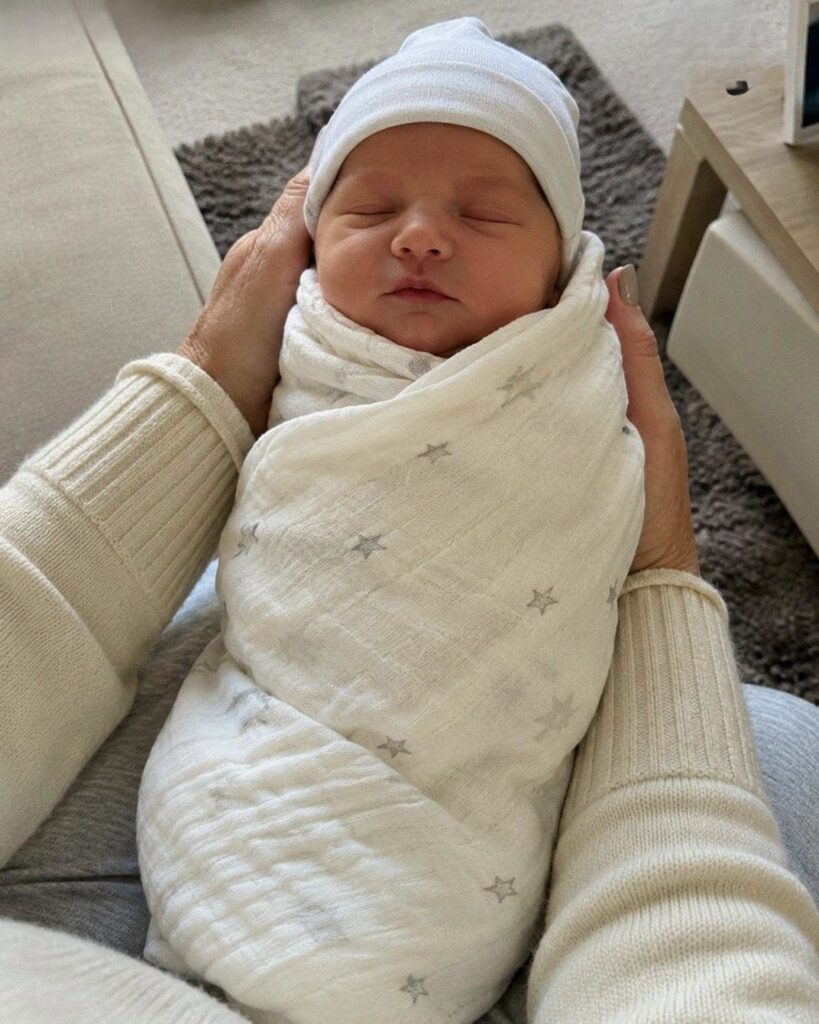
The first time I was allowed to bathe my grandson, I finally understood why Emily had spent months making sure it never happened.
When Luke was born, I wanted to help without becoming overbearing.
My son, Nate, and his wife, Emily, had waited eagerly to become parents. They adored their baby, but within weeks, the sleepless nights began wearing them down.
Nate returned to work earlier than he wanted.
Emily spent most days moving between the nursery, the kitchen, and the couch with Luke in her arms.
I remembered those months from when Nate was a baby.
I remembered eating cold dinners over the sink, forgetting which day it was, and once crying because I could not find a clean towel.
A newborn could fill a home with more love than seemed possible.
But love did not erase exhaustion.
So I made myself useful without trying to take control.
I cooked meals.
Folded tiny clothes.
Washed bottles.
Cleaned the kitchen while Emily slept.
Sometimes I held Luke so she could eat a full meal with both hands.
Other times, I walked him around the block while Nate and Emily took a nap.
Emily always seemed grateful.
“You don’t have to keep doing all this, Helen,” she said one afternoon as I placed a casserole in their refrigerator.
“I know,” I replied. “That’s why it counts as helping instead of serving a sentence.”
She laughed.
For a while, everything between us felt easy.
There was only one thing she would never allow anyone else to do.
Bath time.
The first time I offered, Luke was only a few weeks old.
Emily had mentioned that warm water always calmed him, so I thought bathing him might give her a brief rest.
“That’s sweet,” she said quickly, “but I’d rather do it myself.”
I did not think much of it.
New mothers often created routines that helped them feel secure.
Emily had spent months preparing for Luke’s arrival. She had read parenting books, organized his nursery, and labeled every drawer.
She knew where every diaper, bottle, washcloth, and pair of socks belonged.
I assumed bath time was simply another routine she wanted to keep for herself.
A few weeks later, Luke began waking every two hours.
When I arrived one afternoon, Emily was rocking him while staring blankly at the wall.
Her hair was unwashed.
Her shirt was stained with formula.
She looked so tired that I worried she might fall asleep while standing.
I gently touched her shoulder.
“Emily, why don’t you take a shower? I’ll bathe Luke tonight.”
She looked at me for one long second.
Then she shook her head.
“No. It’s okay. I already have everything ready.”
“But you’re exhausted.”
“I know.”
She forced a smile.
“I’ll be fine.”
The smile disappeared the moment she turned away.
I wanted to insist.
Instead, I reminded myself that Emily was Luke’s mother.
I did not want to become the sort of mother-in-law who ignored boundaries and called it concern.
So I warmed the soup I had brought and stayed until Nate returned from work.
On the drive home, I told myself Emily simply found comfort in controlling certain routines.
Still, her reaction stayed with me.
As the weeks passed, the pattern became harder to ignore.
Emily accepted help with almost everything else.
She allowed me to change Luke’s diapers, dress him, rock him to sleep, and take him for walks.
She left him with me while she went to appointments or ran errands.
But whenever bath time approached, she became tense.
She checked the clock.
Gathered Luke’s things.
Carried him upstairs.
And closed the bathroom door behind her.
I tried not to notice.
Then Emily caught a terrible cold.
She coughed so hard that she sometimes had to stop speaking halfway through a sentence.
Her eyes were red, and she looked as though she had not slept in days.
Nate offered to stay home from work, but Emily insisted he attend an important meeting.
When I arrived, she was sitting at the kitchen table with a mug of tea that had gone cold.
“You need to be in bed,” I told her.
“I’ve been trying,” she answered hoarsely. “Luke has other plans.”
That evening, I offered again.
“Please let me help this once. Twenty minutes. You can lie down while I bathe him.”
For a moment, I thought she might agree.
Instead, she hugged Luke closer.
“I’m sorry,” she whispered. “I just can’t.”
Not I don’t want to.
Not maybe another time.
I can’t.
Something in her voice unsettled me.
She did not sound possessive.
She sounded frightened.
Her fingers tightened around Luke, and she looked down at him as though handing him over would cause something terrible to happen.
I wondered whether she had experienced a frightening accident as a child.
Perhaps she had slipped in a bathtub.
Perhaps someone she knew had drowned.
I considered asking Nate, but that felt like going behind her back.
After that, I stopped offering.
I convinced myself Emily had a reason, even if I did not understand it.
Months passed.
Luke grew into a cheerful baby with Nate’s bright eyes and Emily’s soft brown hair.
He loved music, mashed bananas, and grabbing my glasses whenever I held him.
Then, one evening, Nate and Emily came to my house for dinner.
Emily looked exhausted the moment she entered.
She tried to hide it, but her shoulders sagged, and dark circles shadowed her eyes.
After dinner, she sat on the couch for what she called “just five minutes.”
She never got up.
Within moments, she was asleep beneath a blanket.
Nate looked over at her and sighed.
“Mom,” he said quietly, “could you bathe Luke tonight? I’ll let her sleep a little longer.”
I remember smiling as I lifted my grandson.
It was the first time either of them had trusted me with bath time.
I had no idea that within minutes, I would discover why Emily had spent months preventing it.
I carried Luke upstairs, filled the small baby tub, and began removing his pajamas.
He kicked happily and slapped both hands against the warm water.
I removed his socks.
His pants.
Then his little shirt.
That was when I saw it.
A small waterproof bandage was stuck to the center of his back, directly between his shoulder blades.
It did not look new.
The skin around it showed faint traces of adhesive, as though the bandage had been replaced many times.
My first thought was that Luke had scratched himself.
Perhaps he had a small cut.
Maybe the pediatrician had covered a healing mark.
I hesitated.
Then I carefully lifted one corner.
The bandage peeled away easily.
There was no wound beneath it.
No stitches.
No scratch.
There was a birthmark.
It was dark brown and shaped like a small crescent, with a rounded spot near one end.
Unusual.
Distinctive.
Impossible to mistake.
My stomach tightened.
Nate had never had a birthmark like that.
But I knew someone who had.
My hands began trembling.
I stared at Luke’s back.
Then at the bandage in my fingers.
“No,” I whispered.
“That can’t be possible.”
At that exact moment, footsteps sounded in the hallway.
Emily appeared in the doorway.
She was still pale with exhaustion, but the moment she saw the bandage in my hand, her face turned completely white.
Her eyes moved to Luke’s uncovered back.
Then to me.
“You took it off,” she whispered.
Her words hung in the warm, damp air.
Luke kicked his feet happily, unaware that the room had changed.
“Emily,” I said, fighting to steady my voice. “Why was there a bandage over a birthmark?”
She stepped inside and closed the door.
“Please put it back.”
Her answer frightened me more than the mark itself.
“Who are you hiding it from?”
Emily wrapped her arms around herself.
Her lips trembled, but she said nothing.
I looked down at Luke again.
I had seen that exact mark countless times before.
My older son, Adrian, had been born three years before Nate.
The same crescent-shaped birthmark sat between his shoulder blades.
When Adrian was twelve, he hated changing clothes in front of other children.
“Everyone stares at it, Mom,” he once complained after swimming lessons.
“It makes you different,” I told him.
“I don’t want to be different.”
Years later, he learned to joke about it.
He called it his second face and claimed it watched people behind him.
But Adrian was dead.
He had died ten months earlier at thirty-five.
A truck had crossed the center line during a storm.
Adrian died before the ambulance reached the hospital.
The memory of that phone call still lived inside me like broken glass.
Now my grandson carried his mark.
I lifted Luke from the water and wrapped him in a towel.
My arms moved automatically while my mind fought against what I already suspected.
“Tell me the truth,” I said.
Emily’s eyes filled with tears.
“Helen, I never wanted you to find out this way.”
A cold heaviness settled in my chest.
“Find out what?”
The bathroom door opened before she could answer.
Nate stood there.
He looked from Emily to me.
Then he saw the bandage on the floor.
His expression changed.
“What happened?”
No one answered.
“Mom?”
I held Luke against my chest.
“This birthmark is identical to Adrian’s.”
Nate went completely still.
Emily covered her mouth and began to cry.
For several seconds, the only sound in the room was Luke babbling against my shoulder.
Nate looked at his wife.
“Why are you crying?”
She shook her head.
“Emily, answer me.”
His voice cracked on the final word.
“I’m so sorry,” she whispered.
Nate backed into the wall as though she had struck him.
I wanted another explanation.
Birthmarks were not proof.
Families shared features.
Coincidences happened.
But Emily’s terror had already told us the truth.
Nate stared at her.
“Is Luke Adrian’s son?”
Emily closed her eyes.
“Yes.”
The word was barely audible.
It shattered everything.
Nate pushed past us and walked downstairs without another word.
I handed Luke to Emily.
“Get him dressed.”
Then I followed my son.
Nate stood in the kitchen with both hands gripping the counter.
Our dinner plates were still on the table.
One of Luke’s toys lay beneath a chair, bright and innocent among the ruins of the evening.
Emily entered a few minutes later holding Luke tightly.
Nate did not turn around.
“How long?”
“It happened once.”
“When?”
“After your conference in Denver.”
Nate faced her.
“That was five months before Adrian died.”
Emily nodded as tears ran down her cheeks.
I remembered that period.
Nate and Emily had been arguing frequently.
He had taken extra shifts.
She had spent more time alone.
Adrian had visited their house several times, supposedly to repair things and check on Emily.
I had thought he was being a good brother.
Nate’s voice became painfully calm.
“You slept with my brother in my house?”
Emily flinched.
“We had both been drinking. I was angry with you, and Adrian was struggling after his breakup. It was selfish and horrible. I regretted it immediately.”
“Did he know Luke was his?”
“Yes.”
Nate pressed his fist against his mouth.
“How long did he know?”
“I told him after the first ultrasound. He wanted to tell you, but I begged him to give me time.”
“And then he died.”
Emily lowered her head.
The full horror settled over us.
Adrian had carried the secret until the night of his accident.
Nate had mourned him.
Praised him at his funeral.
And given Luke Adrian’s name as a middle name.
My stomach turned.
“Were you certain?” I asked.
Emily nodded.
“I had a DNA test done after Luke was born.”
Nate stared at her.
“You tested him and still said nothing?”
“I was afraid.”
“You let me believe he was mine.”
“You are his father,” she pleaded. “You’ve loved him since the moment he was born.”
“That is not the same as being allowed to know the truth.”
His voice rose.
Luke began to cry.
The baby stretched both arms toward Nate.
Nate’s anger broke immediately.
He crossed the room and took Luke from Emily.
My son held him against his chest and rocked him gently while tears slid down his face.
Luke grabbed Nate’s shirt.
Within seconds, he settled.
Watching them hurt more than I could explain.
Biology had created the wound.
But love stood in front of me, exhausted and trembling, soothing a child who trusted him completely.
“I covered the mark because I knew you would recognize it,” Emily told me.
“The first time I saw it, I panicked. I started placing waterproof bandages over it whenever anyone visited.”
“That is why you would not let anyone bathe him.”
She nodded.
Months of strange behavior suddenly made sense.
Her refusal had never been about control.
It had been fear.
A secret made heavier with every passing day.
Nate looked at her over Luke’s head.
“You need to leave tonight.”
Emily gasped.
“Please don’t take him from me.”
“I am not taking Luke from you. I need space before I say something I can never take back.”
She began to argue.
I touched her arm.
“Go to your sister’s house,” I said quietly. “Take Luke with you tonight. Nate needs time.”
My son closed his eyes.
Then he kissed Luke’s forehead and returned him to Emily.
That goodbye nearly broke all of us.
The weeks that followed were painful and complicated.
Nate requested another DNA test.
He needed the truth confirmed by someone other than Emily.
The result showed that Adrian was Luke’s biological father.
Nate moved into my guest room while he decided what to do.
Some nights, he was furious.
Other nights, he sat on the bed surrounded by childhood photographs of Adrian.
“I hate him,” he admitted one evening. “Then I miss him. Then I hate myself for missing him.”
“You can feel both,” I told him. “He was your brother, and he betrayed you. One truth does not erase the other.”
Emily began counseling.
She stopped asking us to understand why she had lied.
She stopped hiding behind fear.
For the first time, she accepted the damage her choices had caused.
Nate eventually agreed to attend counseling with her.
Not because forgiveness came easily.
Because Luke deserved parents who could speak to each other without destroying him in the process.
Their marriage did not return to what it had been.
It could not.
After several months, they separated.
Still, Nate remained Luke’s father in every way that mattered.
His name was on the birth certificate.
But more importantly, he was the person Luke reached for after a fall.
The man who knew which song helped him sleep.
The one who could identify each cry before anyone else.
And the father who never once blamed Luke for the circumstances of his birth.
The first time Nate bathed him after learning the truth, I waited outside the bathroom.
I heard splashing.
Then Luke squealed with laughter.
A moment later, Nate called me inside.
Luke sat smiling in the tub.
There was no bandage on his back.
The birthmark was fully visible.
Nate rested one hand gently beside the small crescent.
“We are not hiding it anymore,” he said.
I knelt beside them, my throat tightening.
“No,” I agreed. “We are not.”
That mark would always remind us of betrayal.
Of grief.
Of a truth that arrived far too late.
But it belonged to Luke now.
Luke was innocent.
He deserved to grow up knowing that no secret written on his skin could make him less loved.
Years later, when Luke was old enough to ask about the mark, Nate did not lie.
He explained the truth carefully, in words a child could understand.
Then Luke looked at him and asked the question Nate had feared most.
“Does that mean you’re not my real dad?”
Nate pulled him close.
“It means someone else helped give you life.”
He kissed the top of Luke’s head.
“But I am the one who chose to spend mine loving you.”
Luke accepted that answer more easily than any of us had.
Children often understand love more clearly than adults do.
The secret nearly destroyed our family.
In some ways, it did.
A marriage ended.
A brother’s memory changed forever.
Trust that had once seemed permanent could not be repaired completely.
But Luke was not the betrayal.
He was not the lie.
He was a child caught inside choices he had never made.
And when everything else fell apart, Nate understood the one truth that mattered most.
He did not have to protect the people who had deceived him.
But he could still protect the boy who loved him.