
“Did Zane tell you everything?”
For thirty-four years, I believed I knew my husband completely.
Zane was the safest place in my life.
We had survived years when money was so tight that we counted every grocery item before reaching the register.
We had buried parents, comforted grieving relatives, and endured the kind of losses that either tear a marriage apart or bind two people more tightly together.
Whenever life became frightening, Zane took my hand and said the same thing.
“We’ll get through it.”
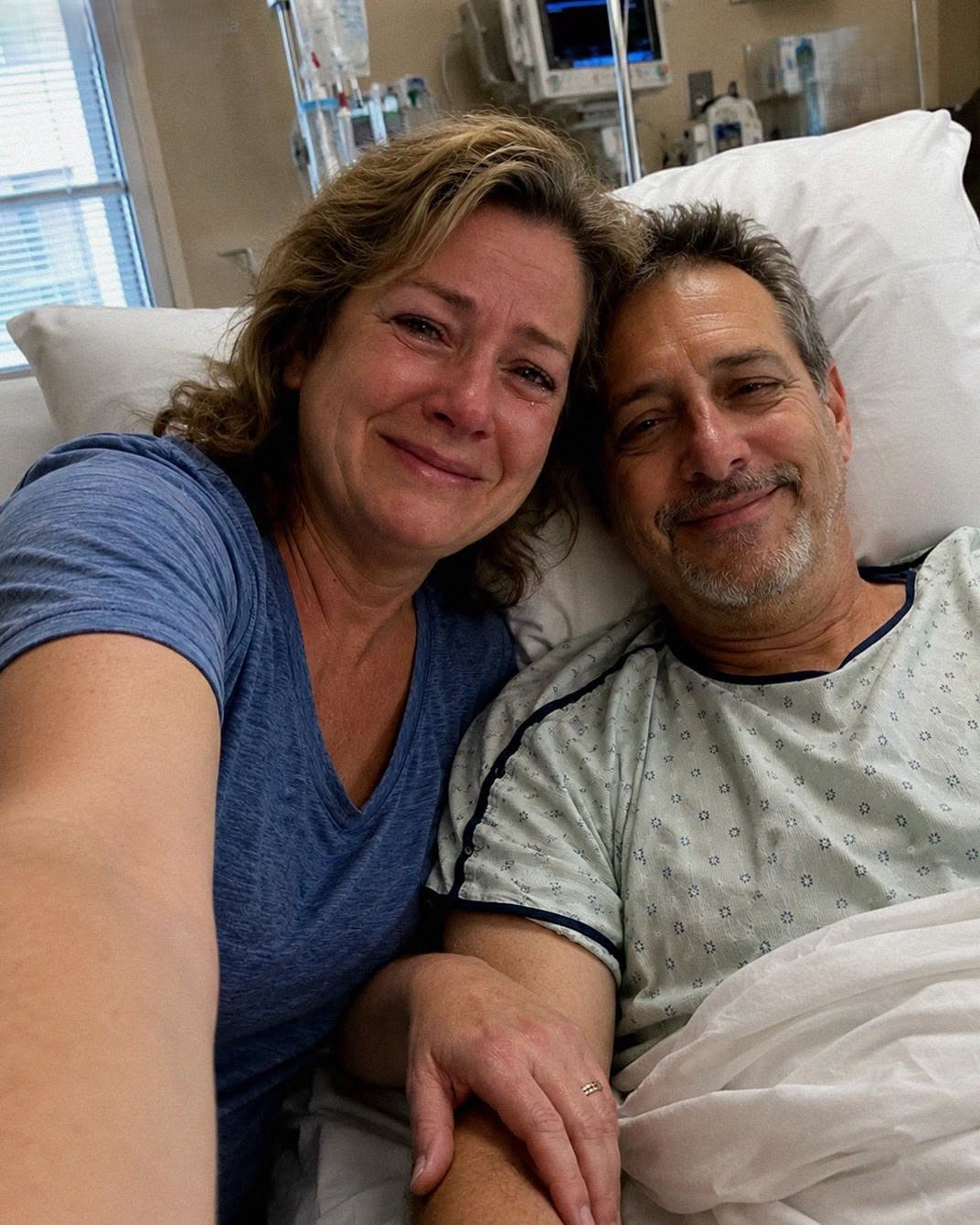
So when the doctors diagnosed him with cancer, I repeated those words to myself.
We had survived everything else.
We would survive this too.
But we did not.
Two days before he died, Zane asked me to open the drawer beside his bed.
Inside was a sealed cream-colored envelope.
A woman’s name was written across the front.
Mara Ellison.
Not mine.
I turned it over.
An address appeared on the back.
“Who is she?” I asked.
Zane’s hand trembled as he reached for the envelope.
“If something happens to me, promise you’ll take this to her yourself.”
“Zane, who is Mara?”
He caught my wrist with surprising strength.
“Please, Irene.”
His breathing was shallow.
“And don’t open it.”
I looked at the unfamiliar name again.
Every instinct told me to demand an explanation.
But he was dying.
His face was thinner than it had been only weeks earlier, and even speaking cost him energy.
So I nodded.
“I promise.”
He died two days later.
The funeral passed in a blur of flowers, casseroles, black clothing, and people telling me what a good man my husband had been.
I heard the same stories repeatedly.
Zane had helped someone find work.
Zane had paid an employee’s medical bill.
Zane had remembered a birthday no one else remembered.
I smiled, thanked people, and accepted their condolences.
Then I returned to a house that felt unnaturally still without him.
His shoes remained beside the back door.
His coffee cup was still in the cabinet where he always kept it.
His reading glasses sat on the arm of his chair.
Two days after the funeral, I found the envelope in my bedside drawer.
I held it for a long time.
Mara Ellison.
I said the name aloud, hoping it might awaken some buried memory.
It did not.
Part of me wanted to tear it open.
Another part was afraid of what I might find.
In the end, I kept my promise.
I got into my car and drove almost three hours to the address written on the back.
The house was small and pale yellow, with a narrow porch and pots of red flowers lining the steps.
A woman in her early fifties answered the door.
She had dark hair streaked with gray and eyes so familiar that my breath caught.
“Can I help you?” she asked.
My throat tightened.
“My husband was Zane.”
She gripped the doorframe.
“Zane?”
I held out the envelope.
“He asked me to bring this to you.”
Her hand shook as she took it.
She did not invite me inside.
She tore it open on the porch.
Her eyes moved across the first line.
Then all the color left her face.
She looked at me with panic in her eyes.
“Did he tell you everything?”
My stomach dropped.
“Everything about what?”
Mara stepped backward.
“You need to come inside.”
Her living room was quiet and carefully kept.
Family photographs covered one wall.
I looked at them despite myself, searching for Zane’s face.
I did not find it.
We sat opposite each other with the opened envelope on the coffee table.
For several seconds, neither of us spoke.
I still believed I was preparing for one kind of betrayal.
An affair.
A secret relationship.
A second life.
Then Mara asked, “Did Zane ever tell you he had a daughter before he met you?”
I stared at her.
“What?”
Her voice broke.
“I’m his daughter.”
The room seemed to tilt.
“That’s not possible.”
Mara gave a short, bitter laugh.
“I spent my whole life believing he forgot I existed. So trust me, I know how impossible it sounds.”
I looked down at the contents of the envelope.
On top was a letter written in Zane’s familiar handwriting.
Beneath it were old envelopes, birthday cards, photographs, and notes.
Many had been opened, resealed, and returned.
I picked up the first card.
Happy Fifth Birthday, Mara.
Inside, Zane had written:
I saw a red sweater in a shop window today and bought it because your mother once said red would be your color. I don’t know whether you will ever read this, sweetheart, but happy birthday. I think about you every day.
Mara’s eyes filled with tears.
“There were more?”
I reached for another card.
Then another.
Birthday letters.
School-year notes.
Christmas cards.
Returned photographs.
One envelope still had a small check clipped inside.
His love had been sitting unread for decades.
“My mother told me he left before I was born,” Mara said. “Later she changed the story and said he tried a few times, then gave up.”
She wiped her eyes.
“But the message stayed the same. He did not want me enough.”
Together, we began piecing together a life neither of us had fully known.
Before Zane met me, he had been in a relationship with Mara’s mother, Elise.
When Elise became pregnant, her wealthy parents decided Zane was unsuitable.
He came from a poor family.
He was still trying to build his business.
Elise’s parents wanted her to marry a man they considered respectable.
They blocked Zane’s calls.
Intercepted his letters.
Returned every gift.
One envelope still carried Elise’s father’s handwriting across the front.
DO NOT CONTACT THIS FAMILY AGAIN.
Mara stared at the words for a long time.
“So he didn’t leave,” she whispered.
“No.”
Her mouth trembled.
“He lost me.”
I opened Zane’s final letter.
Because I had loved him for thirty-four years, I could feel two conflicting truths at once.
He had loved me.
He had also hidden an entire daughter from me.
For one ugly, honest moment, I wondered what else I did not know.
Had my marriage existed beside a locked door I had never noticed?
In the letter, Zane explained that Elise had died several months earlier.
Ten days after her funeral, an old family friend contacted him.
The friend confessed that Mara had never received a single letter.
Not one.
For decades, Zane had believed Mara’s family had rejected every attempt he made to reach her.
He had also created a private investment account intended for Mara’s education.
His business partner, Clark, managed it through the company until she turned eighteen.
Clark later told Zane that Mara’s family had refused the money.
Zane believed the door had been closed permanently.
Then, shortly after learning the truth about the letters, he was diagnosed with late-stage cancer.
His pain explained his silence.
It did not excuse thirty-four years of it.
Mara wiped her face angrily.
“He still waited too long.”
“Yes,” I said.
She looked at me, surprised.
Perhaps she had expected me to defend him.
I folded the letter carefully.
“But he did not forget you.”
Mara released a shaky breath.
“I don’t know whether to hate him or grieve him.”
“Maybe you can do both.”
We continued reading.
One letter, written for Mara’s eighteenth birthday, hit me harder than the others.
Zane wrote that if he could not be part of her life, he wanted at least to give her choices.
He described the education account he had built over the years.
It was funded with his own money but managed through the company by Clark, his oldest friend and most trusted business partner.
I stared at the page.
Clark.
He had worked beside Zane since the earliest years of the company.
He had spoken at our anniversary party.
He had sat in the front row at the funeral.
Mara saw my expression change.
“You know him.”
“Yes,” I said slowly. “Very well.”
The next morning, I took Mara to the company office.
Clark looked up from his desk wearing the same sympathetic expression everyone had shown me since Zane’s death.
Then he saw Mara.
His face changed.
I did not ease him into the conversation.
“This is Zane’s daughter.”
Clark leaned back.
“Irene, perhaps we should discuss this privately.”
“We are discussing it now.”
Mara placed Zane’s letter on the desk.
“My father wrote that you managed an education account for me.”
Clark barely glanced at the page.
“That account was closed years ago.”
“Closed how?” I asked.
“There were circumstances.”
“What circumstances?”
He exhaled slowly, as though we were inconveniencing him.
“The company was struggling. Zane understood why the money had to be used.”
I stared at him.
“You just said the account was closed. Now you are saying Zane approved using the money.”
Clark’s jaw tightened.
Mara leaned forward.
“Did he approve it or not?”
“The company was in serious trouble,” Clark said. “We all had to make difficult decisions.”
Mara tapped the letter.
“This was written two months after my eighteenth birthday. He still believed the money belonged to me.”
Clark went silent.
His explanation had just contradicted Zane’s letter.
My husband had never trusted digital records completely.
He kept paper copies of important documents in a storage unit.
“Computers lie more easily than cardboard boxes,” he used to joke.
I looked at Mara.
“We’re going there.”
We spent more than an hour opening boxes.
Contracts.
Tax records.
Old payroll files.
Property documents.
Finally, I found a folder with Mara’s name written across the tab.
Inside were years of account statements.
The money had existed.
Zane had funded it regularly.
His handwritten notes showed that he believed Clark’s claim that Mara’s family had rejected the transfer.
But the final authorization to move the money was missing.
Mara looked at me.
“So Clark lied to him.”
“Yes.”
“How do we prove it?”
The answer came from Denise, the company’s retired accountant.
She had kept archived transfer logs after the office changed computer systems.
When I showed her the account number, her expression became serious.
“I remember this,” she said.
“Did Zane authorize the withdrawal?”
“No.”
The answer came without hesitation.
“Clark said it was temporary.”
Denise provided copies of the original transfer record.
The funds had been moved into the company’s operating account during a financial crisis.
Clark’s signature appeared on the authorization.
Zane’s did not.
The theft was terrible.
But the cruelty went deeper than the money.
Clark allowed Zane to believe his daughter had rejected him.
He watched his oldest friend die carrying that shame.
Three days later, the company held a memorial meeting.
Employees, board members, relatives, and old friends filled the conference room.
A framed photograph of Zane and Clark from the company’s early years stood beside a large arrangement of flowers.
Clark addressed the room.
He spoke warmly about loyalty.
Friendship.
Sacrifice.
The kind of man Zane had been.
I listened until I could no longer tolerate it.
“I think everyone here deserves the truth.”
Clark gave me a warning look.
“Irene, this is neither the time nor the place.”
“It is exactly the place.”
I walked to the front carrying the records.
Mara came with me.
She did not stand behind me.
She stood beside me.
“My husband trusted Clark with his business, his private affairs, and his daughter’s future.”
Murmurs spread through the room.
Several people turned toward Mara.
I faced Clark.
“You called Zane your brother.”
Then I raised the documents.
“You called him your brother while allowing him to die believing his daughter wanted nothing from him.”
Clark’s face drained of color.
Mara placed two items on the table before him.
The unopened card Zane had written for her fifth birthday.
Then the transfer record carrying Clark’s signature.
She touched the card first.
“This is what my father sent me.”
Then she placed her hand over the bank record.
“And this is what you took.”
No one looked away.
Clark tried one final defense.
“The company was in trouble. I was protecting everyone who worked here.”
Zane’s sister stood from her chair.
She walked to the memorial table, picked up the framed photograph of Zane and Clark, and laid it facedown.
The board placed Clark on immediate leave.
Two weeks later, after attorneys and auditors confirmed the records, he was removed from the company.
The money Zane had intended for Mara was restored from Clark’s ownership share, with interest.
When Mara received the paperwork, she barely looked at the amount.
She cried over the letters.
“I thought he forgot me.”
I shook my head.
“He was wrong. He was afraid. And he waited far too long.”
I placed the letters back into her hands.
“But he never forgot you.”
Zane had retained majority ownership of the company even after Clark became a partner.
Before he died, he had revised his estate documents and left voting control to me.
Once the investigation ended, I transferred a modest ownership share to Mara.
Not as charity.
As recognition.
The company had survived partly by using money meant for her.
I would not allow that injustice to remain hidden.
When I showed her the papers, she stared at me.
“You don’t owe me this.”
“No,” I said. “But Zane did.”
I paused.
“And now I do too.”
Mara looked down at the documents.
“Why?”
I took a breath.
“Thirty-four years with Zane do not make you my enemy.”
Her eyes lifted to mine.
“You did not take my marriage from me. You are part of the man I loved, whether I knew about you or not.”
That was when she finally broke down.
Months later, Mara and I established a small scholarship in Zane’s name.
It was created for students who had grown up without reliable support from one parent.
At the first award ceremony, only a few chairs surrounded a small table near the company entrance.
Beside it stood a glass display case.
Mara placed one of Zane’s unopened birthday cards inside.
For several seconds, she stared through the glass.
Then she said quietly, “He never forgot me.”
This time, I could give her the answer she should have received decades earlier.
“No,” I said. “He never did.”
I had delivered the envelope because I promised my husband I would.
I believed it contained one final secret I would have to carry alone.
Instead, it opened a door between two women who had both loved the same man and had both been denied the full truth about him.
Zane’s silence could not be undone.
His mistakes could not be made harmless simply because he was gone.
But the truth allowed us to do what he had failed to do while he was alive.
We stopped protecting the secret.
And we finally delivered everything that had been kept from Mara for far too long.