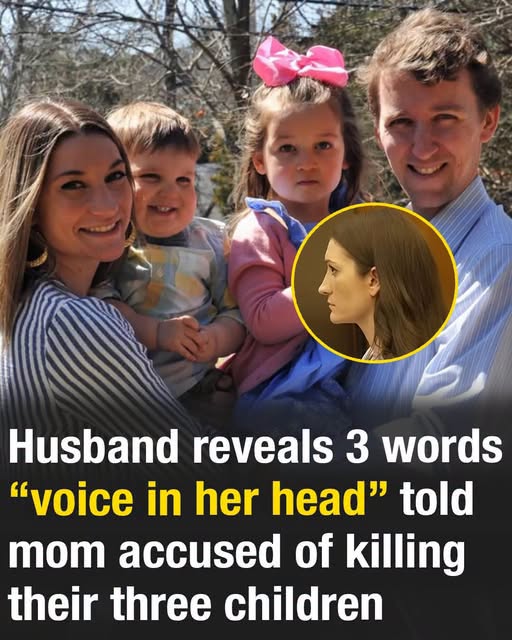
The children’s mother, Lindsay Clancy, survived the event but was left paralyzed. She now maintains that a commanding male voice instructed her to take the children’s lives, placing her state of mind at the center of the ongoing criminal case. The legal dispute is built around two sharply different interpretations of what occurred. One view presents the deaths as the result of deliberate, calculated actions. The other describes a mother experiencing such a profound psychological collapse that she could no longer understand reality or control her behavior.
The prosecution contends that the sequence of events reveals planning rather than confusion. They have focused on timing, preparation, and Lindsay’s own statements as indications that she understood the nature of her actions. Conversely, the defense is expected to emphasize severe mental illness, specifically the possibility that postpartum psychosis had disconnected her from reality. Her claim regarding the male voice is central to this argument, as it suggests that she may have experienced commands she believed were real. Jurors must determine not merely whether she was unwell, but whether her illness removed her capacity to recognize reality and comprehend her conduct at the time.
Patrick Clancy’s public position has added a complex emotional layer to the proceedings. Despite the unimaginable loss of his three children, he has spoken from a position of forgiveness, refusing to describe his wife as a monster. This stance suggests he views Lindsay’s actions through the lens of illness rather than cruelty. However, Patrick’s personal feelings do not dictate the legal outcome. He has also initiated a lawsuit against his wife’s healthcare providers, arguing that the medical treatment she received may have intensified her psychological decline. This legal action raises questions about whether warning signs were recognized and whether her medication regimen contributed to her worsening state.
The defense faces a difficult burden in explaining behavior that resulted in such a devastating outcome while proving the actions were not the product of a calculating mind. Prosecutors, meanwhile, maintain that the existence of mental health struggles does not automatically excuse criminal responsibility. They argue that organized actions—such as locking a door or preparing a weapon—are inconsistent with a total loss of awareness. The jury must navigate these conflicting narratives, weighing evidence of psychological deterioration against evidence of intent and planning.
The role of postpartum psychosis remains a critical, technical element of the case. The defense must connect her mental decline, the medications she was prescribed, and the reported auditory hallucinations into a coherent account of lost reality. This requires jurors to look beyond the horror of the outcome and focus closely on the legal standard of mental capacity. The distinction between being seriously ill and being legally insane is a narrow, difficult path that the court must now traverse. Experts will likely debate the nuances of psychiatric evaluation, while the jury must weigh these clinical perspectives against the stark reality of the physical evidence found at the scene.
Patrick’s forgiveness remains a significant point of public interest, yet the criminal case must be resolved by the evidence and the law. His grief is inseparable from the proceedings, as he remains the grieving father of the children and the husband of the woman accused of their deaths. The court must evaluate whether Lindsay possessed the mental capacity required to understand her acts, regardless of the compassion or anger felt by those watching the case from the outside. The legal system must remain objective, separating the personal tragedy of a grieving husband from the broader requirements of public justice and accountability.
Ultimately, the case is a painful examination of how the legal system responds when extreme violence and serious mental illness intersect within a family. It forces a reckoning with medical care, the complexity of postpartum psychiatric conditions, and the limits of human empathy in the face of tragedy. The jury’s decision will determine Lindsay’s legal fate, but it may not provide a complete explanation for how such a devastating sequence of events unfolded. As the proceedings continue, the focus remains on the three children whose lives were lost and the profound, lasting impact on everyone involved in this Duxbury tragedy. The latest known status of the case involves ongoing legal preparations as the court weighs these competing arguments regarding mental capacity and criminal intent, with the community waiting for a resolution that addresses both the legal and human dimensions of this profound loss.