
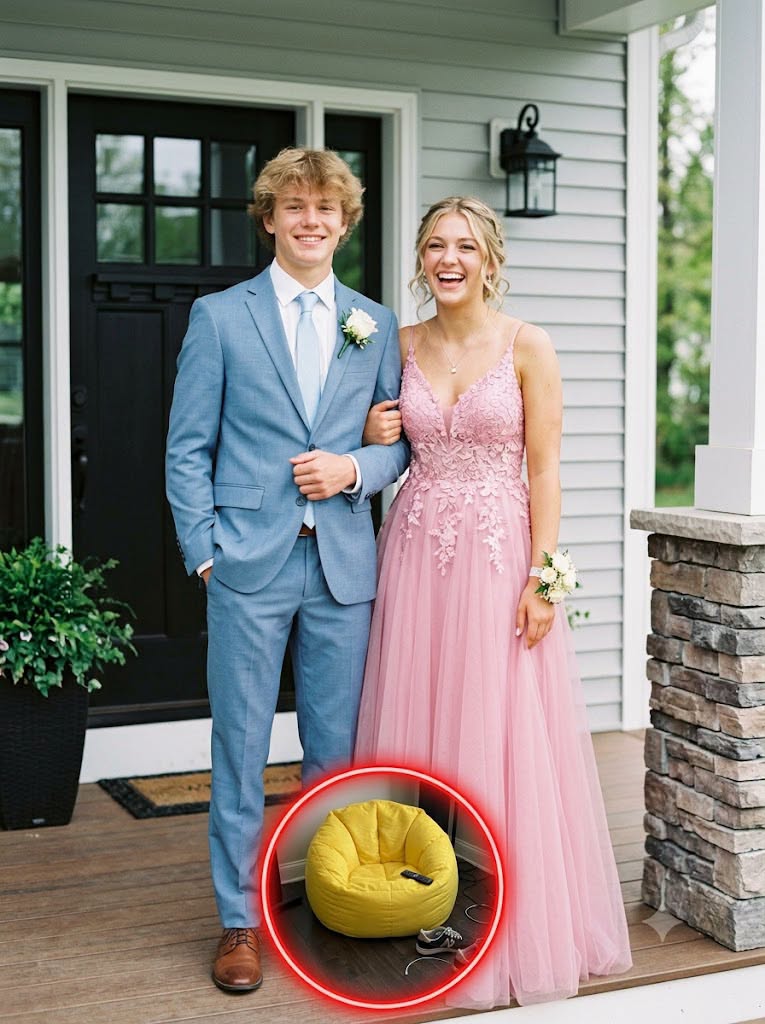
Her twin brother, Liam, stood beside her.
Before they left, I warned her again to stay away from Mitchell.
At the time, I believed I was protecting her.
Looking back, I can hear how much control lived inside that word.
Protecting.
At 11:47 p.m., the phone rang.
A school administrator, Mr. Thomas, told my husband John and me that Livia had vanished from the dance. Her purse was gone. Her phone was off. No one had seen her leave.
Fear took over so quickly that it left no room for wisdom.
I decided Mitchell had taken her.
By the next morning, I was at his mother Natalie’s door, angry and certain. I accused. I demanded. I spoke from panic, but I dressed it as righteousness.
For eleven months, I lived inside that anger.
Our home became a place of grief.
Liam stopped talking about his sister. He locked himself away, carrying a silence I was too consumed by blame to understand. John tried to reach both of us, but I had made my sorrow sharp, and sharp things are hard to hold.
When Liam left for college in August, the house became even quieter.
A few days later, I smelled something burning from his room.
The door was locked.
I broke it open.
At first, I saw nothing unusual. Then I noticed strange lumps beneath his yellow beanbag chair. The seam had been sewn shut with bright red thread, uneven and deliberate.
I cut it open.
Livia’s pale blue prom dress slipped out.
So did sealed letters.
Photographs.
A courthouse wedding picture.
A sonogram.
And one photo of a tiny baby girl in a yellow outfit.
I sat on the floor with my hands shaking.
The truth was not what I had spent eleven months believing.
Livia had not been kidnapped.
She had run away.
She had married Mitchell.
She had given birth to a daughter named Rose, after my own mother.
In her letters, Livia wrote what she had never felt safe enough to say in our kitchen, our car, or her bedroom doorway.
She loved me.
She missed me.
But she had been afraid of my judgment.
Afraid that if she told me the truth about Mitchell, about her pregnancy, about the life she wanted to choose, I would not listen. I would correct, punish, command, and call it love.
Natalie had taken her in without asking questions first.
That sentence hurt.
Not because Natalie had been wrong to help her.
Because my own daughter had felt safer in another mother’s house than in mine.
John sat beside me as I read.
He did not say, “I told you so.”
He simply placed his hand over mine and said, “Call Liam calmly.”
So I did.
My son came home the next day.
He looked older than when he had left, though only weeks had passed. He told us he had known where Livia was. He had helped hide the letters and the dress because he was terrified that if I found out too soon, I would destroy the fragile peace she had built.
His words were not cruel.
That made them harder to hear.
He explained how my constant demands had shaped their lives. How every choice became something to defend. How love in our home often felt like approval granted only after obedience.
I wanted to argue.
But the dress was on the floor.
The letters were in my lap.
And my granddaughter’s face was in a photograph I had never known existed.
There are moments when truth does not ask whether you are ready.
It simply arrives.
John drove me to Natalie’s house.
My heart pounded the entire way.
Natalie opened the door first. Mitchell stood behind her. Neither of them looked triumphant. They looked cautious, tired, and prepared for me to become the woman they had feared.
Then I saw Livia.
She was holding Rose.
My daughter looked different. Softer in some ways, stronger in others. Motherhood had changed her face, but I could still see the girl from the porch, the girl in the blue dress, the girl I had loved so fiercely that I had forgotten love must also make room for breathing.
Every instinct in me wanted to ask questions too quickly.
Why did you leave?
Why didn’t you trust me?
How could you hide this?
But for once, I stopped myself.
Instead, I asked, “What did I do that made running away feel like your only option?”
Livia began to cry.
Then she told me.
She spoke about my criticism. My warnings. My need to manage every detail of her future. She said she had stopped believing I could hear her without trying to overrule her.
I listened.
Not perfectly.
But honestly.
Then I apologized.
Not a small apology meant to end the discomfort. A real one. I admitted that I had confused fear with wisdom and control with care. I admitted that my love had become heavy in her life, and that no daughter should have to disappear in order to become herself.
I apologized to Mitchell.
To Natalie.
To Liam.
To John.
And most of all, to Livia.
We did not fix everything that day.
Families are not repaired by one conversation, especially after silence, fear, and grief have lived between them for almost a year.
But we began.
I held Rose for the first time that afternoon.
She was warm and small, with Livia’s eyes and a serious little frown that made everyone laugh softly. I whispered her name and thought of my mother, whose name she carried into a future I had almost missed.
We agreed to rebuild slowly.
With respect for Livia’s marriage.
Respect for her motherhood.
Respect for the truth that my daughter’s life belonged to her, not to the version of her I had imagined.
For eleven months, I believed I had lost Livia because someone had taken her.
The harder truth was that she had left because my love had stopped feeling safe.
That truth hurt.
But it also gave me a path back.
Not through demands.
Not through control.
But through humility, patience, and the daily choice to love my daughter without trying to own her.