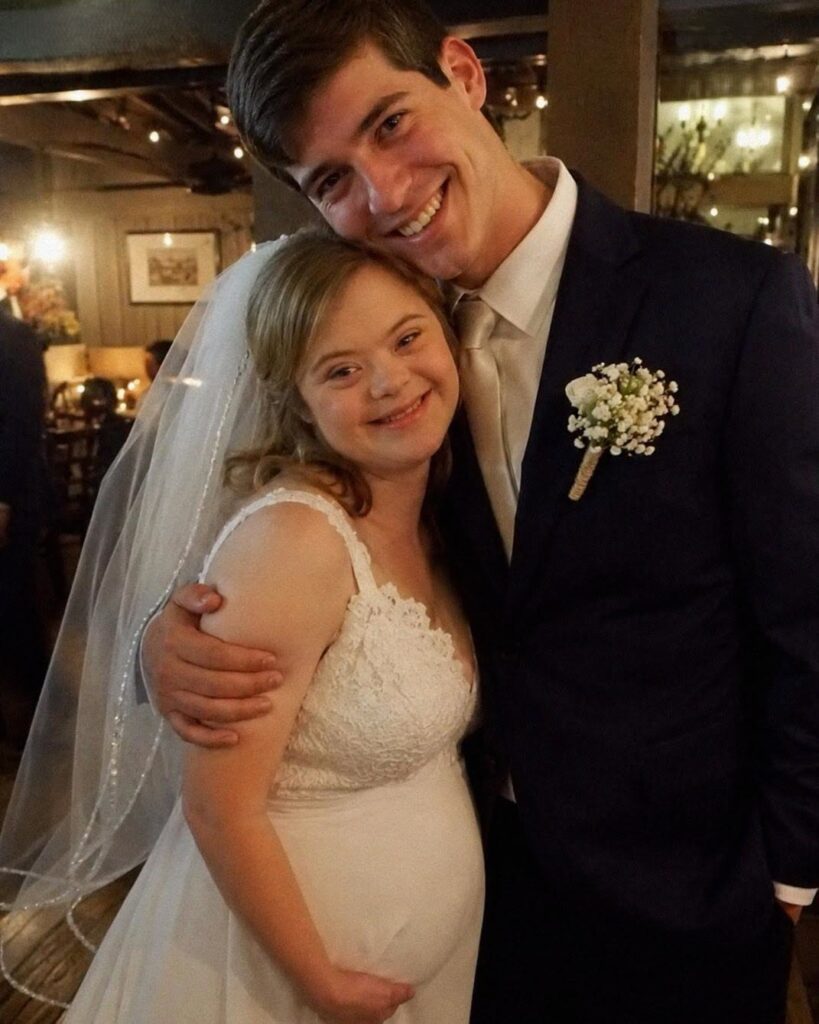
I was seven years old the first time I realized the world would punish my sister for being different.
Rosie was six.
She had soft brown curls, an infectious laugh, and eyes that lit up whenever someone said her name kindly.
Far too many children did not.
They pointed at her.
Mocked the way she spoke.
Excluded her from games.
Sometimes they teased her until she cried.
Whenever that happened, I stood in front of her with my fists clenched at my sides, trying to become a wall strong enough to keep the world away.
Ben was the only other child who always stood beside me.
He had been my best friend since preschool.
When other children groaned because Rosie wanted to join their game, Ben handed her the ball.
When captains refused to pick her for kickball, he chose her first.
When she struggled to tie her shoes, he knelt on the playground and helped without making her feel embarrassed.
“Rosie, you’ll always have Ben and me,” I told her.
I repeated it so often that eventually she believed it.
In fourth grade, Ben made her a promise none of us ever forgot.
Rosie had come home crying because several girls said no boy would ever take her to a dance.
Ben crouched in front of her.
“When we’re older, I’m taking you to prom,” he said. “That’s a promise.”
Rosie’s face transformed.
“You heard him, Cathy!”
She grabbed my hands and bounced with excitement.
“Ben said he’ll take me!”
“I heard him.”
I smiled at both of them, my chest warm with affection I was still too young to understand.
The years passed gently.
Ben rode his bicycle to our house almost every afternoon.
Rosie waited by the living-room window for the sound of his tires against the driveway.
My mother tolerated his constant presence.
My father usually remained hidden behind his newspaper.
But to Rosie and me, Ben belonged in our house.
By seventeen, I had begun imagining a future with him.
I never said it aloud.
They were private daydreams I carried while doing homework or brushing my hair before bed.
I imagined Ben and me marrying one day.
Rosie would live nearby.
The three of us would remain connected, just as we had always promised.
Sometimes I thought Ben imagined it too.
There was a certain way he lingered on the porch after saying goodnight.
A softness in his expression when I caught him watching me.
A hundred small moments that seemed meaningful because I wanted them to be.
Then, one Sunday afternoon when I was twenty-two, Ben knocked on our door holding a small velvet box.
The sight of it made my heart leap so violently that I felt dizzy.
He looked nervous.
His hair was damp from the rain.
His fingers tightened around the box.
“Can I talk to Rosie?” he asked.
My smile disappeared.
“Rosie?”
“Is she in the garden?”
I stepped aside without answering.
From the kitchen window, I watched him walk toward my sister between the tomato vines.
Rosie looked up from the basket in her hands.
Ben knelt.
Her hands flew to her mouth.
Then she nodded so hard that her curls bounced around her face.
I cried into my pillow that night so no one would hear me.
The thoughts that filled my mind made me ashamed.
How could Ben choose her instead of me?
Could he really find her more attractive?
Was he marrying her out of pity?
Did he want money?
Was she simply the closest he could come to having me?
I hated myself for thinking those things.
Looking back, what hurts most is knowing that I had sensed there was a hidden reason.
I was simply wrong about what that reason was.
The next morning, I smiled and helped Rosie create a wedding inspiration board.
She wanted yellow flowers.
A chocolate cake.
Tiny silver stars sewn into her veil.
“You’ll be my maid of honor,” she said.
“Of course.”
“Promise?”
“I promise.”
Part of me expected our parents to interfere.
They had spent Rosie’s entire life treating her future as something that needed to be carefully managed.
Yet when Ben proposed, they accepted almost immediately.
They smiled.
They congratulated him.
They said he would take good care of her.
Their approval should have reassured me.
Instead, it made me uneasy.
The wedding was small.
Ben wore a gray suit and cried when Rosie walked toward him.
My father placed a hand on his shoulder at the reception.
“You chose well,” Dad said.
The words stung more than they should have.
I watched Ben place a ring on my sister’s finger and wondered whether I truly knew the man I had called my best friend for most of my life.
Three years passed.
Eventually, the ache softened.
I met a kind man of my own and built a life that no longer revolved around the future I had once imagined.
Rosie and Ben moved into a small yellow house on the edge of town.
She called me almost every morning at nine to tell me what she was wearing or what Ben had cooked for breakfast.
He brought her flowers on random Tuesdays.
She packed him lunches with handwritten notes.
Their home was warm, noisy, and full of laughter.
Then Rosie called me one morning and whispered, “I’m going to be a mom.”
I froze.
“Rosie?”
“Twins.”
I sank onto the floor of my apartment, laughing and crying at the same time.
All her life, people had told Rosie what she would never do.
She would never live independently.
Never marry.
Never have a home of her own.
Never become a mother.
Now she was carrying two babies.
I should have known that joy so enormous would not arrive without fear.
The pregnancy was difficult from the beginning.
Rosie developed complications.
There were extra appointments, hospital visits, and strict instructions to rest.
At thirty-four weeks, Ben called me in the middle of the night.
“They’re taking her in,” he said.
His voice was breaking.
“Come now.”
By the time I reached the hospital, Rosie had already been taken for an emergency delivery.
The waiting-room clock moved past midnight.
Ben sat beside me, his knee bouncing uncontrollably.
His hands were clasped so tightly that his knuckles had turned white.
“She’s going to be okay,” I whispered.
I was speaking as much to myself as to him.
“Rosie is strong.”
Ben pressed both palms against his eyes.
A sound escaped him that was somewhere between a sob and a prayer.
Then the double doors opened.
A doctor stepped into the waiting room.
Ben stood so quickly that his chair nearly tipped over.
The doctor’s expression told us the truth before he spoke.
“The babies have been delivered,” he said. “They are stable.”
Ben grabbed the back of his chair.
“And Rosie?”
“She has lost a significant amount of blood. Her condition is critical. We are doing everything possible, but you should prepare yourselves.”
The doctor disappeared through the doors again.
Ben stood frozen.
His entire body seemed to sway.
I placed my hand on his back.
“Look at me.”
He did not.
“Ben, Rosie chose you because you make her feel safe. She needs you to hold onto that now.”
“My promise,” he whispered.
“What?”
He turned toward me.
His eyes held something I could not understand.
“I need to speak to you privately.”
“Now?”
“She told me to.”
He led me down the corridor to a quiet alcove near the stairwell.
The lights were too bright.
The floors smelled of disinfectant.
Somewhere nearby, a machine beeped steadily.
Ben leaned against the wall.
“Before they took Rosie into surgery, she made me promise something.”
“What did she say?”
“She said, ‘If I don’t wake up, tell Cathy everything.’”
A cold sensation moved through me.
“Tell me what?”
Ben reached inside his jacket.
“It’s time you understood why I really married her.”
I gripped the railing beside me.
“Please don’t say that.”
“What?”
“Do not destroy four years of watching my sister love you.”
He closed his eyes.
“You think I want to be standing here while she is fighting for her life?”
Every suspicion I had once buried came rushing back.
Money.
Pity.
Manipulation.
A marriage built on some hidden bargain.
Ben pulled out a folded document.
“I made her a promise, and I’m going to keep it.”
He held the paper toward me.
“But you should sit down.”
I took it with shaking hands.
The first thing I saw was the letterhead.
It belonged to my father’s law firm.
The second thing I saw was a payment schedule.
A six-figure amount.
Money to be paid to Ben if he married Rosie.
My parents’ signatures were at the bottom.
So was Ben’s.
The scream tore out of me before I could stop it.
“You sold yourself to marry my sister?”
Ben flinched.
“I know what it looks like.”
“She is dying in there!”
My voice echoed through the corridor.
“You stood beside her at the altar with a contract in your pocket?”
“Cathy, listen—”
“Explain what?”
My voice cracked.
“That my parents bought her a husband? That you accepted money to pretend you loved her?”
Ben slid down the wall.
Then he began crying.
Not quietly.
His shoulders shook.
“I never cashed a single check,” he whispered.
I stared at him.
“What?”
“Every payment they sent went into a separate account in Rosie’s name.”
He wiped his face.
“Every dollar belongs to her.”
I wanted to believe him.
But the contract remained in my hand.
“Then why sign it?”
Ben lowered his eyes.
“Because I saw where they planned to send her.”
The hallway seemed to narrow.
“Send her where?”
“A place called Willow Grove.”
I did not recognize the name.
But the way he said it made my stomach turn.
“What is Willow Grove?”
“A residential facility several hours away.”
“No.”
“Your mother showed me the brochure.”
He drew in a shaky breath.
“She said you were both adults and Rosie was becoming a responsibility nobody in the family could carry forever.”
“That isn’t true.”
My voice rose again.
“She was never a burden.”
“I know.”
“I would have taken care of her if she needed me.”
“They were never planning to ask you.”
I sank onto the floor opposite him.
Ben continued quietly.
“Your mother said, ‘Cathy deserves a life of her own. We will not chain her to Rosie.’”
I covered my mouth.
“She said that?”
Ben nodded.
“They offered me money to marry her. They wanted the responsibility transferred to someone else.”
I looked down at the contract.
There were clauses about finances.
Housing.
Legal decision-making.
My parents had tried to turn Rosie’s life into an arrangement.
“Why agree?” I asked.
“Because I already loved her.”
I looked up.
“I signed the marriage agreement, but I refused the guardianship provisions.”
His voice steadied.
“I knew that if I rejected everything, they would send her away. So I signed enough to make them believe their plan had worked.”
“You married her to save her?”
“I married Rosie because I loved her.”
He looked toward the operating-room doors.
“The contract only gave me the chance to keep them from deciding her future without her.”
My chest ached.
“And Rosie knew?”
“I told her after our first anniversary.”
“You waited a year?”
“I was ashamed.”
He gave a broken laugh.
“I thought she would leave me.”
“What did she do?”
“She cried.”
He smiled through the tears.
“Then she laughed and said, ‘That was a very silly way to rescue someone.’”
Despite everything, a sound escaped me that was almost a laugh.
“She knew about the money?”
“Yes. She made me transfer everything into her account.”
“Why didn’t either of you tell me?”
“Because Rosie asked me not to.”
His expression filled with pain.
“She said you would go to war with your parents and the family would fall apart.”
“She was right.”
“I kept that promise until tonight.”
He looked down the hallway.
“Then she asked me to make a new one.”
I thought of every Tuesday bouquet.
Every photograph of Ben making Rosie laugh.
The way he listened when she spoke.
How carefully he had prepared their home for the babies.
Their marriage was not a performance.
Their love had never been false.
But my parents’ betrayal was worse than anything I had imagined.
“I hated you for about two minutes,” I whispered.
Ben wiped his eyes.
“I would have hated me longer.”
Footsteps sounded at the end of the corridor.
The doctor was returning.
Ben and I stood.
His face revealed nothing.
Before he could speak, the elevator chimed behind him.
My parents stepped out carrying their coats over their arms.
They approached quickly.
“How is she?” my mother asked.
The doctor glanced between us.
“Rosie is stable.”
My legs almost gave way.
“Both babies are breathing on their own,” he continued. “Your sister remains weak, but the bleeding has been controlled.”
I let out a sob and grabbed Ben’s sleeve.
“She made it.”
Ben covered his face.
“She made it.”
My mother stepped toward us with her arms open.
“Oh, thank God.”
I moved back.
“Do not touch me.”
She stopped.
“What?”
“Not after what you did.”
Her forehead creased.
“What are you talking about, sweetheart?”
I raised the contract.
The blood drained from both my parents’ faces.
“You were going to send Rosie away.”
My father’s expression hardened.
“You do not understand the situation.”
“I understand that you called your own daughter a burden.”
“We were planning for her future,” Mom said.
“You planned to remove her from it.”
My father glanced toward Ben.
“He is the one who accepted money.”
Mom pointed at him.
“You cannot condemn us without condemning him too.”
“You signed that contract to get rid of Rosie.”
My voice shook with fury.
“Ben signed it to protect her.”
“That does not excuse deception,” Dad snapped.
“And what do you call arranging your daughter’s marriage like a financial transaction?”
Voices had begun carrying through the hallway.
Nurses slowed as they passed.
People in the waiting room turned toward us.
My mother looked around.
“This is neither the time nor the place.”
“The time was three years ago.”
I stepped closer.
“The place was our home, when you decided Rosie’s future without asking her.”
“We were trying to protect Cathy,” Mom said.
“From what?”
“From spending her entire life responsible for her sister.”
“You never asked me what I wanted.”
“You would have sacrificed everything.”
“That was my choice to make.”
My father lowered his voice.
“We ensured Rosie would be cared for.”
“No. You paid someone to make her disappear from your conscience.”
My mother flinched.
“You will not enter her room today,” I said.
“She is our daughter.”
“Then you should have treated her like one.”
My father stepped forward.
“You do not have the authority to keep us out.”
Ben finally spoke.
“As Rosie’s husband, I do.”
My parents turned toward him.
His face was pale, but his voice was clear.
“She asked for Cathy and me. Until Rosie says otherwise, you will stay away.”
My mother looked around again.
For the first time, she seemed to realize that everyone had heard.
No one in the corridor looked sympathetic.
My parents had spent years fearing that Rosie would embarrass them.
Now they stood exposed by their own choices.
My mother lowered her eyes first.
Without another word, they walked back toward the elevator.
The hallway felt lighter when the doors closed.
Ben touched my elbow carefully.
“I’m sorry I kept it from you.”
“You kept her safe.”
I looked at him.
“That matters more.”
A nurse appeared at the doorway.
“She’s awake,” she said. “And she is asking for both of you.”
Ben’s knees almost buckled.
I caught his hand.
Together, we entered Rosie’s room.
She looked pale and exhausted.
Two tiny bundles rested in clear bassinets nearby.
When she saw us, her tired face brightened.
“Did he tell you?” she whispered.
I laughed through my tears.
“He told me everything.”
Rosie looked at Ben.
“I told you she would scream.”
He leaned over and kissed her forehead.
“You nearly gave me a heart attack.”
“I was busy having babies.”
I moved beside the bed and took her hand.
“You should have told me.”
“I know.”
Her smile faded.
“I did not want you to lose Mom and Dad because of me.”
I squeezed her fingers.
“Rosie, you did not cause this.”
“They made their choice.”
Her eyes filled with tears.
“Are you angry?”
“Yes.”
“At me?”
“Never at you.”
I leaned down and kissed her forehead.
“You were never a burden.”
“I know.”
She looked toward Ben.
“He told me every day.”
Three weeks later, our parents resigned as trustees of Rosie’s family trust.
An independent attorney reviewed the agreement and confirmed that several provisions would never survive legal scrutiny.
Our aunt agreed to oversee the trust instead, with Rosie involved in every financial decision.
Word spread through the family faster than my parents expected.
Invitations stopped arriving.
Excuses were no longer accepted.
For the first time in their lives, people saw them as clearly as they had once claimed to see Rosie.
They sent apologies.
Rosie read them but did not respond immediately.
“I can forgive them one day,” she told me. “But forgiveness is not the same as letting them decide things again.”
Ben smiled proudly.
“That is my wife.”
A few months later, we gathered for the twins’ dedication.
Rosie stood at the front of the room holding her daughter.
Ben cradled their son against his chest.
My uncle raised his glass.
“Some men become husbands,” he said. “Ben became a protector.”
The room filled with applause.
Ben looked embarrassed.
Rosie looked radiant.
I watched the three of them and thought about the little boy who had promised to take her to prom.
He had kept that promise.
Then he had made a greater one.
He had chosen her when others saw a responsibility.
He had loved her when others tried to manage her.
He had protected her without ever treating her as helpless.
My parents had believed they could purchase Rosie’s future.
Instead, the contract they created became evidence of the love they had underestimated.
Ben did not marry my sister because he was paid.
He accepted their money because it was the only way to stop them from taking away her choices.
Then he returned every dollar to the woman it had always belonged to.
That day, as Rosie smiled down at her babies, I understood something I should have known from childhood.
She had never needed someone to rescue her from being different.
She needed people willing to stand beside her while she built the life she chose.
Ben had done that.
And when the truth finally came out, I chose to stand beside her too.