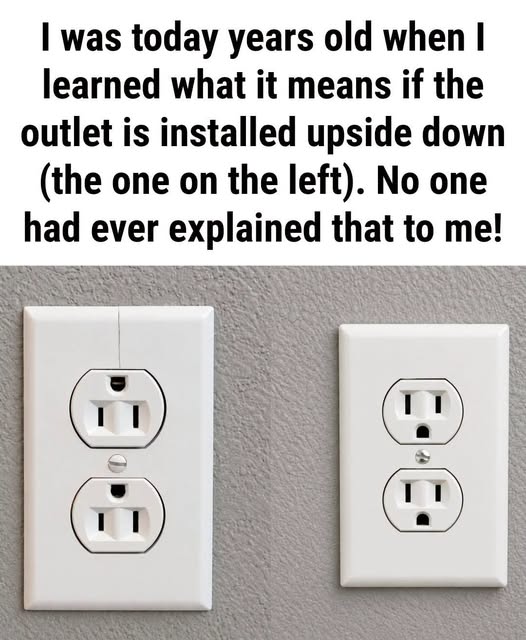
that the installation is actually a deliberate, functional choice rather than a mistake. This specific orientation serves as a vital visual cue for anyone interacting with the electrical system of the home. By placing the grounding hole at the top, builders provide an immediate, non-verbal signal that the outlet is not a standard, always-on power source. Instead, it indicates that the receptacle is controlled by a nearby wall switch, a design feature frequently used for lamps and appliances.
The primary utility of this configuration lies in convenience. In many residential layouts, particularly in living rooms and bedrooms, ceiling lights may not be present or sufficient. To solve this, builders install outlets that are wired to a wall switch, allowing residents to illuminate an entire room by flipping a single switch near the door. By installing these specific outlets upside down, the homeowner can instantly distinguish between a receptacle that provides constant power and one that requires the switch to be in the on position.
Beyond mere convenience, this practice is often rooted in building codes and specific project requirements. While not every jurisdiction mandates this exact orientation, many local building codes and individual contractors have adopted this as a standard best practice. This standardization helps prevent frustration. Imagine plugging a clock, a security camera, or a router into an outlet, only to have it lose power unexpectedly because someone flipped the wall switch to turn off a lamp plugged into the other half of the duplex receptacle.
The grounding hole, which is the round or U-shaped opening at the bottom of a standard outlet, is the most important part of the device for safety. When the outlet is flipped, the grounding pin of a three-prong plug enters from the top. This orientation is not just a random choice; it is a clear indicator that the circuit is interrupted by a switch. This is particularly helpful in homes with multiple outlets along a single wall, where it might otherwise be impossible to know which one is hot at all times and which one is dependent on a switch.
Furthermore, this visual indicator is a boon for residents who may have trouble remembering which switch controls which light or device. It reduces the need for trial and error. When you see that grounding hole facing upward, your brain receives a signal that you should check the wall switch before assuming a device is broken or that the power is out. It is a simple, elegant solution to a common domestic annoyance that has saved many homeowners from unnecessary troubleshooting and service calls.
If you find yourself living in a home with these upside-down outlets, take comfort in the fact that they are a sign of a thoughtful electrical design. They are not broken, nor are they a sign of poor craftsmanship. Instead, they represent a commitment to clarity and user-friendliness. The next time you walk into a room and see that grounding pin pointing toward the ceiling, you will know exactly what it means: that the power is managed by a switch, and you have a bit more control over your environment than you might have realized.
Understanding these small details can significantly improve your relationship with your home’s infrastructure. Electrical systems are complex, but they are designed with human behavior in mind. By paying attention to these subtle cues, you can better manage your energy usage and avoid the minor inconveniences that come with living in a modern space. Ultimately, the upside-down outlet is a testament to the fact that even the smallest design choices, when implemented with purpose, can make a meaningful difference in the daily experience of a homeowner. Keep this in mind, and you will find that your home’s electrical layout becomes much more intuitive and easier to navigate over time.
In conclusion, when you encounter an outlet with the grounding hole facing upward, recognize it as a purposeful feature intended to simplify your life. It acts as a permanent, reliable label for a switched circuit, saving you time and preventing the accidental loss of power to essential devices. Rather than attempting to fix these outlets to match the others, embrace them as a helpful guide that keeps your home running smoothly and efficiently. If you are ever unsure, a quick test with a lamp or a simple voltage tester will confirm the connection, but in almost every case, you will find that the orientation is exactly as the electrician intended for your convenience.