My body was weak from treatment.
My hope was not.
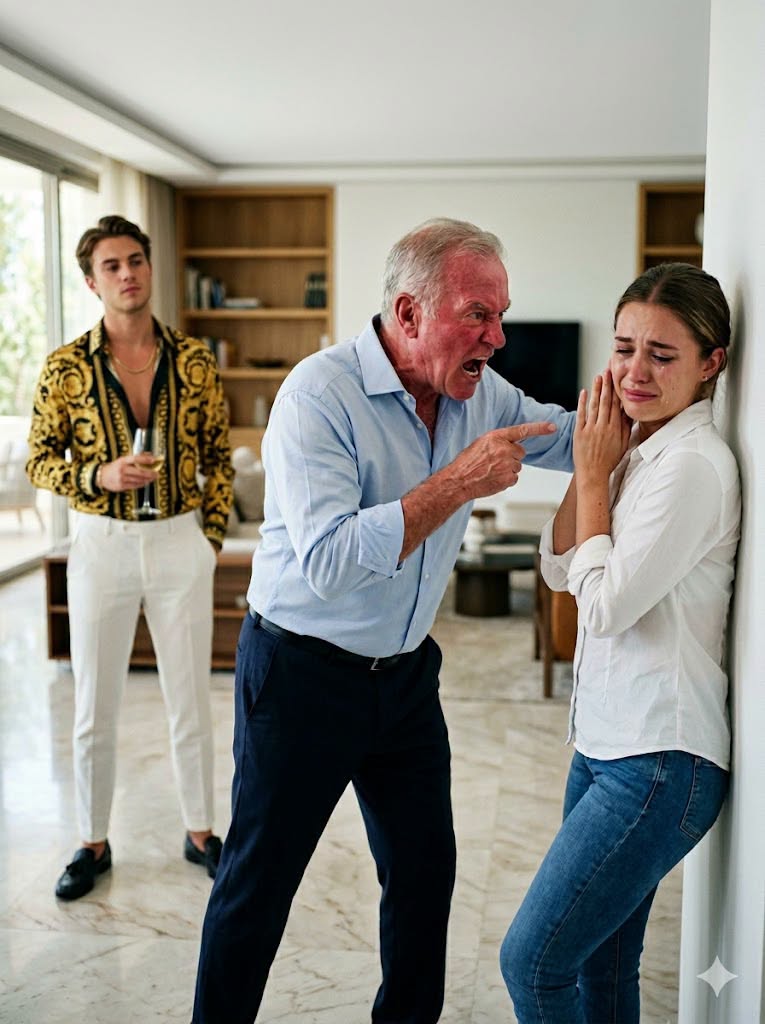
Then my parents called a family meeting.
My brother Evan had lost everything through reckless spending. He owed money to dangerous people, and instead of making him face the consequences of his own choices, my parents decided I should become the solution.
My mother spoke first, her voice soft in the way it became whenever she wanted cruelty to sound like compassion.
“He made mistakes,” she said. “But he is still your brother.”
My father was less careful.
He told me Evan needed the money more than I needed my procedure.
More than I needed my health.
More than I needed a chance to survive.
I looked at each of them and understood something clearly: they had come to my apartment believing my illness made me easier to pressure.
They saw my weakness and mistook it for surrender.
But I had already learned that people who try to take from the vulnerable rarely stop because they are asked nicely. They stop when a boundary becomes stronger than their entitlement.
So I stayed calm.
Then I placed my phone on the table.
“I have been recording this conversation,” I said.
My father’s face changed.
He stood quickly, moving toward me with the old force he had always used to make fear do his work for him.
Before he could reach me, my phone rang.
It was already on speaker.
My attorney, Mara Voss, spoke clearly.
She told my family she had heard everything: the pressure, the threats, the attempt to force me to surrender money reserved for medical care.
Then she told them the part they had not expected.
The funds were already secured in a protected medical trust.
They could not touch them.
They could not pressure me into signing them away.
And any further interference with my treatment would bring immediate legal consequences.
Mara also informed them that hospital security and local police had been notified due to the escalating hostility and the nature of their demands.
For the first time that day, my family fell silent.
Not because they were sorry.
Because they realized the door they had tried to force open had already been locked.
Minutes later, law enforcement officers arrived at my apartment.
My father quickly changed his tone. He tried to tell them I was unstable, that my illness had affected my judgment, that the whole situation was a misunderstanding.
But Mara arrived in person with the recording.
She also brought documents showing a deeper betrayal.
Evan had recently used my personal information to open fraudulent credit lines in my name.
While I had been attending medical appointments and saving for treatment, my brother had been stealing pieces of my financial life and calling it desperation.
The truth was no longer something my family could bury beneath emotion.
It was written.
Recorded.
Documented.
A few days later, Evan was arrested for his financial crimes.
My parents, who had defended him at the cost of my safety, faced crushing legal bills. Eventually, they lost the home they had spent years treating as proof of their stability.
My mother contacted me later and asked for forgiveness.
I listened.
Then I told her the truth I should never have had to say.
“My survival had to come first.”
There are apologies that begin healing.
And there are apologies that arrive only after consequences.
I did not know which one hers was, so I protected my peace and kept my distance.
Six months later, I woke in a bright recovery room after a successful medical procedure.
The light above me was soft. The sheets were clean. My body ached, but it was a healing ache, not the heavy dread I had carried for so long.
I was alive.
That simple fact felt enormous.
I used part of the legal settlement to move into a quiet apartment where no one had a key but me. I filled it slowly: a comfortable chair, clean curtains, a small table by the window, plants I could water on good days.
Peace became part of my recovery.
So did purpose.
In time, I began speaking publicly about patient rights and financial protection. I talked about medical trusts, documentation, coercion, identity theft, and the quiet ways vulnerable people can be pressured by those closest to them.
I told my story because I knew I was not the only one.
Some people are harmed by strangers.
Others are harmed by relatives who believe love gives them access.
One year after that terrible confrontation, I stood on a stage and looked out at a room full of patients, caregivers, advocates, and survivors.
My voice did not shake.
I spoke about fear.
About money.
About illness.
About the courage it takes to say no when people accuse you of being selfish for protecting your own life.
My family had wanted my survival fund.
But what they truly tried to take was my right to choose myself.
They failed.
My greatest victory was not the trust, the settlement, or even the successful procedure.
It was the moment I understood that my life was not less important because someone else had created a crisis.
I was allowed to live.
I was allowed to protect what kept me alive.
And I was allowed to build a future no longer shaped by people who only remembered I was family when they needed something from me.