To me, the work mattered.
To my family, it was proof that I had not aimed high enough.
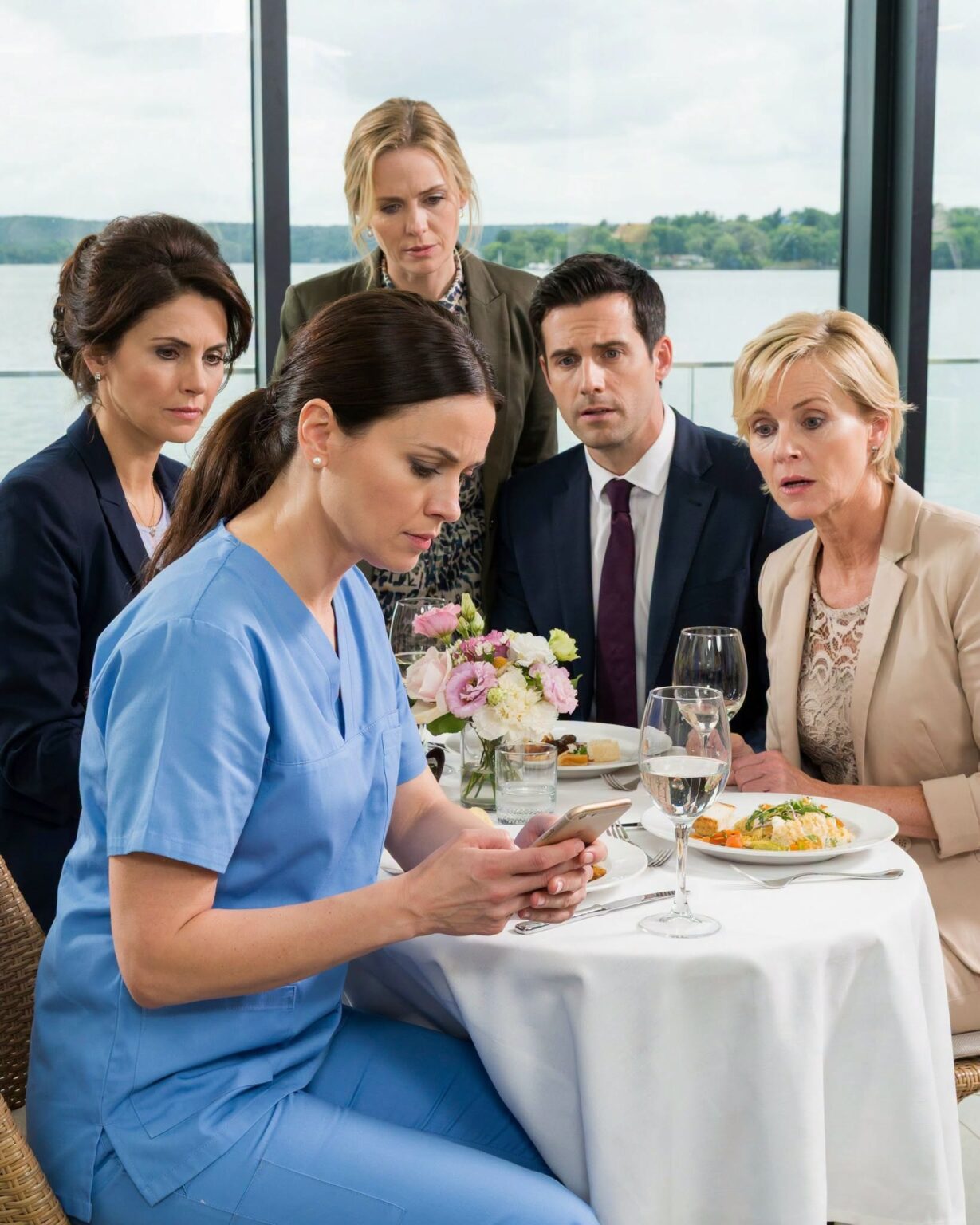
That became painfully clear during a Sunday brunch with my parents, my brother Jeffrey, and his girlfriend, Jennifer.
The restaurant was bright and polished, the kind of place my parents chose when they wanted to feel successful. They spent most of the meal praising Jeffrey’s career in commercial real estate. They spoke about his deals, his suits, his future, his potential.
They did not mention how much they had paid to create that future.
His expensive education.
His rent.
His car.
His networking trips.
The quiet checks written whenever his ambition needed cushioning.
When they turned to me, the warmth disappeared.
My nursing income was “modest.”
My life choices were “safe.”
My career was “fine, but not impressive.”
They spoke as though caring for sick children was a small thing because it did not come with luxury cars or large commissions.
I sat there listening, swallowing more than food.
Jeffrey smiled through it.
Jennifer looked uncomfortable, but said nothing.
I had spent years telling myself that if I worked hard enough, stayed kind enough, and caused little trouble, my family would one day see me clearly.
But that brunch showed me they were not confused.
They simply valued money more loudly than service.
The following week, my parents called with a demand.
They wanted twelve thousand dollars for their December vacation to Hawaii.
Not a loan.
A gift.
They said it was the least I could do to thank them for raising me.
For a moment, I thought I had misunderstood. Twelve thousand dollars was not spare money to me. It was years of careful saving, double shifts, skipped purchases, and discipline. It was security. It was emergency rent. It was the small future I had built for myself one exhausted day at a time.
Jeffrey called after them.
He told me not to be dramatic. He said I should just transfer the money and stop acting like a victim. My parents gave me a deadline and made it clear there would be consequences if I refused.
That night, I sat at the hospital beside a young boy named Trevor.
He was frightened before a procedure, so I held his hand and talked to him about dinosaurs until his breathing slowed. His mother whispered thank you with tears in her eyes.
A few minutes later, my phone buzzed again with another message from my family asking about the money.
The contrast settled into me with painful clarity.
At work, I was trusted with fragile lives.
At home, I was treated like a disappointing bank account.
During my lunch break, I opened my banking app.
For a moment, I prepared the transfer.
My thumb hovered over the screen.
Then something in me stopped.
Not loudly.
Not dramatically.
Just firmly.
I closed the app, drove back to the restaurant where my family had agreed to meet, and sat across from them with the truth I had avoided for years.
I told them I knew how much they had invested in Jeffrey.
I knew about the tuition, the rent, the car payments, the private support they never admitted to giving him. I told them I had received none of that, yet they still expected me to drain my modest savings so they could enjoy a luxury vacation.
My mother’s face hardened.
My father called me ungrateful.
Jeffrey said I was useless if I could not even help the people who raised me.
There it was.
Not disappointment.
Not misunderstanding.
The bargain beneath all their words.
I was not valued for my character, my work, or the years I had stood on my own.
I was valued only if I kept giving.
So I took out my phone, opened the banking app, and canceled the transfer in front of them.
No speech after that would have made the boundary clearer.
I stood up and walked out.
My car was old. The door made a tired sound when I closed it. The dashboard had a crack near the windshield. But as I drove away, I felt a freedom no expensive vehicle could have given me.
For the first time, I had chosen my own future over their appetite.
That choice changed everything.
In January, I used part of the money I had saved to begin therapy. Week by week, I started to understand how long I had been trying to earn love from people who kept changing the price.
My friend Teresa became one of the steady voices in my life. She reminded me that support should not require performance, and that family should not make you feel guilty for protecting yourself.
At work, I began to feel joy again.
Not because the shifts became easy. Pediatric nursing is never easy. But I no longer carried my family’s contempt into every room. I could sit beside children like Trevor, comfort parents, and cherish small moments — a brave smile, a recovered appetite, a child named Maya laughing as she showed me a sticker on her hospital gown.
Those moments were not mediocre.
They were sacred in their own quiet way.
In February, Jennifer ended her engagement to Jeffrey.
She had seen enough. His cruelty toward me had shown her something about the kind of man he was becoming, and she chose not to build a life around it.
By May, my parents’ financial situation had begun to collapse without the hidden support they were used to drawing from others. Eventually, they sent a written apology. My uncle Robert became involved, encouraging accountability and urging them to face the damage they had caused.
I read the apology carefully.
I did not throw it away.
But I also did not let it erase the truth.
An apology may open a door, but it does not rebuild a house by itself.
My peace did not come from their regret.
It came from no longer needing their approval to believe my life had worth.
I continued my nursing shifts. I paid my own bills. I kept going to therapy. I built friendships that did not ask me to shrink. I learned to rest without guilt and to save money without fearing someone would claim it before I could use it.
My family had spent years calling my life small.
But I had seen what happens in hospital rooms when a child stops crying because someone stayed close.
I had seen tired parents breathe easier because a nurse explained one more thing gently.
I had seen courage in tiny hands and hope in quiet hallways.
That work had dignity, whether my family recognized it or not.
I stopped trying to buy affection.
I stopped funding people who measured my worth by my usefulness.
And in choosing the life I had built with my own hands, I finally understood something I should have known all along:
A modest life lived with purpose is not failure.
It is freedom.