social discourse. The evening was defined by a palpable tension, as the establishment honored the gritty realism of films like The French Connection while simultaneously acknowledging the enduring legacy of legends who had built the industry from the ground up. This duality was not merely a matter of artistic preference but a reflection of a nation in flux, where the boundaries of acceptable expression were being tested on screen and in the streets, creating a unique atmosphere of anticipation.
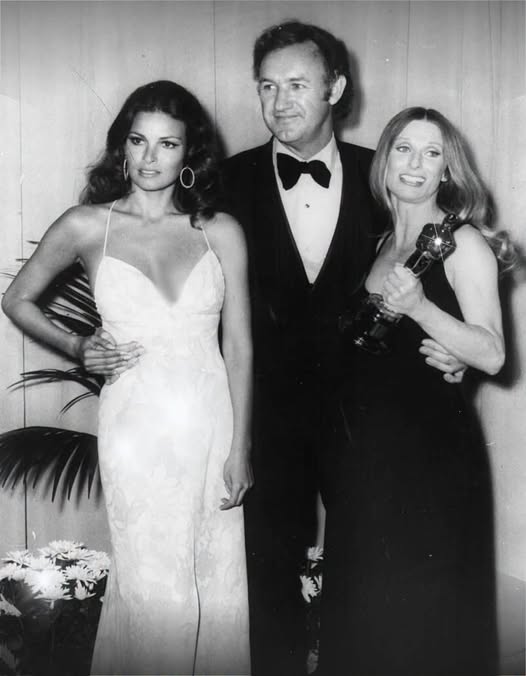
Gene Hackman’s victory for Best Actor in The French Connection served as the night’s definitive anchor for this new, visceral style of filmmaking. Hackman, who later admitted to the overwhelming nature of the win, had delivered a performance that demanded a departure from the stylized acting of the past. His portrayal reflected the grueling, outdoor, and often chaotic production conditions that defined the era’s shift toward naturalism. This win signaled that the Academy was ready to embrace the unvarnished, high-stakes storytelling that would come to dominate the decade.
Yet, the ceremony was far from a singular focus on the new. The presence of icons like Betty Grable, appearing in one of her final public engagements, provided a poignant reminder of the wartime glamour that had once defined Hollywood’s reach. Grable, a symbol of the pinup era, stood as a living bridge to a time when stars were manufactured through a different kind of myth-making. Her presence offered a sense of continuity, grounding the evening in the history that the younger attendees were simultaneously evolving and challenging.
The cultural friction of the era was perhaps most visible just outside the venue. While attendees celebrated the night’s nominees, demonstrators gathered to protest the film Dirty Harry, arguing that its depiction of law enforcement glorified police brutality. This juxtaposition of high-fashion red carpets and urgent political dissent highlighted the growing divide between the industry’s output and the public’s evolving moral expectations. It was a stark reminder that the movies were no longer just entertainment; they were catalysts for national debate.
Fashion, too, became a site of this cultural negotiation. Jane Fonda’s decision to wear a pantsuit was more than a stylistic choice; it was a bold assertion of independence that challenged the rigid sartorial expectations of the Academy Awards. By eschewing the traditional gown, Fonda mirrored the broader movements of the time, signaling that the industry’s most prominent figures were increasingly comfortable using their platform to defy established norms and express personal and political autonomy.
The musical landscape of the evening further underscored this evolution. Isaac Hayes made history as the first African-American to win an Oscar for Best Original Song for his iconic Theme from Shaft. His performance, characterized by a striking, shirtless aesthetic adorned with chains, was a watershed moment that brought a new level of soul and cultural relevance to the ceremony. It was a bold, unapologetic declaration of artistic identity that resonated far beyond the walls of the Music Center, marking a significant step forward for representation.
The emotional zenith of the evening arrived with the appearance of Charlie Chaplin. At eighty-two, the silent film legend returned to the United States to receive an honorary award. As he stepped onto the stage, cane in hand, the audience erupted into a twelve-minute standing ovation. This record-breaking display of affection was not merely for the man, but for the history he represented. It was a collective acknowledgment that while the industry was moving toward a grittier future, it remained deeply indebted to the pioneers who had mastered the art of visual storytelling.
The 1972 ceremony serves as a vital case study for those interested in the evolution of cultural institutions. It teaches us that periods of transition are rarely smooth; they are often marked by the uncomfortable coexistence of the old guard and the rising tide of change. For contemporary observers, the lesson is clear: the strength of an institution lies in its ability to honor its roots while remaining open to the uncomfortable, necessary shifts that define a new era. By balancing the reverence shown to Chaplin with the bold recognition of Hayes and Hackman, the 1972 Academy Awards demonstrated that history is not a static record, but a living, breathing dialogue between the past and the present. Understanding this balance is essential for anyone looking to navigate the complexities of modern creative industries, reminding us that progress requires both respect for the foundations laid by others and the courage to challenge them when the times demand a new perspective.