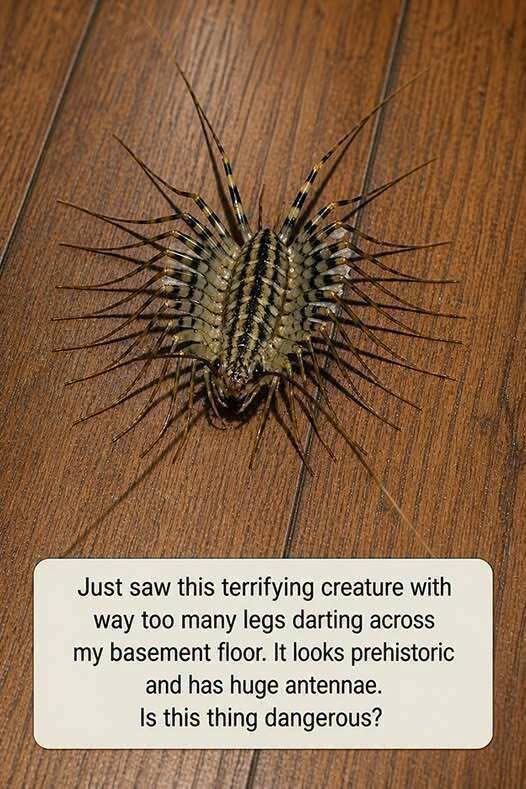
These creatures are far more interested in maintaining their own survival than they are in interacting with humans. While their appearance may be jarring, they are generally not dangerous to people. In fact, they occupy a unique and surprisingly beneficial niche within your home’s ecosystem. By acting as highly efficient, natural predators, house centipedes serve as a biological control mechanism. They actively hunt and consume a variety of common household pests, including ants, cockroaches, spiders, silverfish, and even termites.
Because their venom is specialized for subduing small prey, bites are exceedingly rare and, should one occur, they are typically mild and localized, causing little more than minor irritation. Rather than viewing them as an infestation, it is often more accurate to see them as a sign that your home has a healthy, albeit hidden, population of other insects that they are currently keeping in check. They are drawn to your living space not because of any malice, but because they are seeking the same things you might prioritize in a clean home: a stable environment with a reliable food source.
They thrive in dark, damp, and secluded areas, which is why you are most likely to encounter them in basements, crawl spaces, bathrooms, or near laundry facilities where moisture levels remain consistently high. Understanding this behavior helps to transform the narrative from one of a terrifying intruder to that of a misunderstood, silent partner in home maintenance. If you find yourself frequently spotting these long-legged visitors, it is a clear indicator that you should investigate the environmental conditions of your home.
Their presence is a biological signal that there is likely excess moisture or a secondary pest issue that requires your attention. By addressing these underlying factors, you can naturally encourage these creatures to move elsewhere while simultaneously improving the overall health and structural integrity of your living environment. Managing their population is less about eradication and more about habitat modification. Since they rely on humidity to survive, the most effective strategy involves controlling the moisture levels in your home.
Start by inspecting your plumbing for any slow leaks, as even a small amount of condensation can create an ideal environment for them. Using a dehumidifier in basements or damp storage areas can significantly reduce the appeal of these spaces to both centipedes and the insects they hunt. Proper ventilation is equally essential; ensure that exhaust fans in bathrooms are functioning correctly and that they are used consistently during and after showers to clear out trapped humidity.
Beyond moisture control, physical exclusion is a powerful tool in your management arsenal. Take the time to inspect the exterior of your home for any cracks or gaps in the foundation, around windows, or near utility entry points. Sealing these potential access routes with high-quality caulk or weather stripping not only keeps centipedes out but also prevents the entry of the various pests they feed upon. Furthermore, maintaining a clean home by regularly vacuuming and reducing clutter in storage areas removes the hiding spots they prefer.
It is important to remember that these creatures are not looking to colonize your living room or bedroom. They prefer the quiet, undisturbed corners of a structure where they can hunt in peace. By keeping these areas tidy and dry, you create an environment that is naturally less hospitable to them. If you see one, try to remain calm; it is simply a transient visitor doing exactly what nature designed it to do. You are not witnessing a home invasion, but rather a small, natural cleanup crew operating in the shadows.
Ultimately, the presence of a house centipede is a gentle nudge from nature to take a closer look at your home’s maintenance needs. By focusing on these practical steps—reducing humidity, sealing entry points, and keeping areas dry—you can effectively manage their presence while creating a more comfortable and pest-resistant home for yourself and your family. This approach allows you to move past the initial shock of their appearance and instead appreciate the balance of your domestic environment, ensuring that your home remains a sanctuary that is both clean and well-maintained without the need for harsh chemical interventions or unnecessary anxiety.