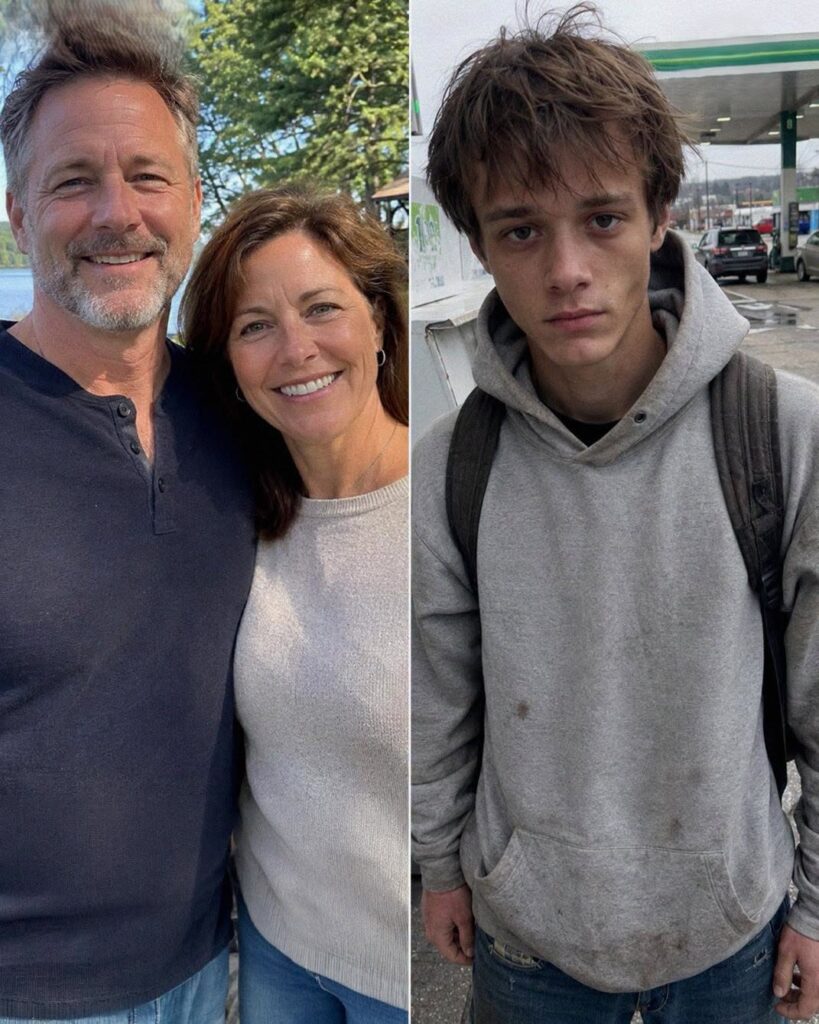
Because the idea was too absurd to understand.
Then he told me how long it had been happening.
The highway hummed beneath my tires as the last light of a long Tuesday faded into blue.
I was two exits from home, and my life still felt as steady as the road beneath me.
Our two children were away at college.
Emma was studying environmental science in Vermont, and Ben had just started his second year of engineering in Ohio.
David and I were learning how to live in a quieter house.
At least, that was what I thought we were doing.
We had been married for twenty-two years.
Everyone who knew us called our marriage solid.
Unshakable.
David was a respected neurologist at the county hospital.
I was a nurse in the surgical recovery unit.
We had spent decades helping frightened people through some of the worst moments of their lives.
I believed that kind of work had made us honest with each other.
Perhaps I had confused familiarity with honesty.
My father had died three years earlier and left me a lake cabin that had belonged to our family for generations.
It was a modest cedar house on twelve acres of wooded land, but the lakefront property had become extremely valuable.
A developer had recently offered more money for it than I had ever imagined.
David thought I should sell.
I refused.
The cabin was where my father taught Emma to fish.
It was where Ben learned to paddle a canoe.
It was where my mother had spent her final summer before cancer took her.
Some things were worth more than a check.
David had not argued openly, but small things had begun brushing against the edge of my attention.
A new brass lock appeared on his home-office door while I was working a double shift.
When I asked why, he said confidential patient files needed better protection.
A week later, I found a business card in his coat pocket for an attorney specializing in guardianship, elder law, and estate disputes.
David dismissed it with a wave.
“One of my patients needed a referral.”
“Why would the lawyer give you his personal card?”
“He didn’t. A colleague did.”
He smiled and kissed my forehead.
“Nothing to do with us.”
I believed him.
After twenty-two years, trust had become less of a choice and more of a habit.
That Tuesday evening, I pulled into the gas station where I always filled up after work.
I swiped my card, inserted the nozzle, and watched the numbers climb.
That was when I noticed the boy sitting beside the ice machine.
He looked about seventeen.
Maybe younger.
A faded backpack rested between his knees, and his oversized gray hoodie swallowed his narrow shoulders.
He was thin in the way that told you food was not something he could count on.
When he noticed me looking, he stood.
He approached slowly, careful not to come too close.
“Ma’am?”
His voice was polite but nervous.
“I’m sorry to bother you. Could I borrow your phone for a minute?”
I hesitated.
He saw it.
“My aunt is supposed to pick me up. My phone doesn’t have service.”
For a second, I imagined my own son stranded at some gas station in Ohio, hoping a stranger would decide he looked trustworthy enough to help.
I unlocked my phone.
“Of course.”
The boy turned away and spoke quietly for less than a minute.
When he returned, he held the phone out with both hands.
“Thank you. Really.”
“You’re welcome.”
I slipped it into my coat pocket.
“Are you safe out here?”
He nodded too quickly.
“Yeah. She’s coming.”
The gas pump clicked off behind me.
I replaced the nozzle and reached for the receipt.
I was about to wish him well when his gaze shifted past me toward the entrance of the parking lot.
His jaw tightened.
He stepped closer.
“Ma’am,” he whispered. “Please don’t get in your car yet.”
Something in his voice made me stop.
“What’s wrong?”
“There’s something I need to tell you.”
He glanced across the lot again.
Then he leaned close enough that I could smell cold air and cigarette smoke clinging to his hoodie.
“Your husband is paying me to watch you.”
I laughed.
A sharp, startled sound escaped my throat.
“You have the wrong woman.”
He did not smile.
“My husband is a doctor.”
“I know.”
“He would never do something like that.”
The boy’s eyes stayed fixed on mine.
“He said you would say that.”
A chill slid down my back.
“What is your name?”
“Marcus.”
“Okay, Marcus. Why are you telling me this?”
His hands disappeared into his sleeves.
“Because I can’t do it anymore.”
I studied his face.
Years of nursing had taught me how to recognize panic, shame, intoxication, manipulation, and fear.
Marcus looked frightened.
He also looked relieved.
I did not think he was lying.
“Start at the beginning.”
He looked toward the road.
“There’s a church on Fremont Street. They serve meals on Wednesdays. Your husband came there around two months ago.”
“David went to a church outreach center?”
“He asked one of the volunteers if he could speak to someone who needed regular work.”
My stomach tightened.
“What did he tell you?”
“That his wife was sick.”
The parking lot seemed to tilt beneath me.
“What kind of sick?”
“Memory problems.”
Marcus watched my face carefully.
“He said you were forgetting things and driving around town without knowing where you were. He said he was worried you might get hurt.”
I placed one hand against my car.
“Go on.”
“He said he couldn’t put a tracking app on your phone because you might notice. He needed someone who looked normal. Someone you wouldn’t pay attention to.”
“Someone homeless.”
Marcus lowered his head.
“Yes, ma’am.”
“What did he ask you to do?”
“Follow you sometimes. Watch where you stopped. Tell him who you talked to.”
“How much did he pay you?”
“Three hundred dollars a week.”
My chest tightened.
“For how long?”
“Almost two months.”
Two months.
Two months of grocery runs, pharmacy stops, coffee before work, and visits to Emma’s apartment when she came home for a weekend.
Somewhere behind me had been a child I never noticed, watching every ordinary movement as if it were evidence.
“What did David ask about?”
“At first, just where you went. Whether you seemed okay. Whether you drove toward the lake.”
“The cabin?”
“He didn’t call it that, but yes.”
“And then?”
Marcus looked down.
“The questions changed.”
“How?”
“He started asking whether you stopped after work. Whether you met any men. Whether you bought alcohol.”
I stared at him.
“Alcohol?”
“He asked if you looked confused. He used that word a lot.”
Confused.
The word struck harder than the others.
As a nurse, I had seen families struggle with dementia, brain injuries, medication reactions, and neurological decline.
For one terrible second, I wondered whether David had noticed something I had missed.
Had I forgotten conversations?
Taken wrong turns?
Repeated myself?
Surely someone at work would have said something.
Wouldn’t they?
“Marcus, have you ever seen me confused?”
“No.”
His answer came immediately.
“That’s why he got angry.”
“Angry at you?”
“I kept telling him you seemed normal. He said I wasn’t watching closely enough.”
Marcus swallowed.
“He told me if you bought wine, I should take a picture. If you stumbled, I should record it. If you stopped somewhere and looked around, I should say you seemed lost.”
Something inside me became very still.
“You said you couldn’t do this anymore. Why now?”
He looked across the lot again.
“My father used to talk about my mother the way your husband talks about you.”
I waited.
“He told everybody she was unstable. Said she couldn’t remember anything. Said she needed him to manage her money.”
Marcus’s mouth tightened.
“She wasn’t broken. He just needed everyone to believe she was.”
The words settled between us.
“How do you communicate with David?”
Marcus reached into his backpack and removed a folded piece of paper.
“That’s the number he uses. I think it’s a prepaid phone.”
He pointed to another line.
“And that’s his payment account.”
I recognized David’s initials in the username.
My fingers shook as I folded the paper.
“Do you have the messages?”
“Most of them.”
“Would you show them to a lawyer?”
His expression changed.
“A lawyer?”
“I need to understand what my husband is doing before he knows I know.”
Marcus nodded slowly.
“Yes.”
“Where are you staying tonight?”
“The youth shelter on Ninth Street.”
“Do you have a working phone?”
He pulled out an old device held together with black tape.
“It works sometimes.”
“I’ll get you another one.”
He looked uncomfortable.
“You don’t have to.”
“I’m not doing it out of pity.”
I met his eyes.
“I may need to find you again. And what you told me may protect me from something serious.”
He nodded.
I gave him the cash in my wallet.
“Do not tell David we spoke.”
“What should I text him?”
“Whatever you normally would.”
Marcus glanced toward my car.
“Are you going home?”
“Yes.”
“Be careful.”
The fact that a homeless seventeen-year-old felt the need to warn me about my husband should have terrified me more than it did.
Instead, I felt strangely calm.
I drove home by a longer route.
As I moved through familiar streets, I replayed every recent conversation.
David asking whether I had stopped anywhere after work.
David questioning why I had driven to the cabin alone.
David suggesting I had forgotten telling him about a lunch with a coworker.
The new lock.
The lawyer’s card.
The pressure to sell the property.
By the time I reached our driveway, I had made one decision.
I would not confront him.
Not until I knew exactly what he was planning.
David was in the kitchen chopping vegetables when I entered.
“There you are,” he said. “I was starting to worry.”
“Traffic.”
He kissed my cheek.
For the first time in twenty-two years, the gesture felt rehearsed.
We ate dinner as we always did.
He talked about a difficult patient.
I told him about a delayed surgery.
We discussed Ben’s upcoming exams.
Then, halfway through the meal, David placed his fork down.
“Have you thought any more about the offer on the cabin?”
“No.”
“The developer may not keep it open.”
“I’m not selling.”
He leaned back.
“It’s an emotional decision, Rachel.”
“It’s my property.”
“I know.”
His tone was gentle.
Too gentle.
“I’m only worried you’re not thinking clearly about the financial opportunity.”
My hand tightened around my water glass.
“Not thinking clearly?”
“You know what I mean.”
“I don’t think I do.”
He smiled.
“You look tired.”
“I worked eleven hours.”
“Exactly.”
He reached across the table.
“I worry about you.”
I looked at his hand resting beside mine.
For the first time, concern sounded like a threat.
The next morning, I waited until David left for the hospital.
Then I opened our joint banking account.
The withdrawals were there.
Three hundred dollars every Friday.
Sometimes four hundred.
Small enough to disappear among groceries, utility bills, and school payments.
Regular enough to be wages.
I printed the statements.
Then I walked upstairs to David’s office.
The brass lock gleamed in the morning light.
I had noticed a new key tucked behind batteries in the junk drawer several weeks earlier.
At the time, I assumed it was for the shed.
Now I retrieved it.
It slid into the office lock perfectly.
The door opened.
David’s office smelled of leather, paper, and the cedar cologne he had worn for years.
I searched carefully.
The first desk drawer held nothing unusual.
The second contained insurance documents and old tax returns.
Inside the locked top drawer, I found a manila folder with my name written across it.
RACHEL M. HART — CAPACITY CONCERNS.
My knees weakened.
I lowered myself into his chair.
Inside was a black notebook filled with dated observations.
Tuesday, 6:47 p.m.
Subject stopped at wine store on Elm Street.
Purchased two bottles.
Appeared unsteady while returning to vehicle.
I remembered that Tuesday clearly.
I had driven directly home after work.
I had not stopped at a wine store.
There were dozens of entries.
Subject repeated question during breakfast.
Subject became disoriented while driving.
Subject forgot scheduled dinner.
Subject displayed emotional volatility when asked about finances.
Some descriptions twisted ordinary moments.
Others were complete inventions.
Behind the notebook were printed messages between David and Marcus.
There were photographs of me entering the supermarket, leaving the pharmacy, sitting at a traffic light, and walking through the hospital parking lot.
Marcus’s reports were brief and factual.
She went to work.
She bought groceries.
She drove home.
She seemed fine.
David’s responses became increasingly irritated.
Look closer.
I need useful observations.
Confusion, alcohol, erratic behavior.
Do not send me normal.
My hands went cold.
The next document was a draft legal petition.
Petition for appointment of guardian due to diminished mental capacity.
My full name appeared at the top.
David was listed as the proposed guardian.
Attached was a checklist of medical evidence needed to demonstrate that I could no longer manage financial or property decisions.
Then I found the reason.
A recent appraisal of the lake cabin.
A revised offer from the developer.
And an email exchange between David and the attorney whose card I had discovered.
Once a guardian is appointed, the sale of separately owned real property may proceed with court approval.
Medical documentation must establish that your wife lacks capacity to manage the asset herself.
I read the sentence three times.
David was not worried about my memory.
He was manufacturing an illness so he could take control of my property.
I photographed every page.
I copied the messages, bank withdrawals, legal correspondence, appraisal, and draft petition.
Then I returned everything exactly as I had found it.
I locked the drawer.
Locked the office.
Returned the key to the junk drawer.
Only then did I call Karen Mitchell.
Karen had been my closest friend since nursing school.
She was also one of the most relentless family-law attorneys in the county.
When she answered, I did not greet her.
“I need you to be my lawyer today. Not my friend.”
Her tone changed immediately.
“What happened?”
I told her everything.
She did not interrupt once.
When I finished, she was silent for several seconds.
“Rachel, listen carefully.”
“I’m listening.”
“Do not confront him.”
“I wasn’t planning to.”
“Do not let him know you entered the office. Do not change your routine. Do not drink anything he pours for you. And do not sign a single document.”
My stomach tightened.
“You think he might drug me?”
“I think a man who has spent months inventing evidence may become desperate if his plan is threatened.”
I closed my eyes.
“What do we do?”
“We document everything legally.”
“Marcus will speak to you.”
“Good.”
“David paid him electronically.”
“Better.”
“He has messages.”
“Even better.”
Karen’s voice softened.
“You only need to act normal for a little longer.”
“I have been acting normal.”
“I know.”
There was anger in her voice now.
“That’s what makes this so monstrous.”
I met Marcus at a diner near the highway two days later.
Karen joined us.
Marcus arrived wearing the same oversized hoodie and carrying the worn backpack.
He sat stiffly in the booth until Karen explained that he was not in trouble.
“You were manipulated by an adult,” she said. “But you need to tell us everything.”
He handed over his phone.
The messages confirmed what I had found.
David had paid him for weeks.
He had instructed him to watch my workplace, errands, social meetings, and trips toward the lake.
Several messages asked Marcus to provoke certain situations.
Ask her for directions twice. See if she gives different answers.
Follow her into the grocery store. Photograph the wine aisle if she enters it.
If she seems upset, describe her as agitated.
Marcus had refused most of them.
Then he showed us a new message.
Need documentation Saturday.
Public location.
Confusion or intoxication preferred.
Bonus if photographed.
“What is happening Saturday?” Karen asked.
“He hasn’t sent the address yet,” Marcus replied. “He said he would arrange everything.”
I already knew.
David had mentioned the restaurant near the lake three times that week.
“Marcus,” Karen said, “would you be willing to give a sworn statement?”
He looked at me.
“My father did this to my mother.”
His voice was quiet.
“I watched everyone believe him. I’m not doing it again.”
Karen nodded.
“We’ll protect your information as much as possible.”
Marcus signed the statement that afternoon.
That night, David poured himself a scotch and leaned against the kitchen counter.
“I made reservations for Saturday.”
“Where?”
“That restaurant near the lake you like.”
He smiled.
“I thought we could use a romantic evening.”
The lake.
The cabin.
The public setting David wanted Marcus to photograph.
“That sounds lovely,” I said.
David relaxed.
After he went upstairs, I sent Karen one word.
Saturday.
The evening arrived with a strange calm.
I dressed carefully.
David complimented my blouse.
He opened my car door.
At the restaurant, he pulled out my chair and ordered a bottle of wine without asking.
The waiter poured me a glass.
I did not touch it.
David watched me.
“You’ve seemed exhausted lately.”
“I have.”
“And forgetful.”
I met his eyes.
“Have I?”
“You repeated yourself at breakfast yesterday.”
“I asked whether you wanted coffee twice.”
“Exactly.”
I almost smiled.
He reached for my hand.
“I’ve been worried about you, Rachel.”
“I’ve been worried too.”
Then I reached into my bag and placed a thick folder on the table.
David frowned.
“What’s this?”
“Open it.”
He flipped the cover.
The color drained from his face.
Inside were copies of the payment records, Marcus’s messages, the guardianship petition, and the legal correspondence.
David looked up.
His expression changed three times in seconds.
Surprise.
Fear.
Calculation.
“I know about Marcus,” I said.
He closed the folder.
“Rachel, this is not what you think.”
“I know you hired a homeless teenager to follow me.”
“I was worried.”
“I know you told him to create reports about confusion and alcohol use.”
“I never said create.”
“You told him not to send you normal.”
David leaned closer.
“Lower your voice.”
“I know you drafted a petition to have me declared incompetent.”
His jaw tightened.
“I spoke to a lawyer because I had concerns.”
“And I know you planned to use that guardianship to sell my father’s cabin.”
“Rachel, you are emotionally attached to a property that no longer makes financial sense.”
“There it is.”
“What?”
“The real diagnosis.”
I held his gaze.
“You decided disagreement was proof of illness.”
He shook his head.
“You went through my office.”
“Is that your defense?”
“Anything you stole from a locked drawer is inadmissible.”
His voice had become cold.
Clinical.
The voice he probably used when explaining hopeless diagnoses to families.
“I did not need your drawer.”
That stopped him.
“Marcus gave a sworn statement this morning. His payment records are stored in his account. Your attorney filed preliminary documents with the court. Karen obtained them legally.”
David’s face collapsed.
“The police have copies of the surveillance messages,” I continued. “The hospital’s legal department will receive notice Monday.”
“You contacted my employer?”
“You used your medical credentials to construct a false diagnosis.”
He stared at me.
“You have no idea what you’re doing.”
“I know exactly what I’m doing.”
He looked toward the untouched wine.
“I was trying to protect us.”
“From what?”
“From your refusal to make a rational decision.”
“About my property.”
“Our future.”
“No, David. Your access to my property.”
He lowered his voice.
“That cabin could secure our retirement.”
“Our retirement is already secure.”
“You don’t understand the numbers.”
“I understand them perfectly.”
He leaned back and studied me with an expression I had seen him use on difficult patients.
“You’re proving my concern right now.”
I almost laughed.
“By confronting you with evidence?”
“You’re agitated.”
“I’m ending my marriage.”
“That is an extreme reaction.”
“You hired a vulnerable child to stalk me, created false medical observations, and tried to take legal control of my life.”
I reached into my bag again.
Then I placed divorce papers on top of the folder.
David stared at them.
“You planned this.”
“You planned it first.”
“Rachel, think about the children.”
“I am.”
“Emma and Ben will be devastated.”
“They will hear the truth from me tonight.”
His voice sharpened.
“You would destroy their view of their father?”
“No.”
I stood.
“You did that.”
He looked down at the papers.
“You expect me to sign these here?”
“You do not have to sign them tonight.”
I placed two twenties beside my untouched wine.
“But you will be served formally tomorrow.”
I walked toward the exit.
“Rachel.”
I stopped but did not turn.
“Where are you going?”
“To the cabin.”
He pushed back his chair.
“You can’t drive there in this condition.”
There it was again.
The language of control.
The manufactured concern.
I finally turned toward him.
“Watch me.”
Karen was waiting outside in her car.
Marcus sat in the passenger seat.
When I stepped into the parking lot, he looked through the windshield and gave me a small nod.
I nodded back.
The boy David had paid to help erase my independence had become the person who helped me save it.
The weeks that followed were brutal.
David denied everything.
Then he claimed he had acted out of genuine concern.
Then he suggested Marcus had misunderstood.
Then he said Karen had manipulated me.
His attorney withdrew from the guardianship matter as soon as the messages were disclosed.
The hospital opened an internal investigation into whether David had misused patient-access systems, hospital resources, or his medical authority.
The police reviewed the surveillance arrangement.
Marcus was connected with a youth advocacy organization and entered a supported housing program.
I bought him a phone, but Karen insisted the foundation handling his case manage the account so he would never feel indebted to me.
Emma and Ben came home the weekend after I left.
I told them everything at the cabin.
Emma cried before I finished.
Ben sat perfectly still.
“Dad really wrote fake medical notes about you?”
“Yes.”
“Why?”
“Because he wanted the cabin sold.”
Ben shook his head.
“He could have just kept arguing.”
“He wanted a guarantee.”
Emma looked toward the lake.
“Did he think we would believe him?”
“He was counting on it.”
That truth hurt all three of us.
David had not only tried to manipulate the court.
He had been preparing a story for our children.
Your mother is declining.
She does not know what she is doing.
I am only trying to protect her.
Emma reached across the table and took my hand.
“I would have asked you.”
I looked at her.
“Would you?”
Her face crumpled.
“I want to say yes.”
“So do I.”
Ben lowered his head.
“Dad is a doctor. We probably would have believed him at first.”
His honesty hurt, but I appreciated it.
“That is why Marcus mattered.”
The divorce took eleven months.
The court did not appoint a guardian.
The cabin remained mine.
David’s hospital privileges were temporarily restricted while the medical board reviewed his conduct.
He was not imprisoned, despite what some people expected.
What he did lived in a complicated space between coercive control, fraud preparation, unlawful surveillance, and professional misconduct.
But the consequences were real.
He lost his position as department chair.
Several colleagues stopped referring patients to him.
The medical board placed restrictions on his practice.
The children spoke to him rarely.
For a man who had spent his life being trusted, public doubt became its own punishment.
Months after the divorce was finalized, David asked to meet.
I almost refused.
Then I agreed to one conversation at a coffee shop halfway between our homes.
He looked older.
His hair had gone almost completely gray.
He sat across from me with both hands wrapped around a cup he never drank.
“I’m sorry,” he said.
I waited.
“I know that doesn’t mean much.”
“It means less than the truth.”
He nodded.
“I wanted the cabin sold.”
“I know.”
“I convinced myself you were being irrational.”
“You knew I wasn’t.”
He looked away.
“At first, yes.”
“And later?”
“Later, I needed you to be irrational.”
The honesty was ugly.
But it was honesty.
“Why not divorce me and argue about the property legally?”
“Because it was separate property. I had no claim.”
“So you decided to take control of me instead.”
His eyes filled.
“I told myself I was protecting our retirement.”
“You were protecting your own plans.”
He nodded.
“I liked being the person everyone trusted.”
“You used that trust as a weapon.”
“I know.”
For a moment, neither of us spoke.
Then he said, “I never expected Marcus to tell you.”
“That was your mistake.”
“Hiring him?”
“Believing someone desperate had no conscience.”
David looked down.
“I treated him like he was invisible.”
“Yes.”
“The same way I treated you.”
I did not answer.
He inhaled slowly.
“Is there any chance you will forgive me?”
“I already have.”
His head lifted.
“You have?”
“Forgiveness means I am not going to let what you did poison the rest of my life.”
I held his gaze.
“It does not mean I trust you. It does not mean I excuse you. And it does not mean there is a way back.”
He nodded as tears slipped down his face.
“I understand.”
I left him sitting there.
A year after Marcus approached me at the gas station, I returned to the same place.
The ice machine was still beside the building.
The pavement still carried dark oil stains.
The highway still hummed beyond the pumps.
Marcus was not there.
He had earned his high-school equivalency certificate and started an apprenticeship with an electrical contractor.
He sent me occasional updates.
Never long ones.
Passed my test.
Got the apartment.
First day went okay.
I saved every message.
Not because he owed me anything.
Because he reminded me that one honest choice can interrupt a carefully built lie.
I kept the cabin.
I repaired the roof, replaced the old dock, and turned the smallest bedroom into a reading room.
Emma visited whenever she could.
Ben brought friends during school breaks.
Sometimes I sat on the porch alone and watched the light move across the lake.
My marriage ended because my husband wanted control more than partnership.
But that was not the whole story.
It also ended because a frightened teenage boy decided he would not help one more man destroy one more woman.
David had chosen Marcus because he thought nobody would listen to him.
He believed poverty made the boy powerless.
He believed respectability made himself untouchable.
He was wrong about both of them.
The five-second whisper at the gas station did not destroy my marriage.
The marriage had already been destroyed by secrecy, entitlement, and a plan built behind a locked door.
The whisper simply turned on the light.
And once I saw the truth clearly, I never allowed anyone to convince me I was confused again.