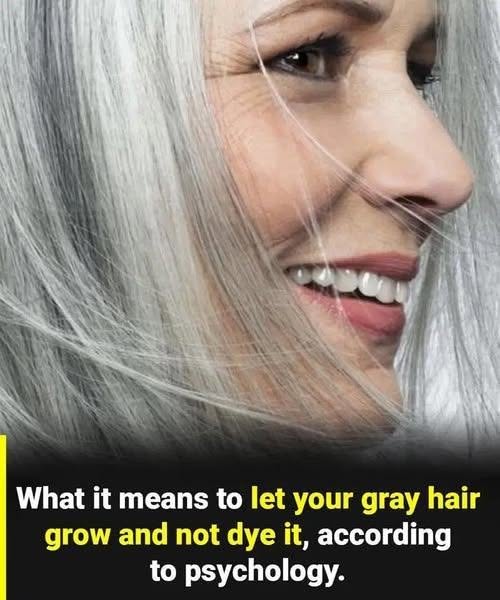
That attitude is gradually changing. Gray hair is now frequently viewed as a symbol of authenticity, maturity, and self-assurance rather than something that must be hidden. For many people, allowing it to show is not a sign of giving up on appearance. Instead, it is a deliberate choice to feel comfortable with who they are.
From a psychological perspective, the decision to stop dyeing hair can represent an important change in self-perception. Hair is closely connected to identity and the way people present themselves to the world. Letting gray strands become visible may therefore challenge deeply rooted beliefs about aging and attractiveness.
Some people eventually realize that their discomfort with gray hair is not really about the color itself. It may come from concerns about being judged, ignored, or treated differently. Choosing not to hide it can become a way of redefining personal worth and moving away from the belief that value depends on looking young.
Psychologists may describe this decision as a form of self-affirmation. By accepting their natural appearance, individuals communicate that they no longer want cultural expectations to determine how they should look. The choice can reflect independence, emotional maturity, and a desire to live more honestly.
Instead of feeling obligated to maintain a youthful image, a person may begin prioritizing authenticity. This can provide a renewed sense of control over personal appearance, especially after years of coloring appointments, maintenance, and anxiety about visible roots.
The shift can be particularly meaningful for women, who have historically experienced greater pressure to conceal signs of aging. While gray hair in men has often been described as distinguished, women have frequently been encouraged to hide it. Allowing it to remain visible can therefore feel like a quiet rejection of unequal and unrealistic beauty standards.
Many women describe the transition as freeing. They no longer have to plan their lives around hair coloring or worry that visible gray strands will expose something they were expected to conceal. This relief can contribute to stronger confidence and a more peaceful relationship with aging.
Men may traditionally have had more freedom to age naturally, but they are not completely protected from appearance-based expectations. Increasing pressure to look energetic, youthful, and professionally competitive can also affect how men view gray hair. Choosing to embrace it may represent confidence and a refusal to measure personal value through age or constant productivity.
For both women and men, the deeper issue is usually not hair color. It is the relationship between appearance, identity, and self-worth. Accepting gray hair can signal that external approval is no longer the main source of confidence.
Ultimately, allowing gray hair to remain natural can be an expression of emotional freedom. It reflects a healthier acceptance of aging and a rejection of the shame sometimes attached to growing older. For many people, this shift reaches far beyond appearance, encouraging greater resilience, self-respect, and a more authentic way of living.