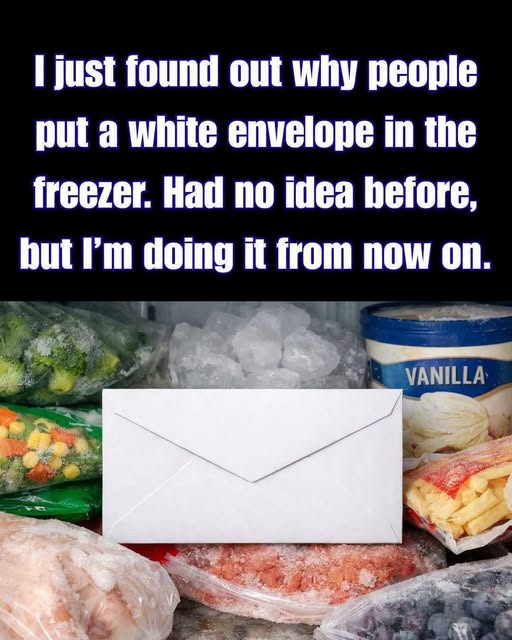
The freezer trick is a widely discussed, though often misunderstood, method for reopening traditional lick-and-stick envelopes. This technique relies on the specific chemical properties of water-based dextrin glue, which is the standard adhesive found on most conventional stationery. When this type of glue is subjected to extreme cold, it loses its inherent flexibility and becomes notably brittle. By placing the sealed envelope in the freezer for a sufficient period, you are essentially attempting to weaken the structural integrity of the dried adhesive bond, making it susceptible to mechanical separation.
If the conditions are favorable, the glue may stiffen enough to allow you to gently slide a thin, flat tool—such as a butter knife, a letter opener, or even a carefully placed fingernail—under the flap. The goal is to coax the seal open, moving millimeter by millimeter, without tearing the delicate paper fibers. However, it is critical to understand that this method is not a guaranteed solution. Success depends heavily on the specific type of adhesive used by the manufacturer, the amount of moisture applied during the initial sealing process, and how firmly the flap was pressed down against the body of the envelope.
If an envelope was heavily moistened or secured with significant, sustained pressure, the bond is likely too strong for the cold to overcome. In such instances, the paper will almost certainly tear regardless of your patience or the duration of time spent in the freezer. Furthermore, modern peel-and-stick envelopes, which utilize synthetic, pressure-sensitive adhesives, are generally designed to be resistant to cold temperatures. In these cases, the freezer trick will have virtually no effect on the bond, as the synthetic adhesive is formulated to maintain its tackiness and flexibility across a wide range of environmental conditions, including the frigid air of a household freezer.
Even when working with traditional envelopes, the process is inherently delicate and requires a steady, patient hand. Attempting to force the flap while the glue is still too resilient will result in immediate, visible damage, leaving you with a ragged, unsightly edge that cannot be easily repaired. It is also important to consider the environmental impact of the process; the condensation that inevitably forms as the envelope returns to room temperature can sometimes cause the paper to warp, wrinkle, or even cause ink to bleed, potentially ruining the very contents you were trying to save.
Because of these significant variables, you should never rely on this method for sensitive, legal, or irreplaceable documents. The freezer trick is best viewed as a last-ditch effort for low-stakes items rather than a reliable, professional solution for unsealing mail. If the envelope is vital, the risk of damaging the contents or the paper itself is often far too high to justify the attempt. The physical act of freezing and thawing can also alter the texture of the paper, making it obvious to the recipient that the envelope has been tampered with, which may be undesirable depending on the context of your correspondence.
Beyond the technical limitations, there is the practical reality of time and effort. The time required to properly chill the envelope, the precision needed to pry it open, and the high probability of failure make this method inefficient for most people. If you find yourself in a situation where you must open a sealed envelope, it is almost always safer to accept the mistake and start over with a fresh envelope and a new stamp. Trying to force a seal open often leads to frustration and a ruined document, whereas a new envelope ensures your correspondence remains clean, professional, and secure. Accepting the limitations of this trick will save you time and prevent the unnecessary stress of dealing with damaged mail. Ultimately, the most practical conclusion is that while the freezer trick can occasionally work for basic, water-based adhesives, it is far from a foolproof maneuver. When in doubt, prioritize the integrity of your document over the desire to salvage a single piece of stationery.