I felt a sharp, defensive pang of frustration rise in my chest as I looked at his sodden hair. That umbrella was more than nylon and metal; it was a connection to a father he missed every single day. When I asked him where it had gone, Eli looked up, his eyes steady and clear despite the cold. He explained that he had seen a pregnant woman at the bus stop, weeping and completely exposed to the downpour. He could not walk past her. He told me he remembered his father’s voice, a memory he kept tucked away like a treasure, telling him that when someone is in need, you do not wait for the world to act; you become the action yourself. My frustration dissolved, replaced by a profound, aching pride. I wrapped him in a towel, brewed hot cocoa, and told him that his father would have been the first to stand by his side in that moment.
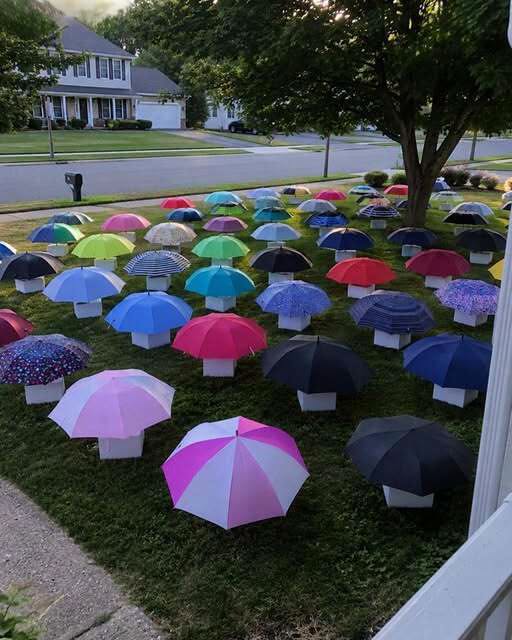
We went to sleep that night with the rhythmic drumming of rain against the roof, unaware that the world outside was shifting. The following morning, I stepped out onto the porch with my coffee, intending to greet the quiet dawn. Instead, I stopped dead. My breath hitched in my throat as I surveyed the lawn. Every inch of grass, from the mailbox to the base of the old maple tree, was occupied by an open umbrella. There were forty-seven of them, a vibrant, multicolored canopy blooming in the morning mist. Beneath each one sat a small, hand-painted white box, numbered meticulously from one to forty-seven. Neighbors were already standing on the sidewalk, their faces soft with smiles, watching as I descended the steps to investigate this surreal, beautiful display.
I knelt before the first box, my fingers trembling as I lifted the lid. Inside was not some grand, mysterious secret, but a simple, heartfelt note from the woman Eli had helped. She had written of her own struggle that day, the overwhelming weight of her circumstances, and how the sight of a young boy offering his only protection had restored her faith in humanity. She had shared the story with her neighbors, and they, in turn, had shared it with others. The boxes were filled with small tokens of appreciation: handmade cards, gift cards for local shops, and even a few small toys for Eli. It was a collective embrace from a community that had been watching, waiting for a reason to show its own capacity for grace. Eli joined me on the lawn, his eyes widening as he realized that his single, quiet act of kindness had rippled outward to touch dozens of strangers.
The sheer scale of the response was overwhelming, yet the most significant gift was not the items in the boxes, but the realization that we were not alone in our grief or our growth. Eli looked at the sea of umbrellas and then back at me, his expression shifting from shock to a quiet, determined resolve. He didn’t want to keep the gifts for himself. He wanted to ensure that the spirit of that day remained a permanent fixture in our neighborhood. We spent the afternoon talking with our neighbors, listening to their stories, and finding common ground in the simple, human need to be seen and supported during life’s storms. The community had seen a young boy acting with the maturity of a man, and they had responded by surrounding him with the warmth he had so freely given to a stranger.
Together, we established a permanent sharing station at the bus stop where Eli had first offered his help. It became a community hub for rain gear, a place where umbrellas were always available for those caught unprepared by the weather. We stocked it with spare jackets and ponchos, turning a temporary solution into a lasting resource. Eli still keeps his father’s original blue umbrella safely tucked away at home, a cherished relic of the man who taught him the value of empathy. Yet, whenever it rains, he heads to the bus stop to check the station, ensuring that the cycle of generosity continues. The lawn is clear again, but the lesson remains etched into the fabric of our daily lives. We learned that while we cannot control the storms that come our way, we can certainly decide how we stand in them, and who we choose to stand with. Kindness, we discovered, is never really gone; it simply waits for the right moment to bloom, turning a gray, rainy afternoon into a testament to the enduring power of a single, selfless heart. The neighborhood now feels like a family, bound by the simple, beautiful thread of a boy who chose to share his light during someone else’s darkest hour.